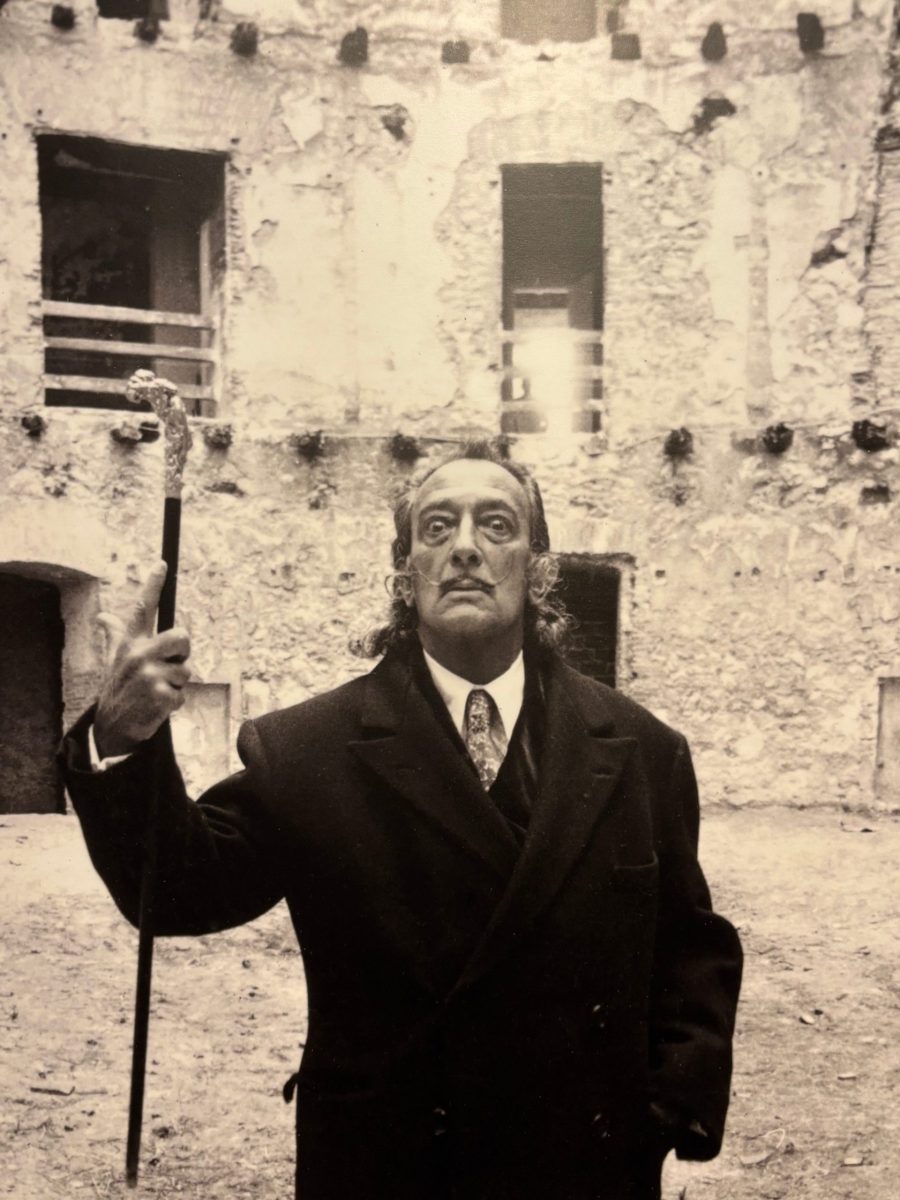
“I don’t do drugs. I am drugs.”
“The only difference between me and a madman is that I am not mad.”
“Each morning when I wake up, I experience again a supreme pleasure—that of being Salvador Dalí.”
It was hard to choose just one Salvador Dalí quote.
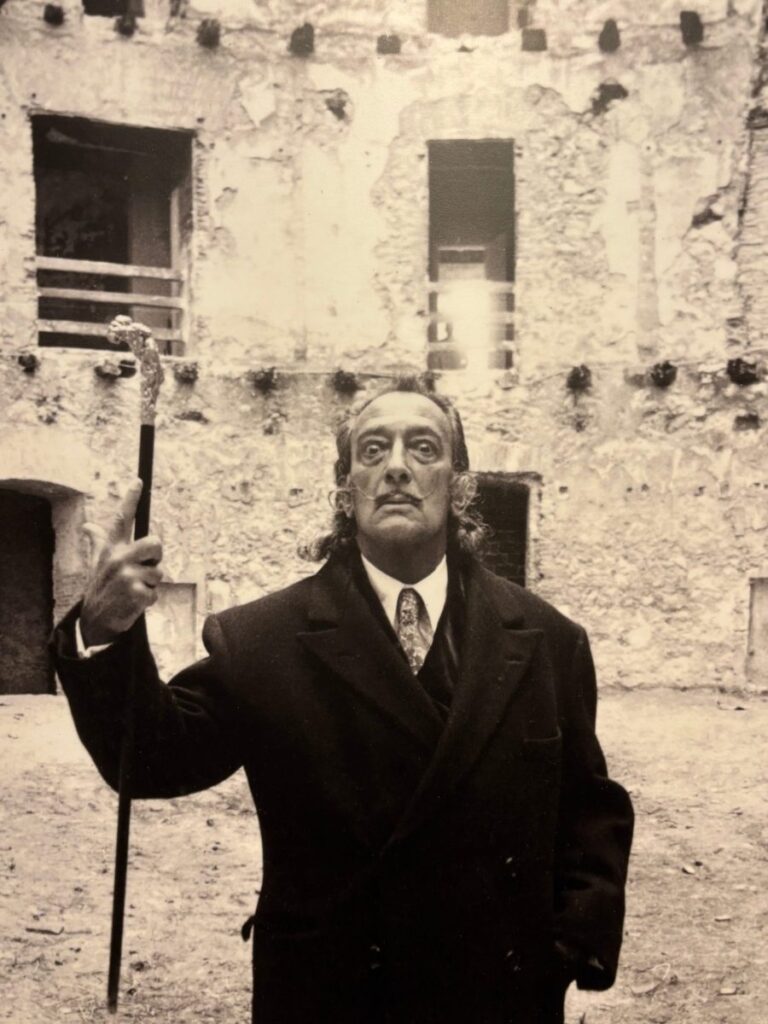
I’m still on the fence about whether or not I liked the place I’m about to tell you about. I was excited to go, but after I arrived and learned more, the jury is still out.
Visiting Figueres on a day trip was high on my list during this visit to Barcelona. The town itself isn’t much to write home about, but it is well known for being the birthplace of Salvador Dalí and houses most of his work in a museum that he designed and built for himself. Nothing like telling people what your legacy will be instead of letting them decide for themselves…Picasso did a similar thing. On the contrary, he purposely did not want any sort of information included with the self-guided museum tour – no audio guide or pamphlets about him or the museum, he wanted you to interpret that for yourself. To say Dalí was a confusing and complicated man is an understatement, and I think he wanted it that way.
Here are some interesting facts I found on the internet before my visit.
Dalí Theatre-Museum (Teatre-Museu Dalí)
-
Designed by Dalí himself, it’s the largest surrealist object in the world.
-
Built on the site of his childhood theater, which was destroyed in the Spanish Civil War.
-
Features immersive installations, interactive exhibits, optical illusions, and many of his most important works.
-
Dalí is buried in a crypt beneath the stage.
I looked up the train schedule online and hopped an early morning train from Barcelona. Funny enough, I was surrounded by Americans. I was seated next to a young guy who was studying abroad in Barcelona…his parents were visiting him and seated behind us. Across the aisle were two American women talking loudly. I made a joke to the guy next to me about how you can always spot the Americans because everyone within a ten-mile radius can hear their life story in just a few minutes, including childhood trauma and career woes – it’s our claim to fame – loud and obnoxious (I’m including myself in that stereotype). He laughed, and we ended up chatting (quietly) the remainder of the two-hour journey.
From the train station, everyone single-filed out the doors and headed for the local bus waiting to take us to the center of town (they have this down to a science) and then a brief walk to the museum.
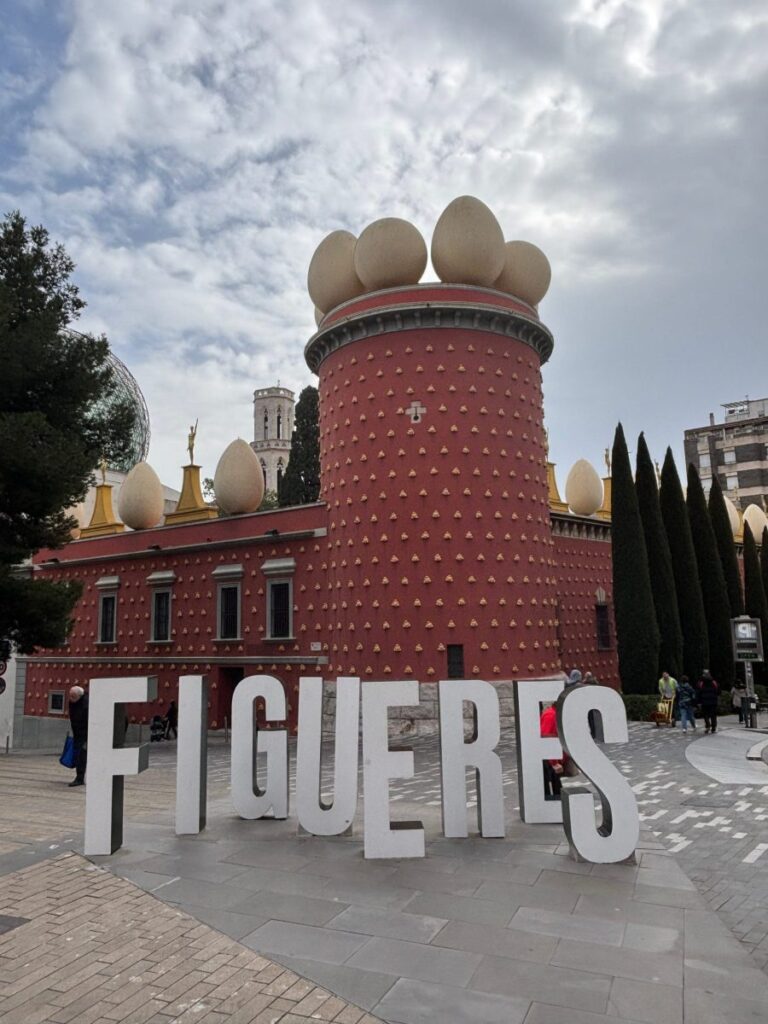
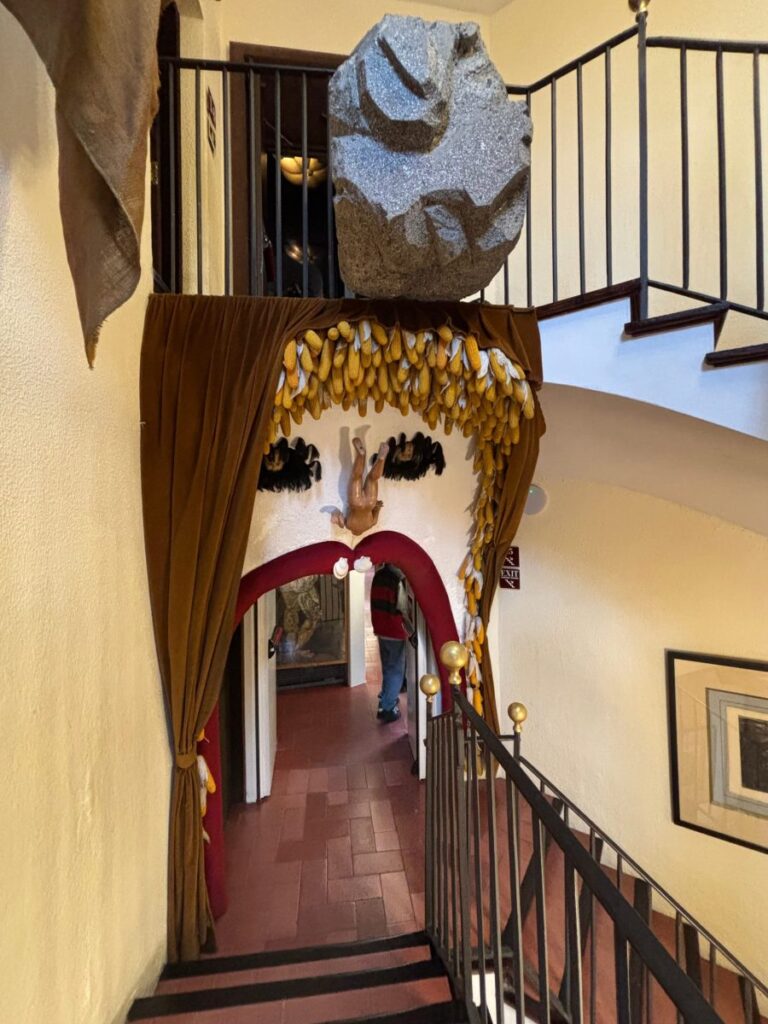
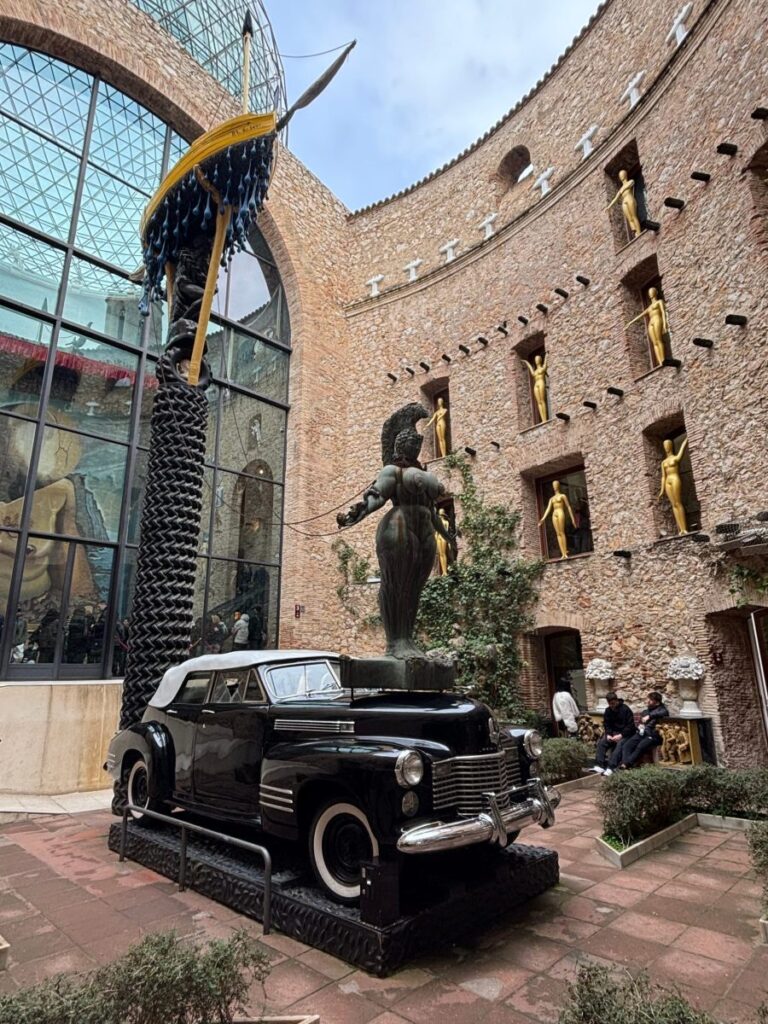
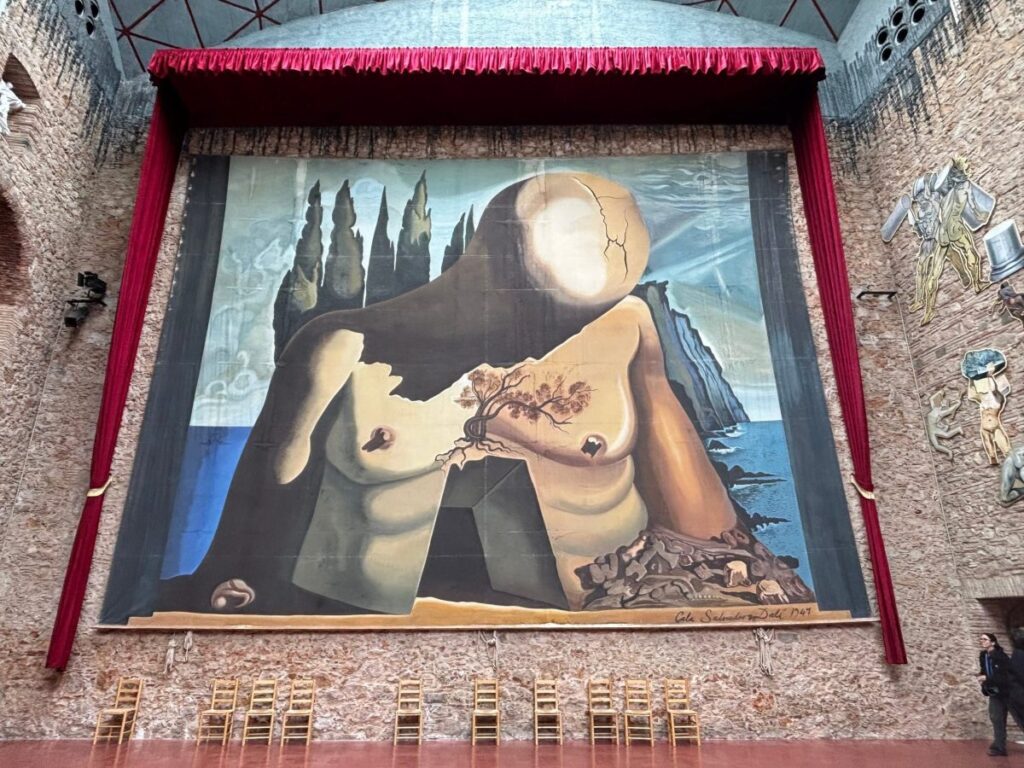
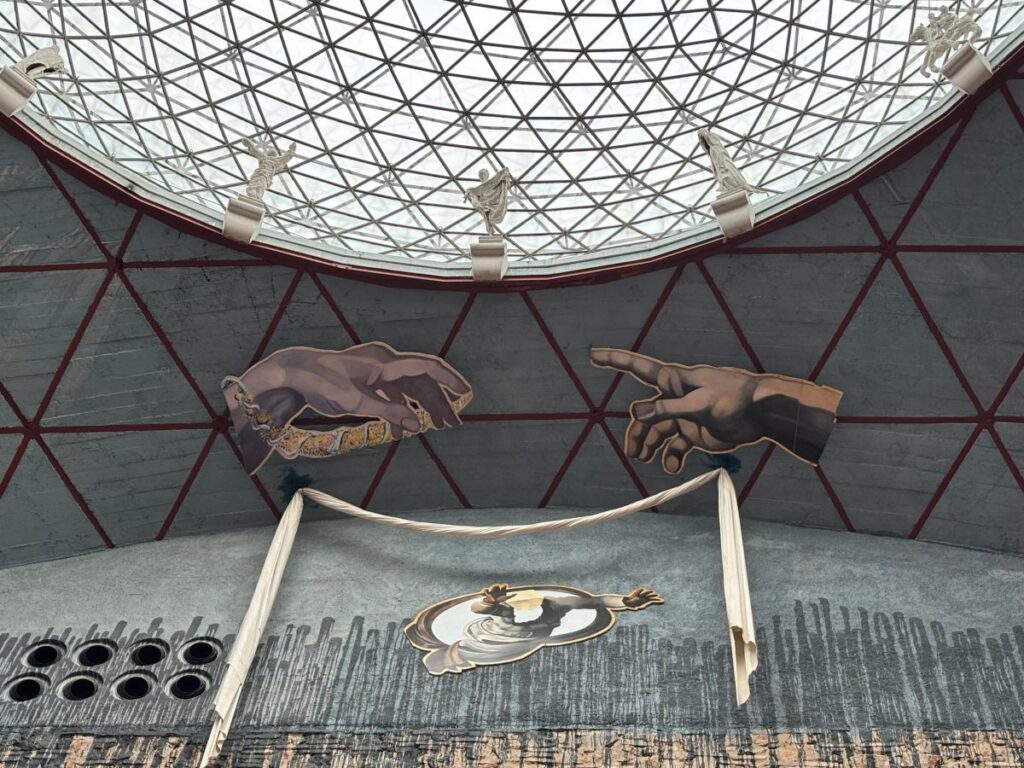
Once inside, I didn’t know what to think. It was stimuli overload. It was like being inside a carnival fun house…like the one at Coney Island in Brooklyn. Wild, whacky, bizarre, and larger than life. It housed incredible life-size objects, paintings, jewelry, sculptures…you name it and it was probably inside this museum. Here is a sneak peek but more about the art in a minute.
Since I wanted to know more about Mr. Dalí, I searched the internet for some interesting facts to get a better understanding of this mystery man. Don’t worry, I’ll share my findings…
Salvador Domingo Felipe Jacinto Dalí i Domènech, born May 11, 1904, in Figueres, Catalonia, Spain. He also died in Figueres on January 23, 1989.
-
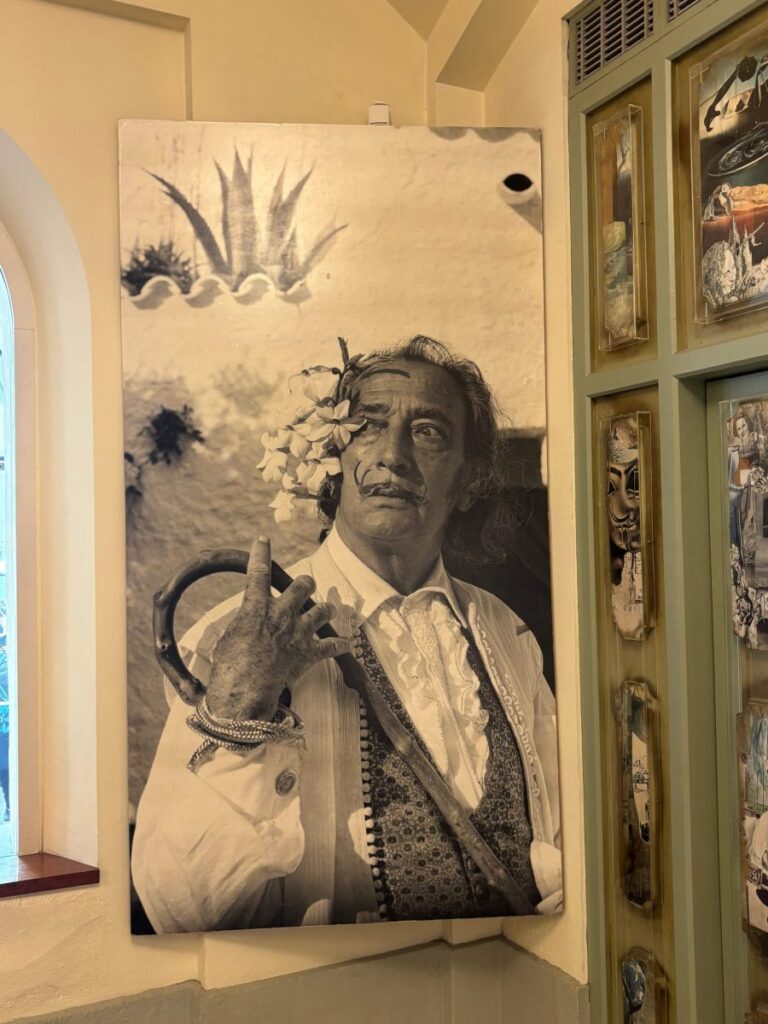
Known For: Surrealism, eccentric personality (giving unconventional interviews), dreamlike and bizarre imagery. And I’ll add mustache – everyone recognizes him by his famous handlebar mustache.
-
He was a painter, sculptor, filmmaker, photographer, and performance artist. He’s most famous for creating iconic, dream-like images that challenge logic and perception.
-
He claimed to be the reincarnation of his brother: Dalí believed he was the reincarnation of his older brother (also named Salvador), who died before he was born. This belief deeply influenced his psyche and art.
-
He was obsessed with time: One of his most famous works, The Persistence of Memory (1931), featuring melting clocks, symbolizes his fascination with time, memory, and the unconscious.
-
Multidisciplinary Artist: He worked across painting, sculpture, film (collaborated with Alfred Hitchcock and Luis Buñuel), photography, fashion (designed for Elsa Schiaparelli), and even advertising (for Chupa Chups).
He also had an extremely complex relationship with his wife Elena Ivanovna Diakonova (Gala Dalí).
-
Gala was born in Russia and originally married to (and the muse of) poet Paul Éluard and became Dalí’s lover and eventual wife. She was ten years older.
-
He adored and idealized Gala (to the point of obsession), frequently depicting her in his art and signing some works as “Gala-Dalí” to honor their creative partnership.
-
Gala was fiercely protective and controlling of Dalí’s career. She was seen as a muse and manager, though some criticized her for exploiting him later in life.
-
Dalí bought her a castle in Púbol, which he could only visit with written permission from her—a testament to the complexity of their relationship.
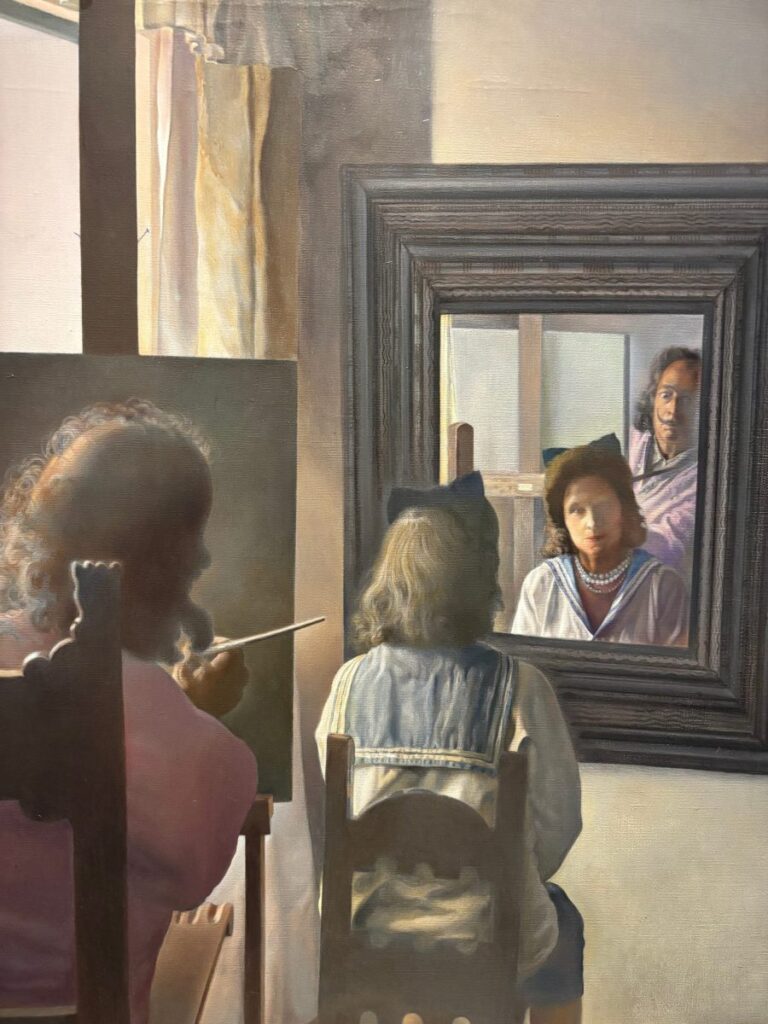
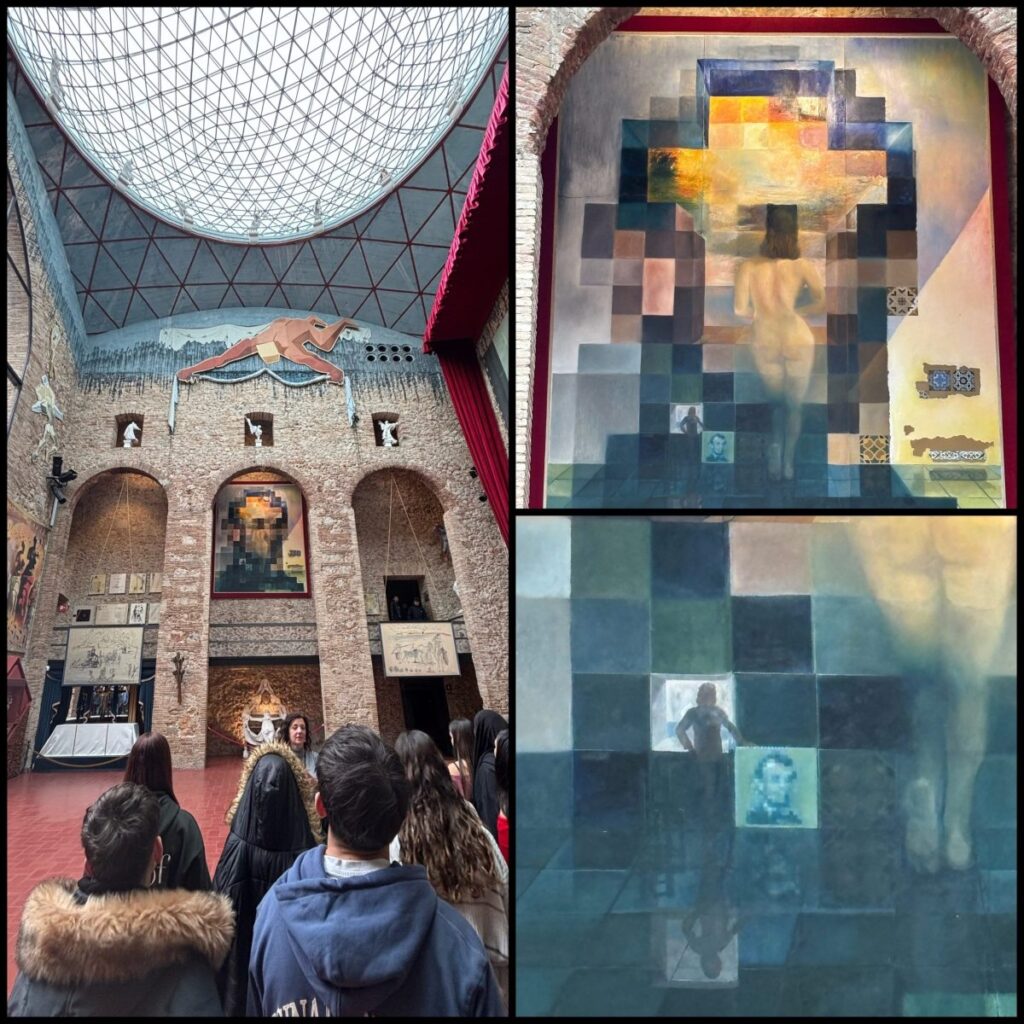
There are many interesting pieces in the museum, but one that caught my eye was this collage. It wasn’t until I overheard an art teacher explaining it to her students that I realized how it worked (you literally have to get into the mind of Dalí to understand some of the things in this museum). She had all of her students take
out their phones, open the camera, and look at the collage on the phone. Only then could you see it was Abe Lincoln – otherwise, to the naked eye, it was just a bunch of fuzzy pictures (I did my best to recreate the moment with these photos). Oddly enough, I happened to be visiting on Honest Abe’s birthday.
Here are a few things I found about his art and symbolism.
-
Key Symbols:
-
Melting Clocks: Fluidity of time.
-
Ants: Decay and death.
-
Eggs: Birth and hope.
-
Drawers: Hidden secrets of the psyche.
-
-
“Paranoiac-Critical Method”: A technique Dalí developed to access the subconscious and create double images, hallucinations, and dreamlike realities.
-
Later Religious and Scientific Themes: In his later years, Dalí’s work turned toward nuclear mysticism, combining religion, DNA, and quantum physics (e.g., “Corpus Hypercubus” – located in NYC).
Here are a few pieces that caught my eye.
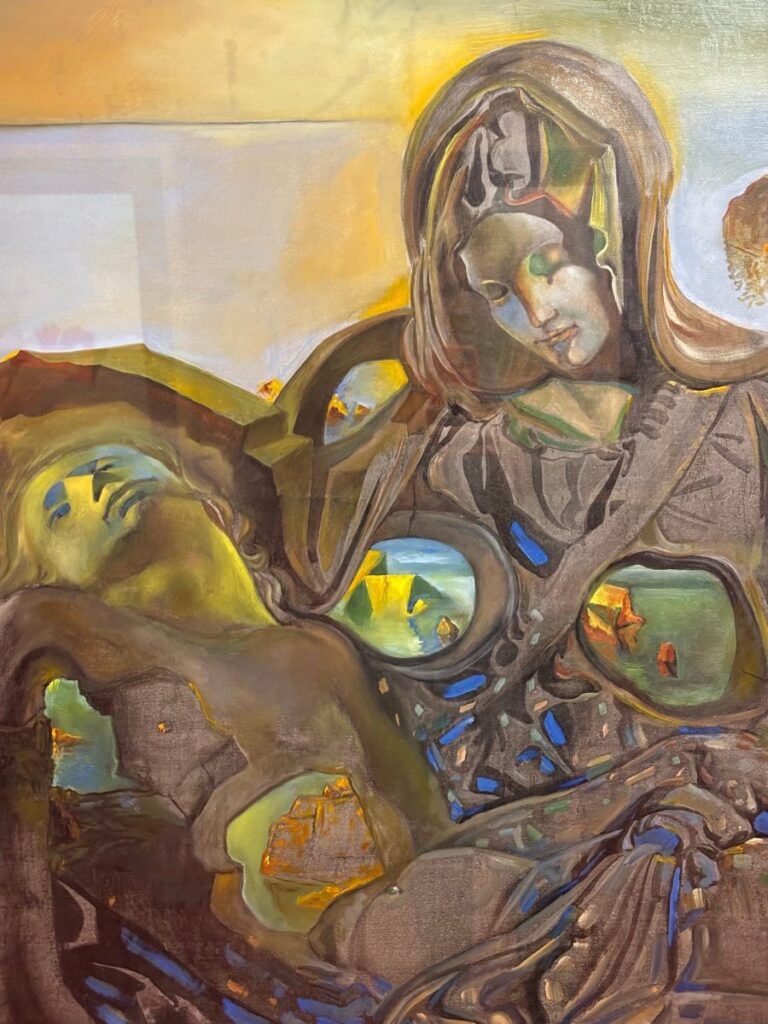
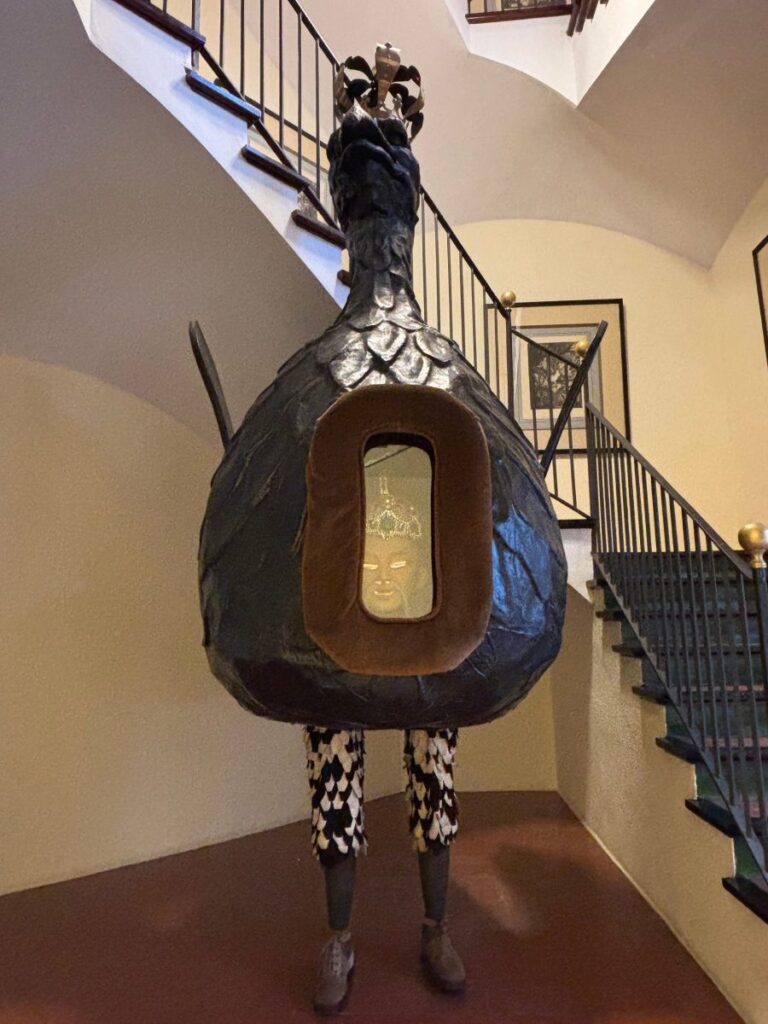
He seemed to have an obsession with religion.
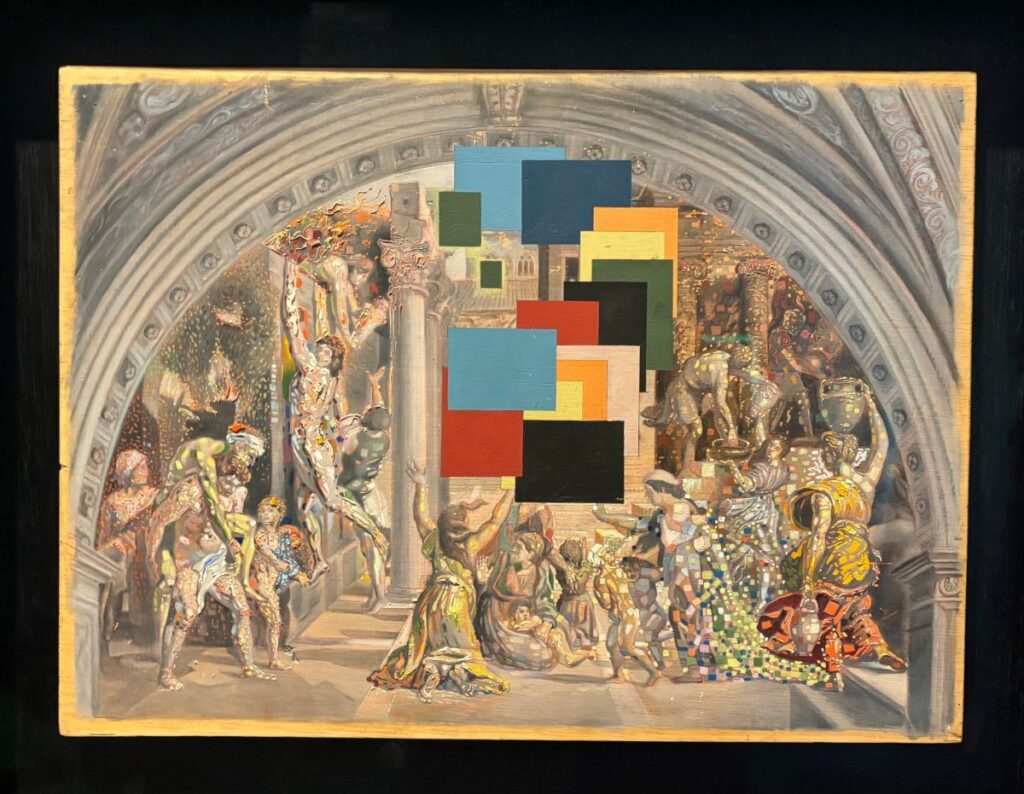
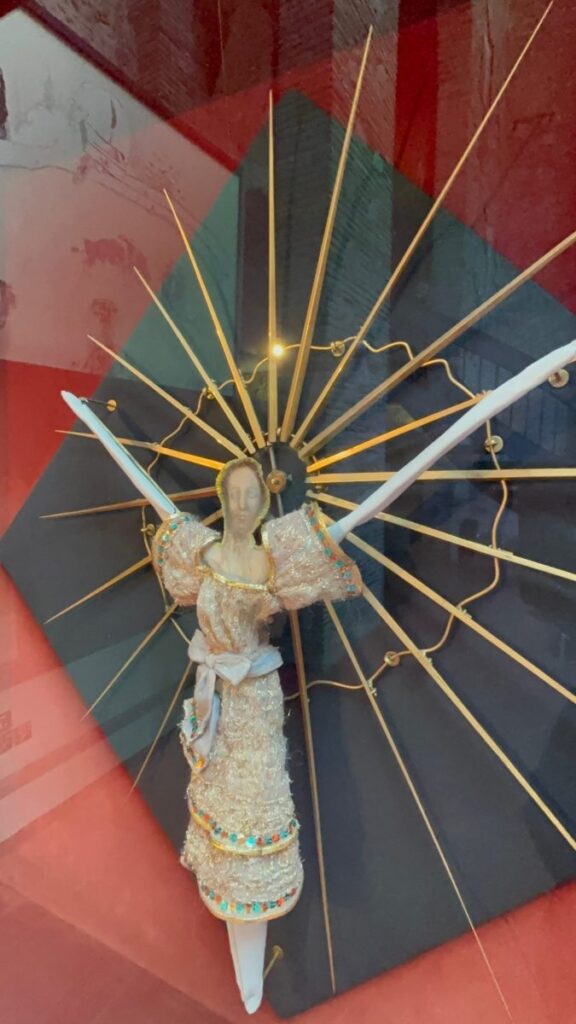
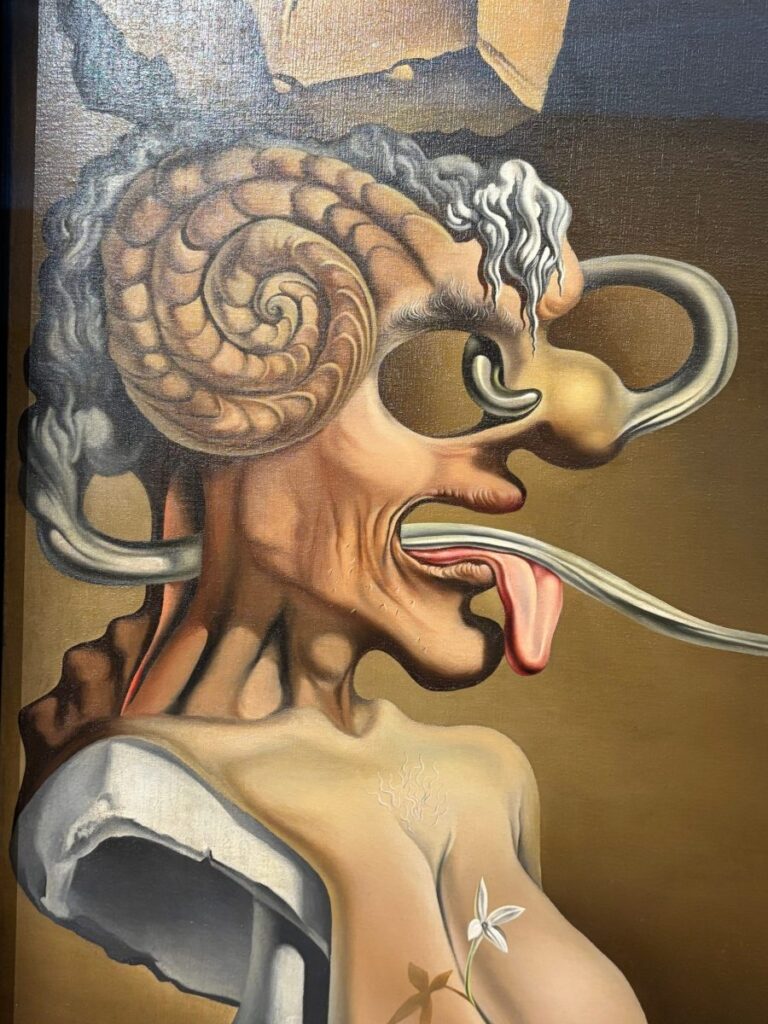
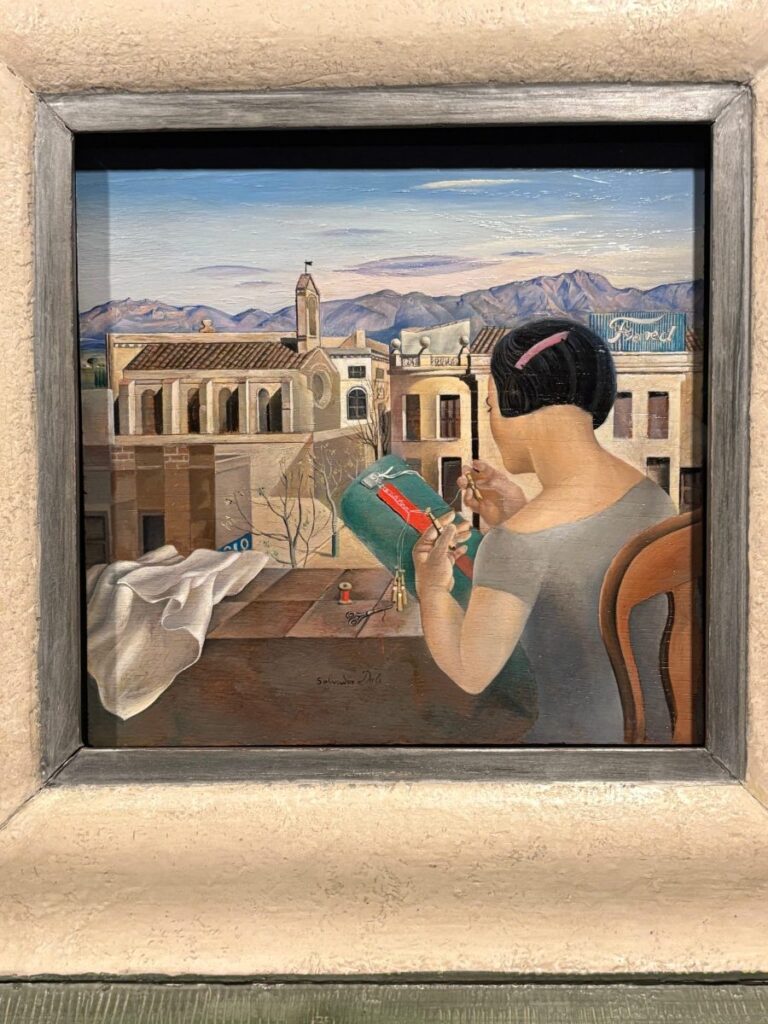
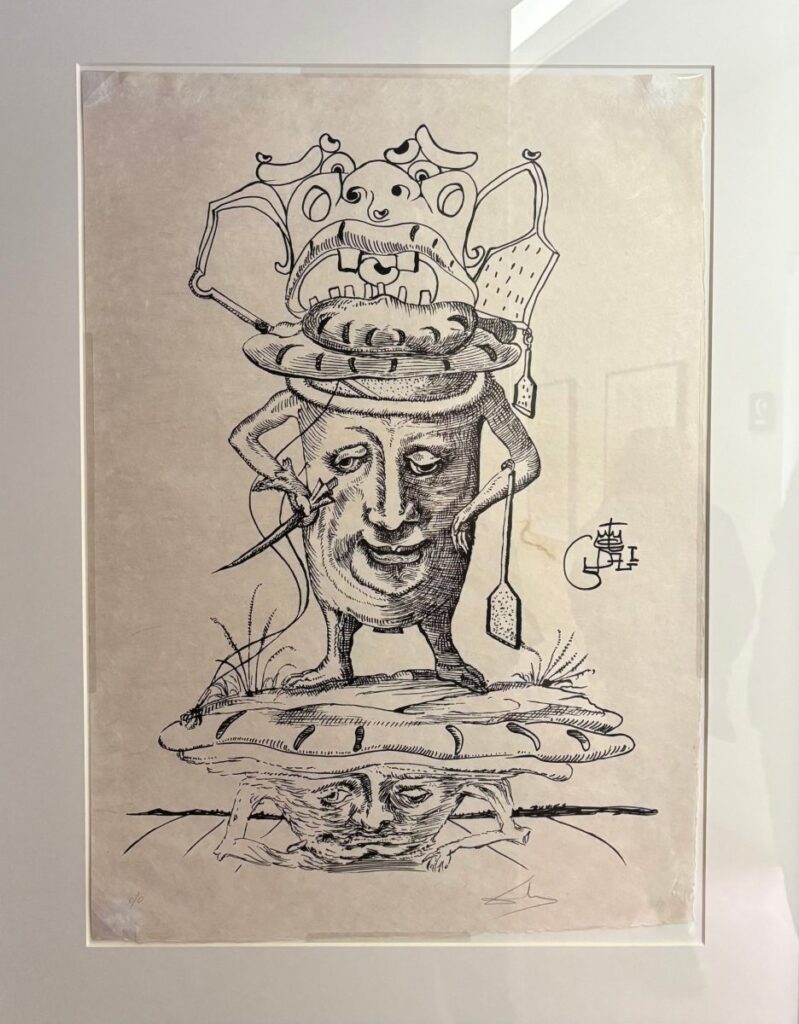
Look closely at the face staring back at you.
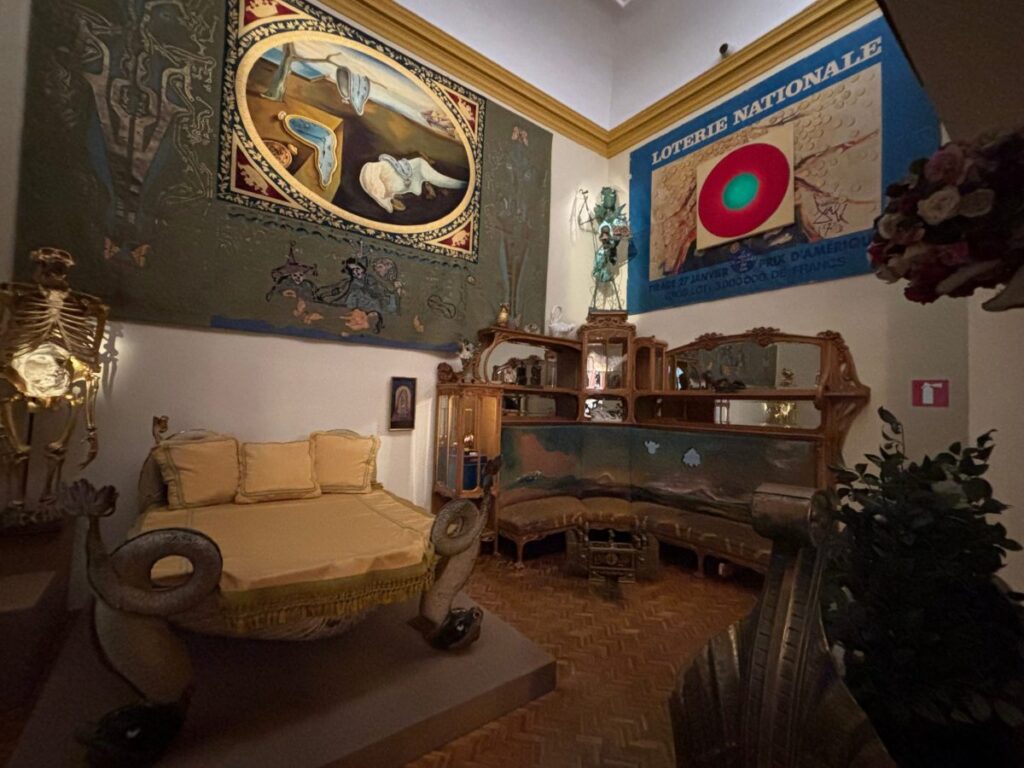
A recreation of his bedroom. Not sure I’d be able to sleep with that skeleton next to the bed.
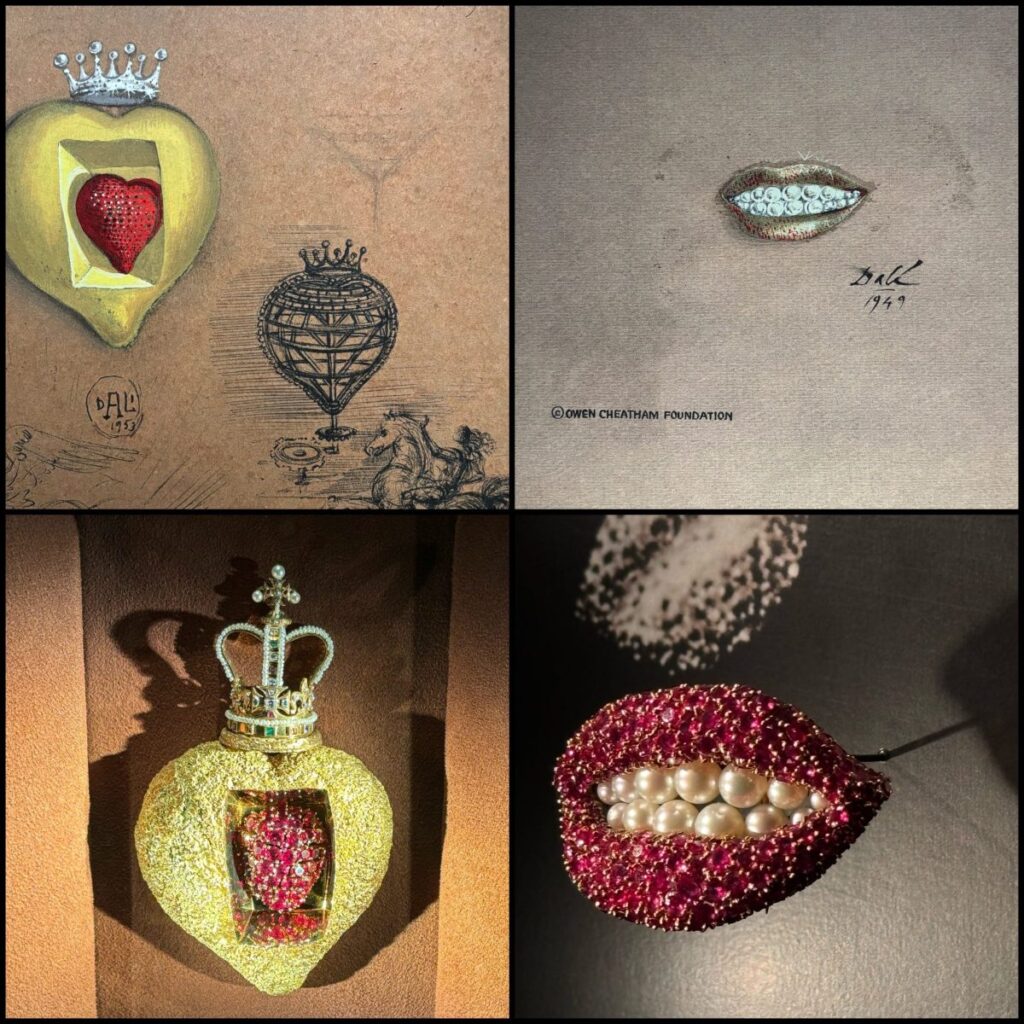
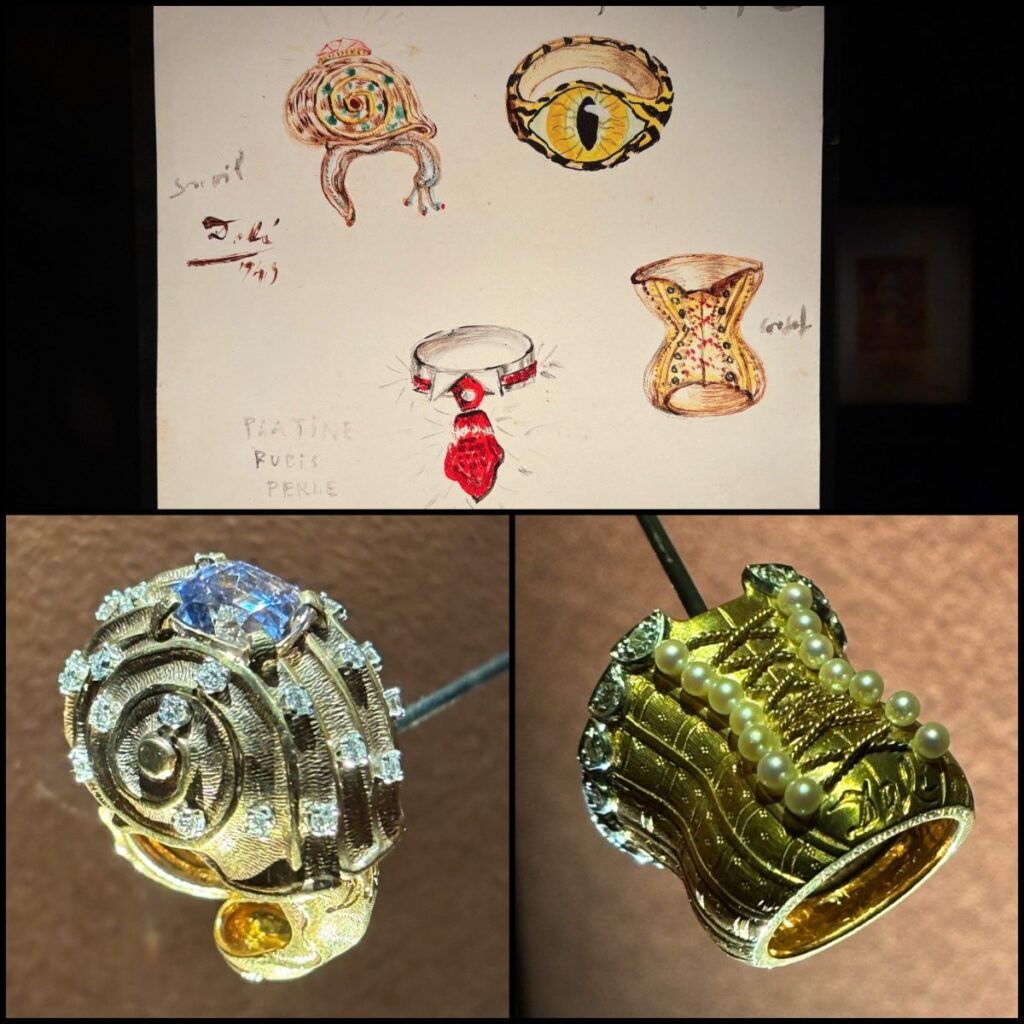
One of the more interesting subjects I thought he created was custom jewelry. He would sketch out each piece and use stunning natural gemstones and materials to bring the brilliant designs to life.
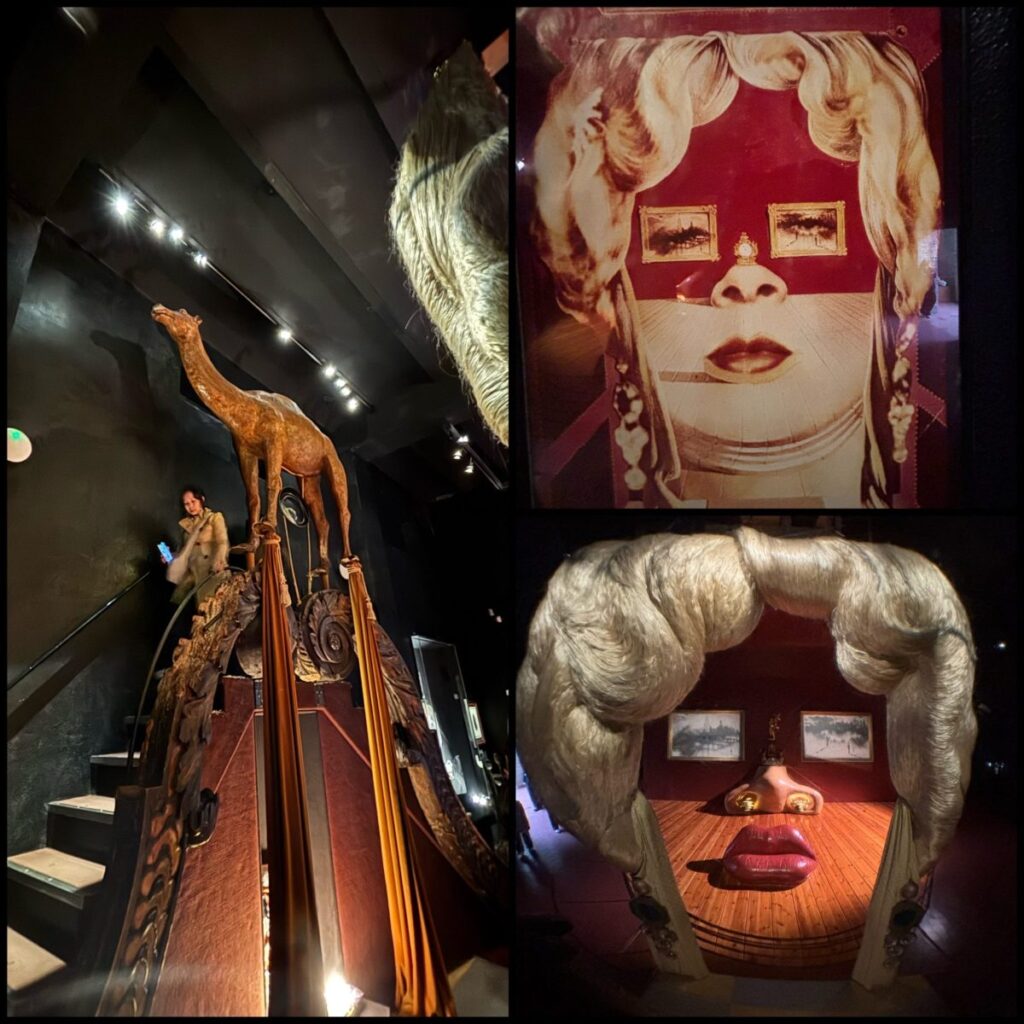
From what I read, he did not create this sculpture/optical illusion pictured below, but it was designed based off of a painting he did of Mae West. It is very wild. You walk up the stairs to the camel and look through the big magnifying glass to see the image of Mae West made out of other pieces of art…a red couch designed as lips, paintings on the walls of a river and bridges, and he hair is made of some sort of rope, but when you walk into the room from the side view, you have no idea what it is because everything is spaced very far apart. It only comes into view with the magnifying glass. It was one of my favorite pieces in the museum. Plus, I just love Mae.
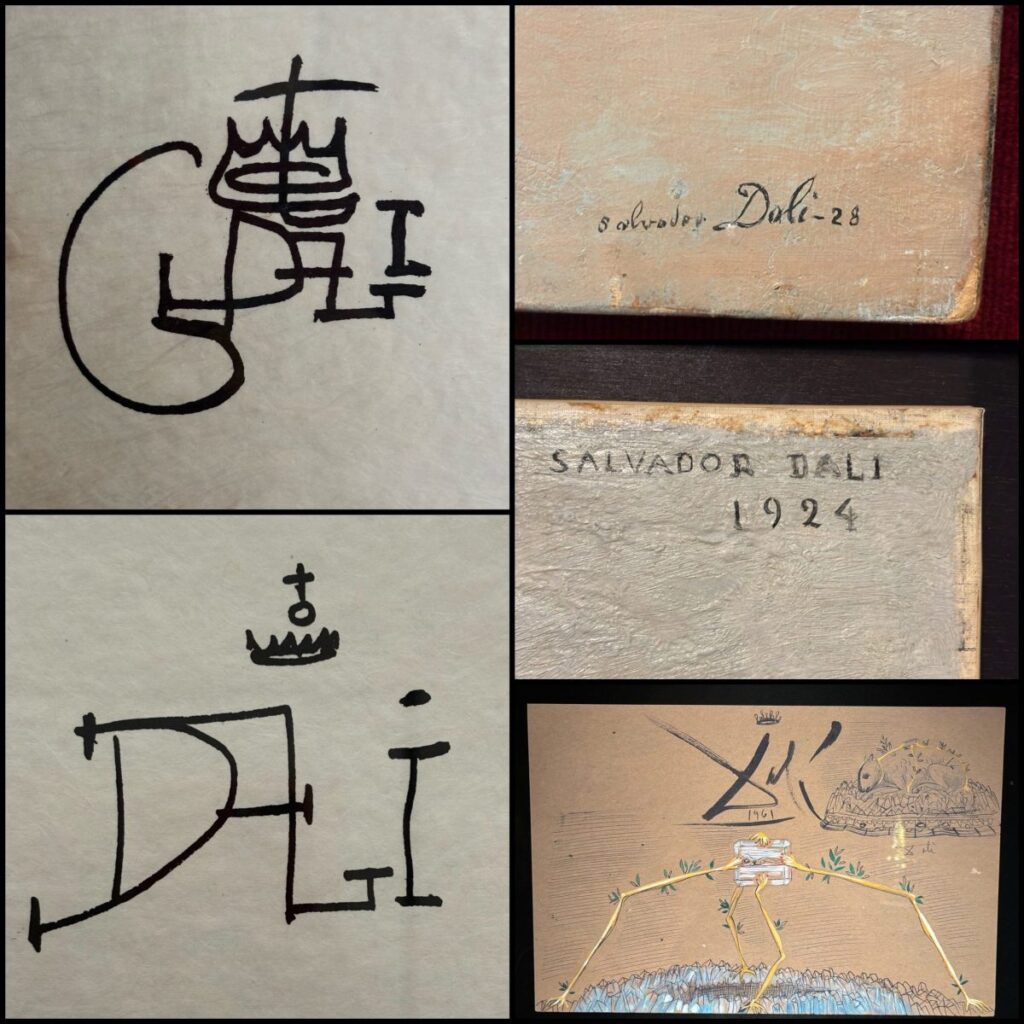
Something else I noticed as I strolled through the museum meticulously looking at each piece, trying to feel what he wanted us to understand about his complex art, was that his signature changed…a lot. And not only did the signature change, but the location of it did too. Sometimes it was in the traditional bottom right, then the top left, and sometimes, it was in the middle at the top, looking almost as if it was part of the artwork itself. He even used his wife’s initials to show their collaboration.
Don’t get me wrong, the museum was great and I’m glad I went, but as I said, the jury is still out (months later) as to how I feel about him and his art. I think that was probably the point he was trying to make. People are complex creatures with multiple layers, so we should keep an open mind.
If you get a chance to visit, go. It will force you out of your comfort zone and to look at art through the eyes of either a madman or a genius…or both. You can decide.
Good Things List
-
Wild and wacky art – there is a place in this world for all of it!
Much love & gratitude. Namaste 🙏
Don’t forget to like and share this post, please. Thank you.
To see more photos and videos from my adventures, follow me on social media. Facebook, Instagram, YouTube, TikTok, and Threads or connect with me on LinkedIn.
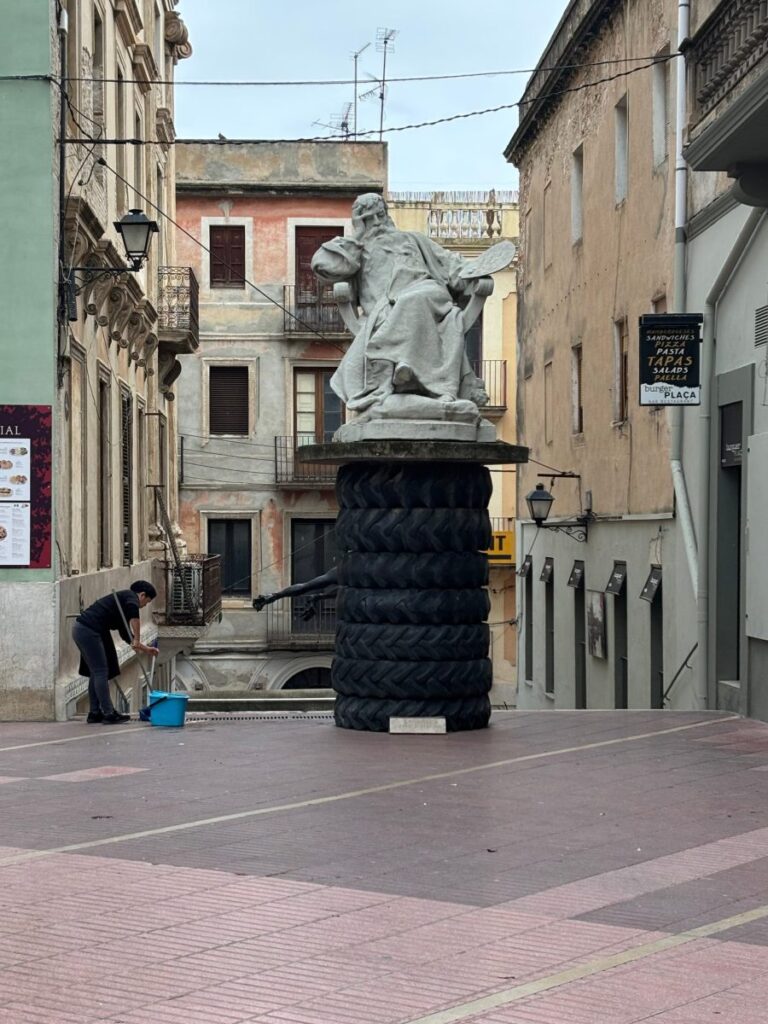
A sculpture outside the museum.
If you look closely at the photo below, the sculpture is made up of corn, life-size dolls, doll heads (for the eyes), hair (wigs) for the eyelashes, and seashells for the teeth.