*These events took place in September 2025.
*This post is very long, so if it is cut off, be sure to click “View Entire Message” at the end.
“At noon, they are thrown to the lions.” Tertullian (I plan to toss James into the pit – so noontime works perfectly for my schedule.)
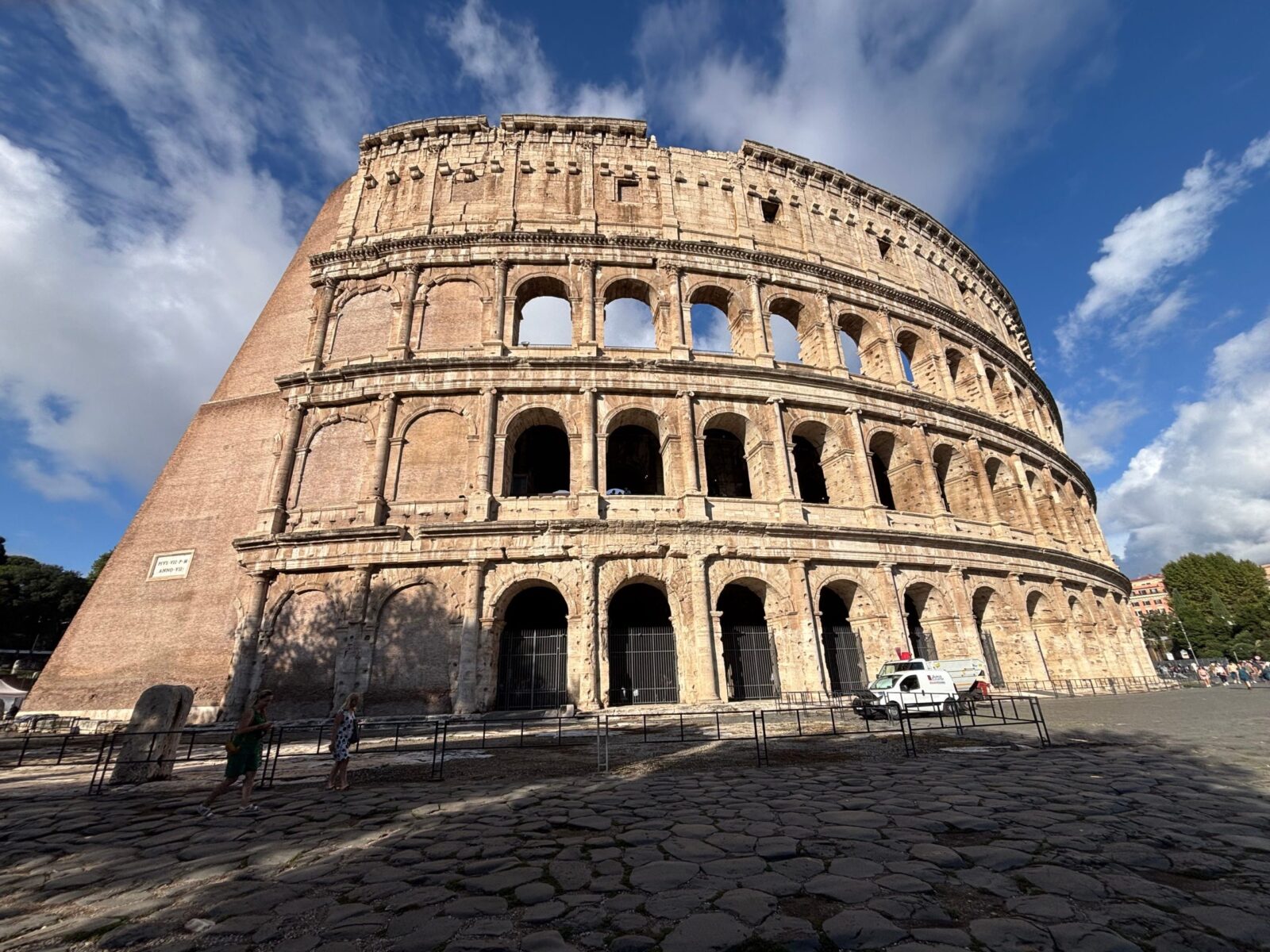
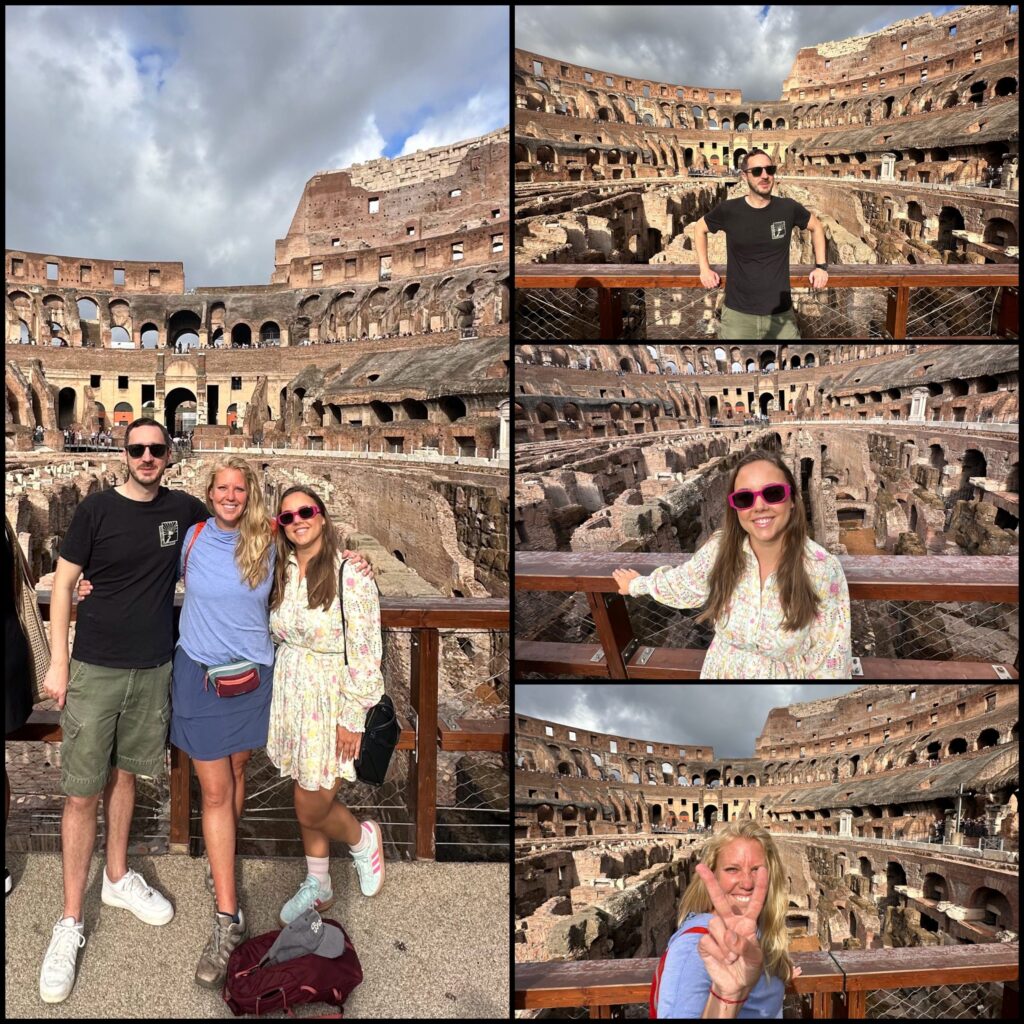
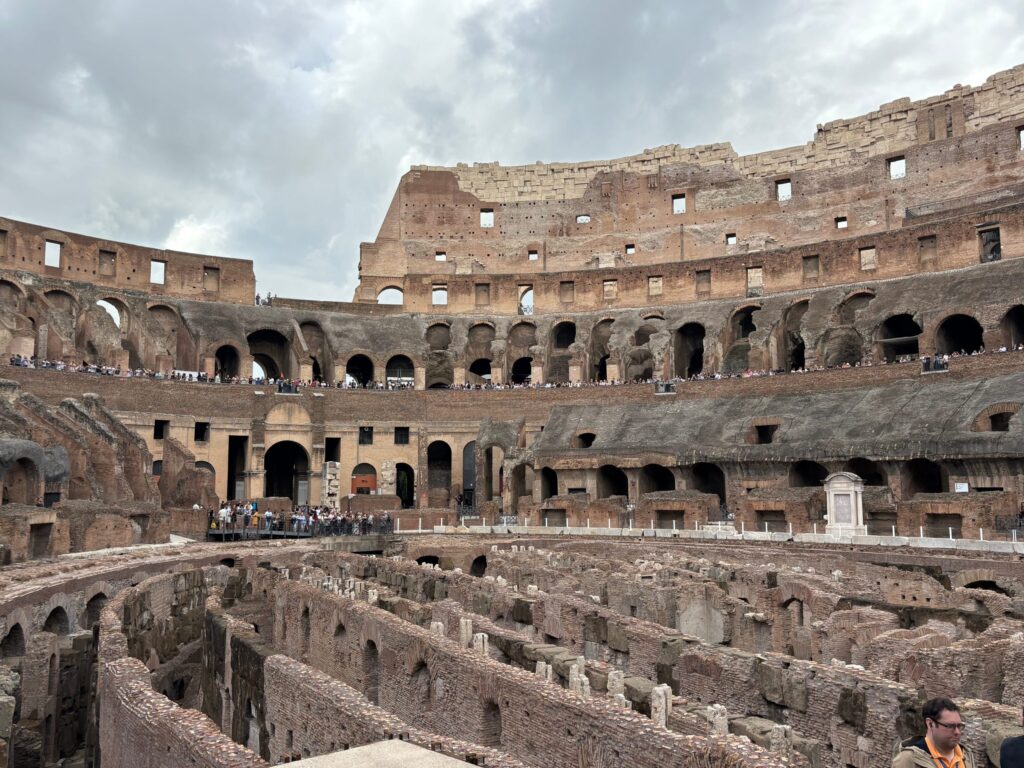
The shenanigans in Rome continue with Ingeborg and James. Our first stop? None other than the world’s first arena – and one of the *New Seven Wonders of the World, the one the only Roman Colosseum – the one and only Roman Colosseum. I hadn’t visited in 23 years, so I was just as excited to see it again as they were experiencing it for the first time.
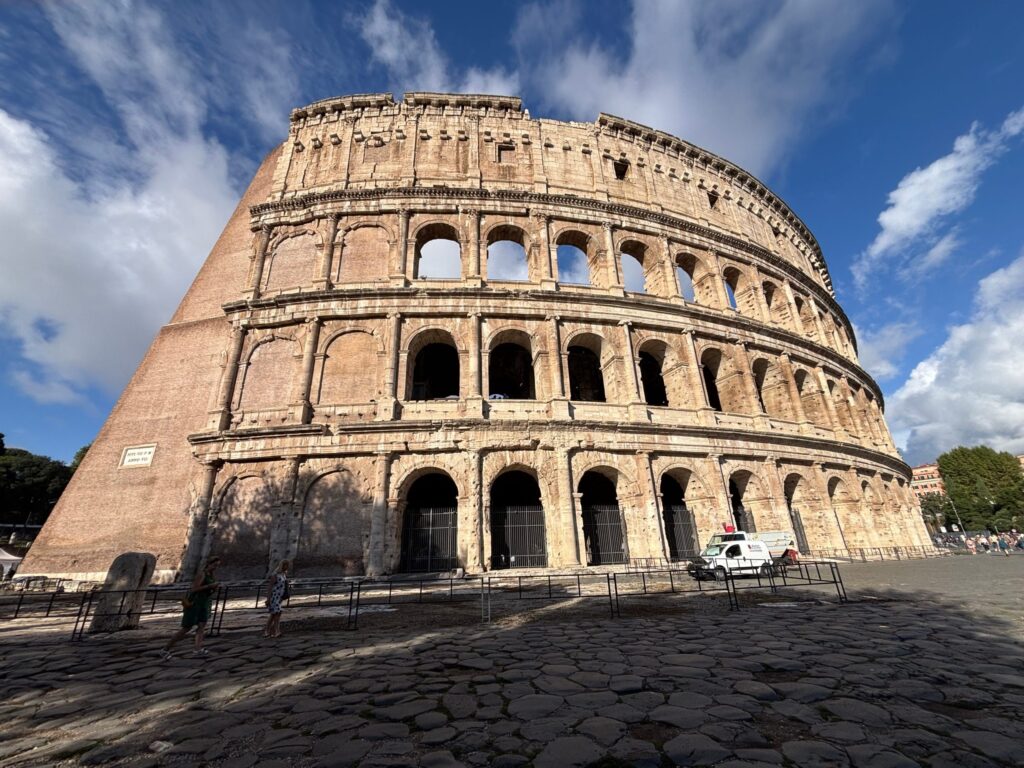
This building is incredibly controversial. Some people love it for its historical significance, while others dislike it for the very same reason—but not all of the information we hear about this place is actually correct. For example, not all gladiators died in the arena, and many were celebrities who even sold merchandise! “Get your Maximus t-shirt, right here before they are gone!”
I’ve done some research, so you don’t have to. Here is an interesting and comprehensive video I found on YouTube, and some wild facts I found online.
As someone who has worked in the arena business, I’m especially impressed by how the Romans set the standard for many modern venues. Their crowd control alone is remarkable.
The Building:
-
Built insanely fast:
Construction took about 8–10 years (opened in 80 AD). For something that massive, that’s wild—even by modern standards. -
Concrete cheat code:
Romans used volcanic ash concrete that actually gets stronger over time. That’s a big reason the Colosseum is still standing while newer buildings aren’t. -
It seated ~50,000 people—with assigned seating.
Social class determined where you sat. Senators up front, commoners up high, and women (usually) in the cheap seats at the very top. -
80 entrances = smooth crowd control:
The design allowed tens of thousands of people to enter or exit in minutes. Modern stadiums still copy this layout. -
Numbered seating & tickets:
Romans had numbered arches and seat assignments—basically ancient ticket stubs. -
Elevators before electricity:
Around 28 wooden elevators powered by slaves and pulleys lifted animals and scenery straight onto the arena floor. -
It had a retractable roof.
A massive fabric awning called the velarium could be pulled over the crowd to block the sun. Sailors from the Roman navy were hired to operate it because it was basically ancient ship rigging. Watch the video above to see how it worked. -
It could flood…kind of.
Early on, the arena was sometimes flooded for mock naval battles (naumachiae). Later, they built underground tunnels, which made flooding impossible—but way more dramatic shows possible. I read that Synchronized swimming (which debuted at the Olympics in 1984) dates back to ancient Rome – and was even performed in the Colosseum. -
The underground was a horror movie.
Beneath the arena floor was the hypogeum: elevators, trapdoors, cages, and pulleys that could suddenly launch animals or fighters onto the stage with zero warning. -
The name “Colosseum” isn’t about its size.
It likely comes from a giant statue of Nero—the Colossus—that once stood nearby.
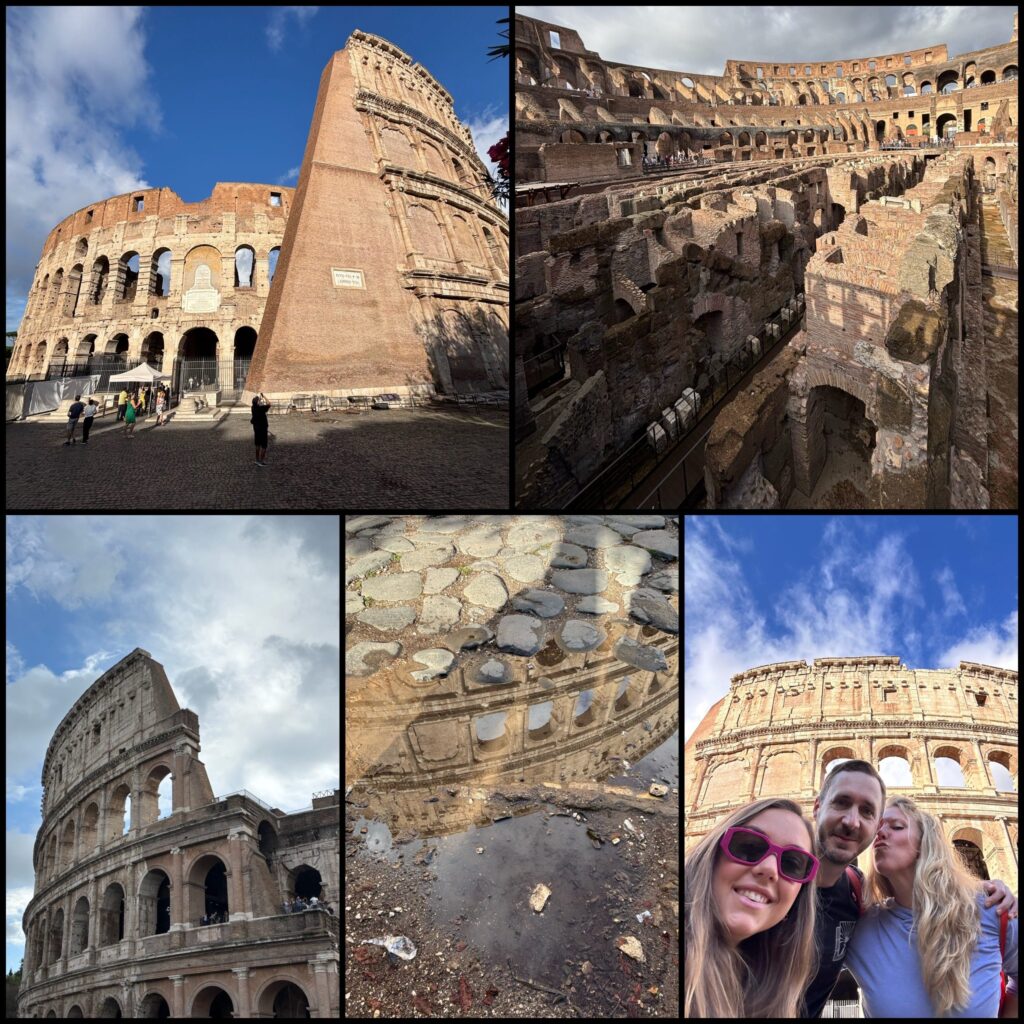
I think we looked at this venue from almost every angle of this darn building – it is absolutely mind-blowing.
The Gladiators:
-
Gladiators were basically celebrities.
Some had fan clubs, endorsement-style merchandise, and even graffiti declaring love for them. Also, Maximus in the US version of Gladiator, starring Russell Crowe, is actually the name Massimo in Italian. -
Gladiator sweat = skincare.
Romans believed it was good for your complexion. Kids scraped sweat off gladiators and used it as a beauty product. They sold it in jars. Ancient Sephora, but cursed. ***This little factoid is controversial and difficult to confirm, so I’ll let you decide.
-
Not everyone died.
Despite the reputation, most gladiators didn’t fight to the death every time. They were expensive to train, and killing them constantly would’ve been terrible business. -
Some fighters were women.
Rare, but real. Female gladiators (gladiatrices – I want to be one! Kidding, I’m a whimp, so I would probably die fairly quickly) existed and were considered extra exotic. -
Thumbs down is mostly a lie.
The famous “thumbs down = death” gesture probably isn’t accurate. The signals were more complex and not standardized.
Myth vs. Reality:
❌ Myth: “Every fight ended in death.”
✅ Reality: Many ended in surrender or mercy. Gladiators were valuable assets.
❌ Myth: “Gladiators were all slaves.”
✅ Reality: Some were volunteers chasing fame, money, or social mobility.
❌ Myth: “Christians were constantly martyred there.”
✅ Reality: Some executions happened, but it wasn’t the main venue for Christian persecution—that idea grew later.
❌ Myth: “It was abandoned after Rome fell.”
✅ Reality: Nope. It stayed in use for over 1,000 years in various forms.
Random tidbits but fascinating:
-
Over 3,500 plant species are growing in the ruins today.
-
The Colosseum is one of the largest earthquake-damaged buildings ever still standing.
-
It’s lit up at night whenever a country abolishes the death penalty. Subtle but powerful.
-
To Romans, this wasn’t cruelty.
It was:-
Social order
-
Moral lessons
-
Imperial power
-
Community bonding
To us, it’s horrifying.
To them, it was Tuesday. -
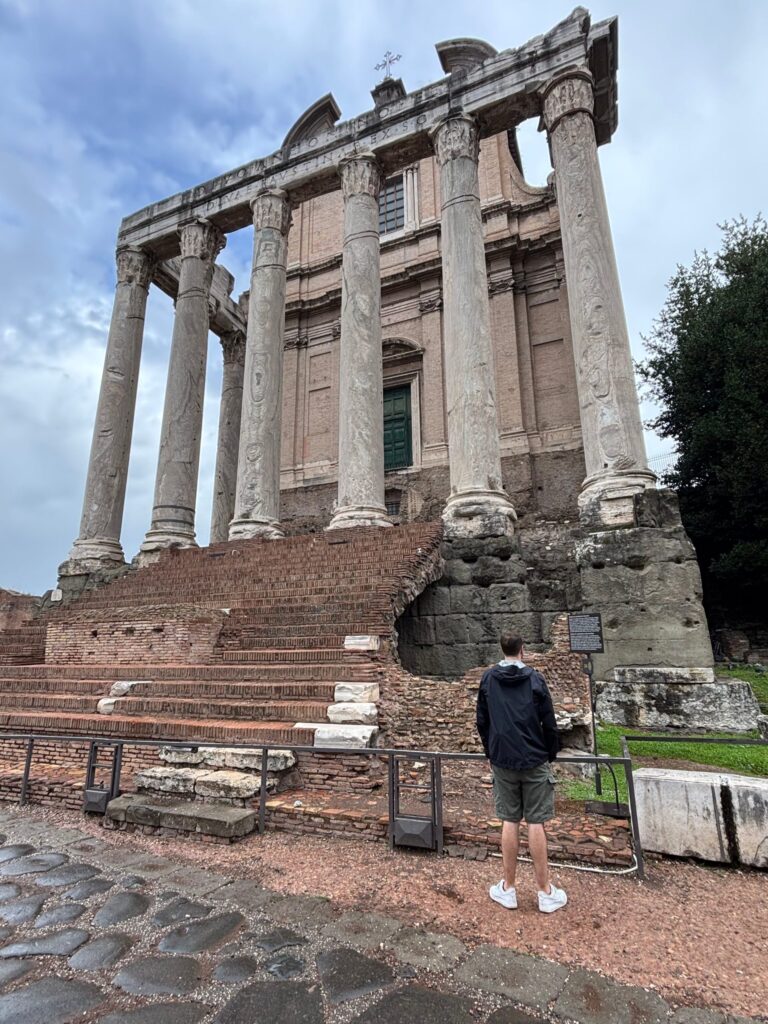
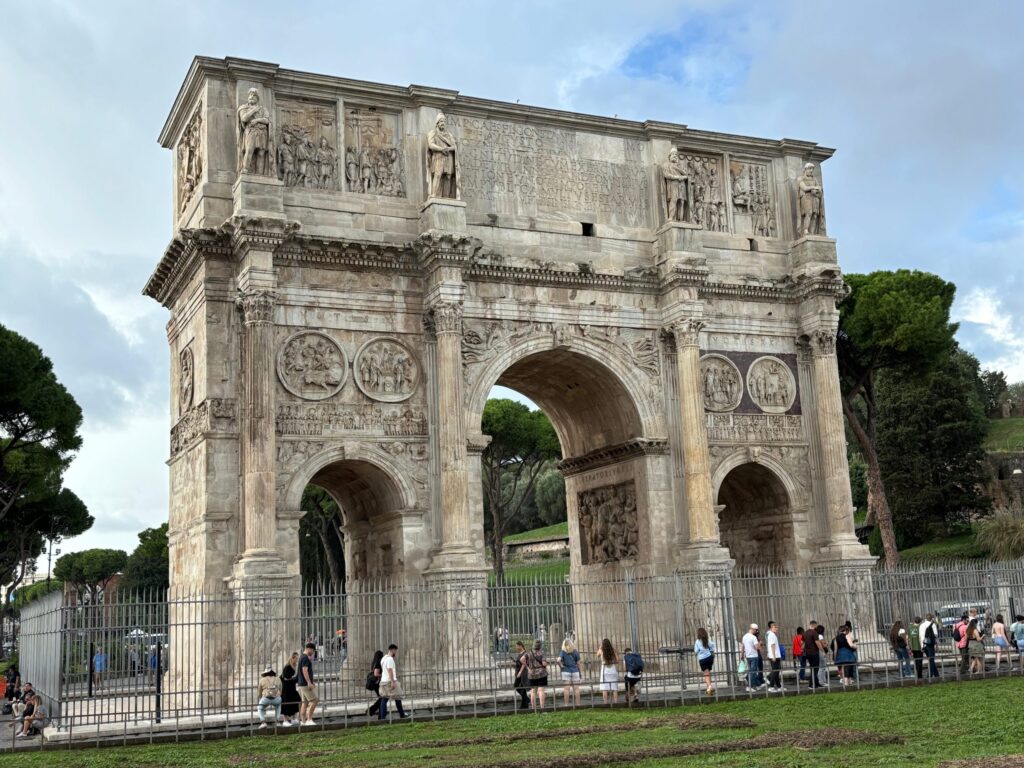
Next stop, the Roman Forum. The heart and soul of Roma! Literally, everything happened here.
-
It was Rome’s downtown.
Politics, religion, trials, business deals, riots, elections, gossip—all in one muddy valley. -
Older than the Colosseum.
The Forum developed around 700 BCE, centuries before the empire. It grew layer by layer as Rome evolved. -
It started as a swamp.
Romans drained it using the Cloaca Maxima, one of the world’s oldest sewer systems—and it still partially works today. -
This is where Julius Caesar was cremated.
His funeral pyre was lit in the Forum, and people were so emotional they rioted afterward. -
Speeches could get you killed.
Political enemies were openly attacked here—verbally and physically. Roman politics was brutal and very public. -
Heads on display were normal.
After executions, enemies’ heads (including Cicero’s) were displayed on the Rostra, the speaker’s platform. -
The Senate wasn’t always in the Senate House.
Senators often debated outside in the Forum so the public could hear—and shout back. -
Law courts were open-air.
Trials happened in public. People watched for entertainment—and to learn how the law worked. -
Markets and shopping were everywhere.
Vendors sold food, jewelry, statues, and political merch. It was loud, crowded, and messy. -
Graffiti was everywhere.
Love notes, insults, campaign slogans, jokes. Ancient Romans were big on public commentary.
After The Fall of Rome:
-
It became a cow pasture (called the Campo Vaccino).
-
Buildings collapsed and were buried by centuries of dirt.
-
Medieval Romans reused stone for churches and palaces.
-
It was slowly excavated in the 18th–19th centuries—sometimes by basically digging and hoping for the best.
In Conclusion, The Roman Forum Was:
-
Rome’s stage, courtroom, marketplace, and best of all, the rumor mill.
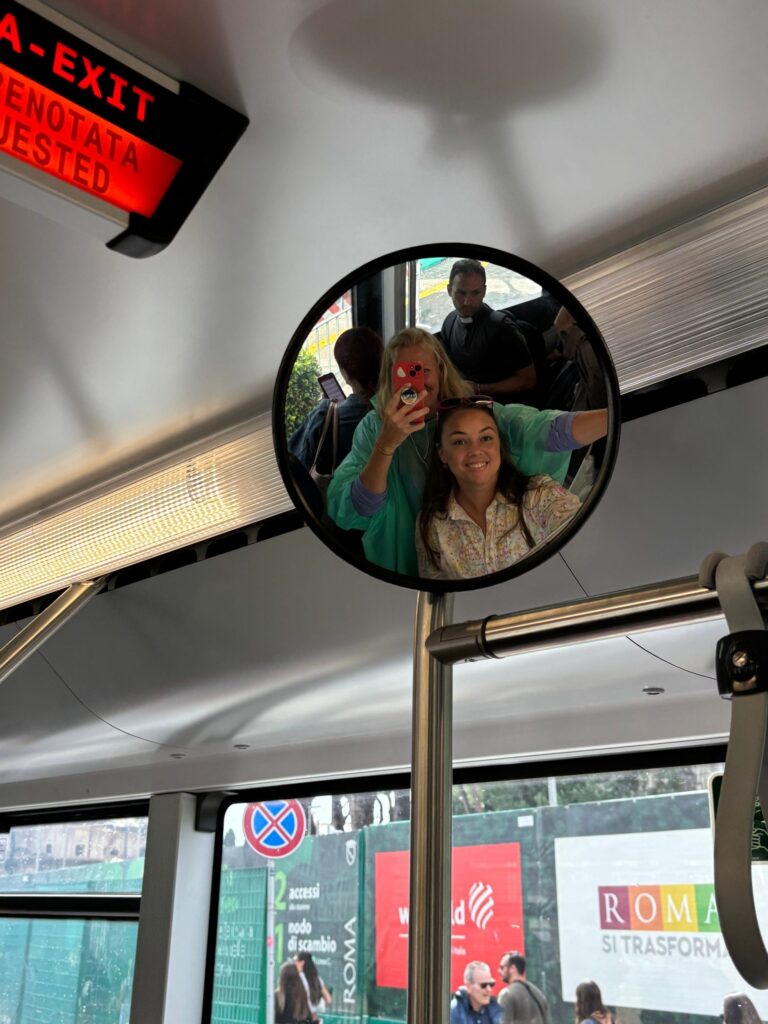
After breakfast, we split up. James headed off to meet up with his friend Mo, while Ingeborg and I hopped a bus across town to meet up with Mattia, a guy I met while hiking the Via Francigena.
And just look at that handsome priest photobombing our picture…these guys are literally everywhere. Such a shame they are taken.
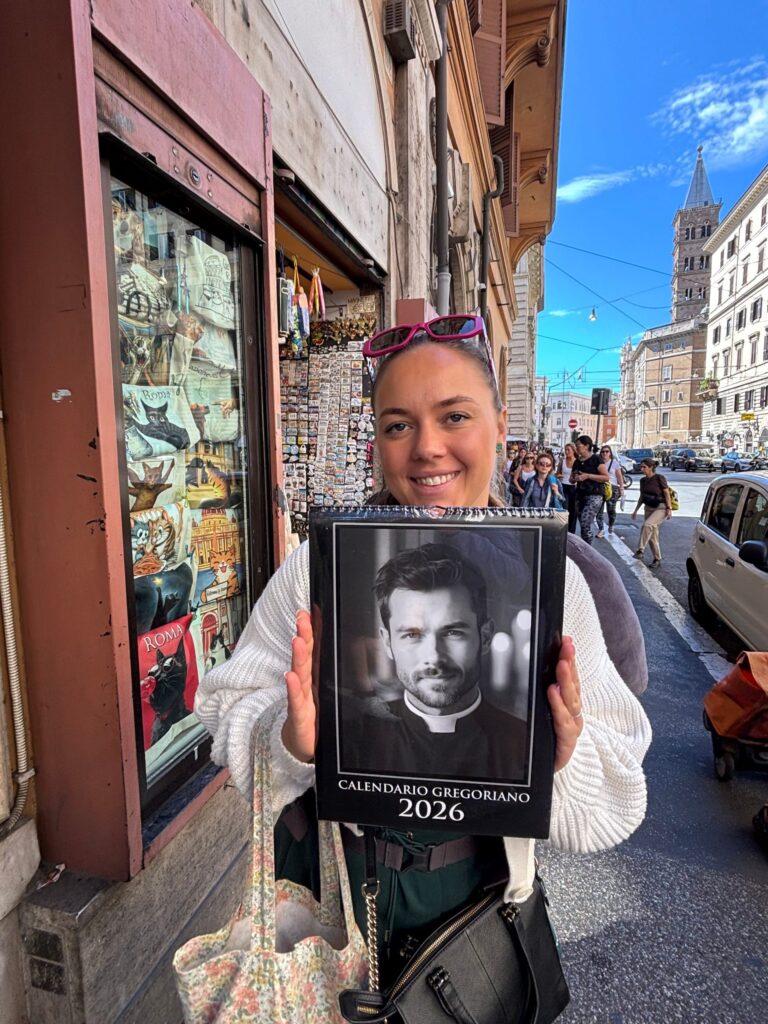
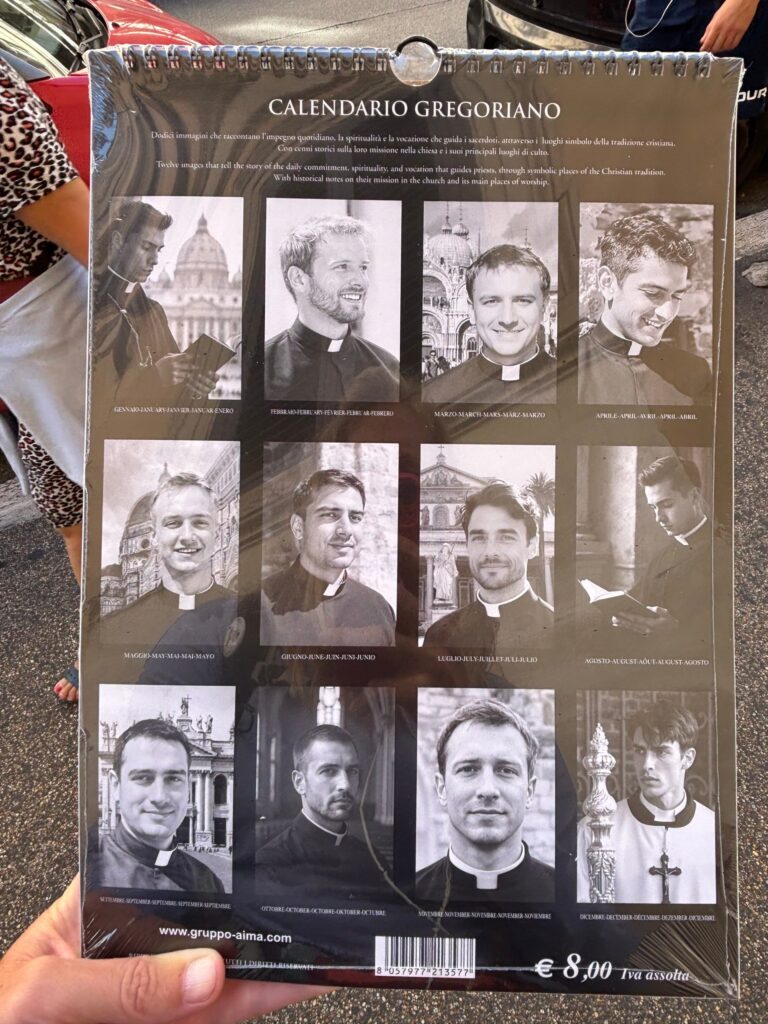
Speaking of attractive priests, if you don’t already have a “Hot Catholic Priests” Gregorian calendar, maybe consider adding it to your list of fun souvenirs. Perfect for any home prayer altar.
Little unknown tourist fact: it’s the same group of guys (models) every year…they just shuffle the dates.
A promise is a promise. Mattia asked me to bring him one of the handmade keychains from a place with both stayed in Orio Litta…on one condition – he would buy lunch. Done.
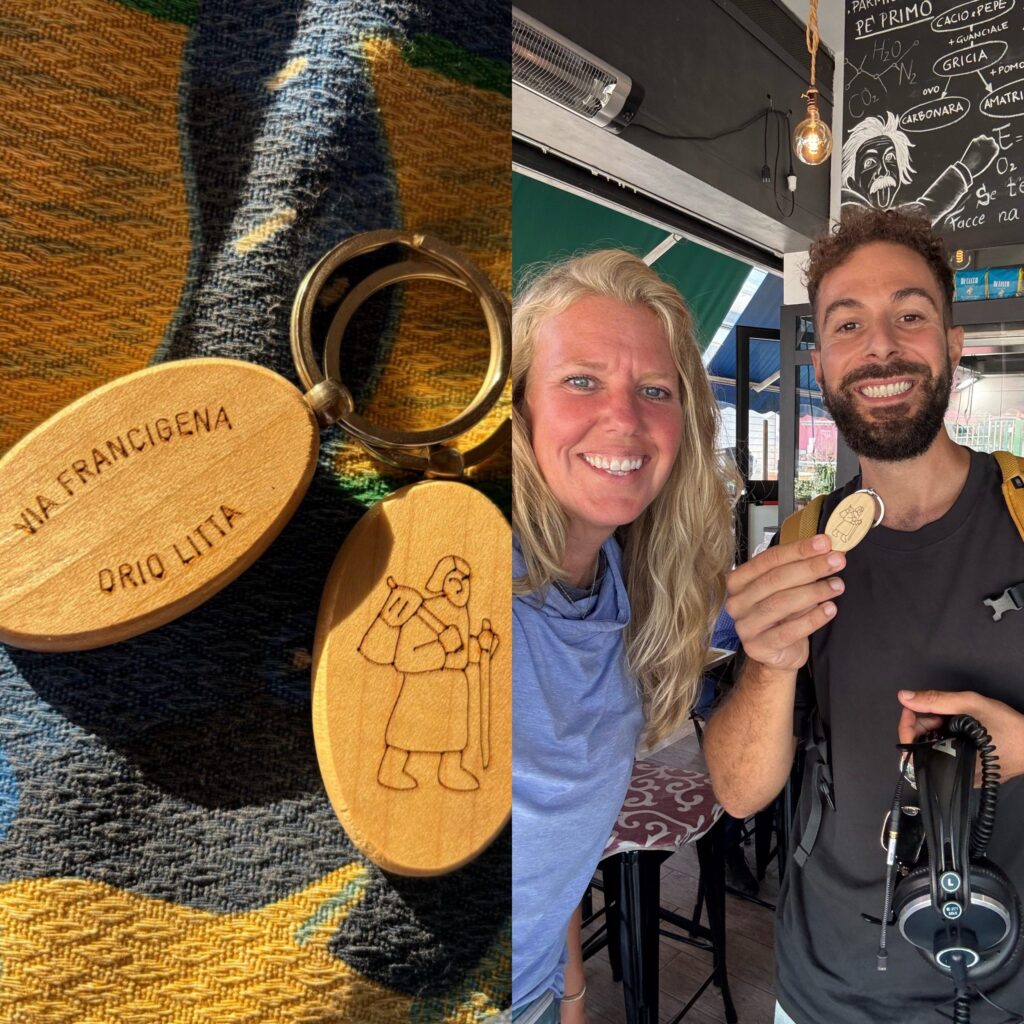
It was great to see him again and meet his friend or girlfriend…I’m not sure – it’s complicated – Ilaria. She is fantastic, just like Mattia.
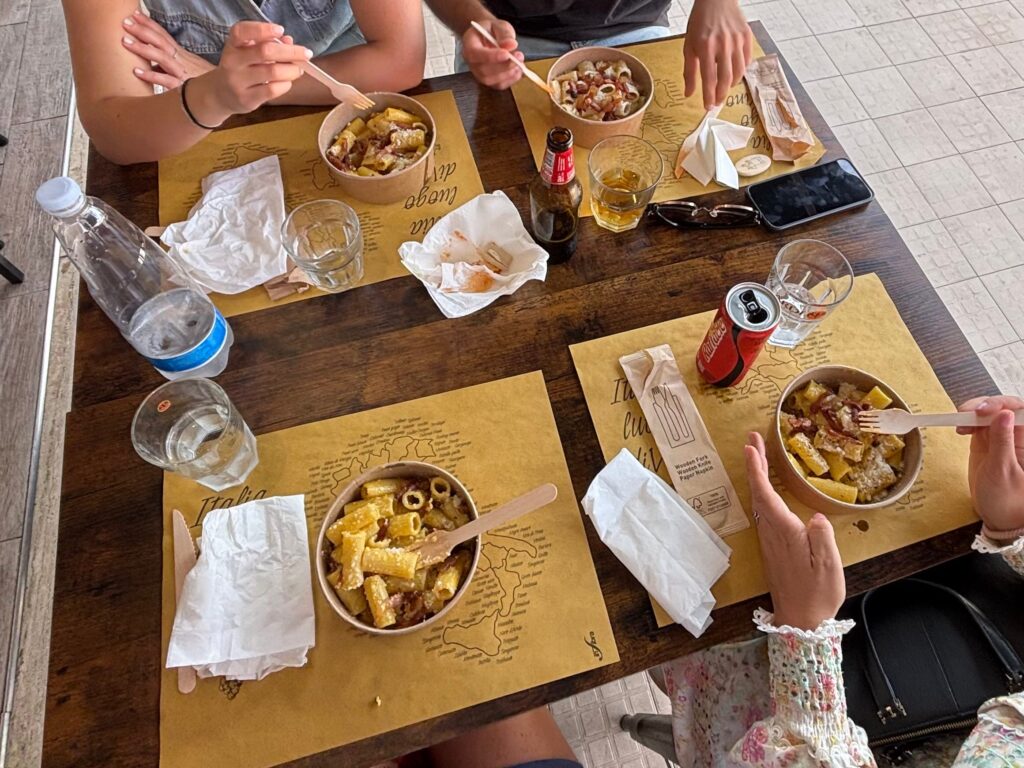
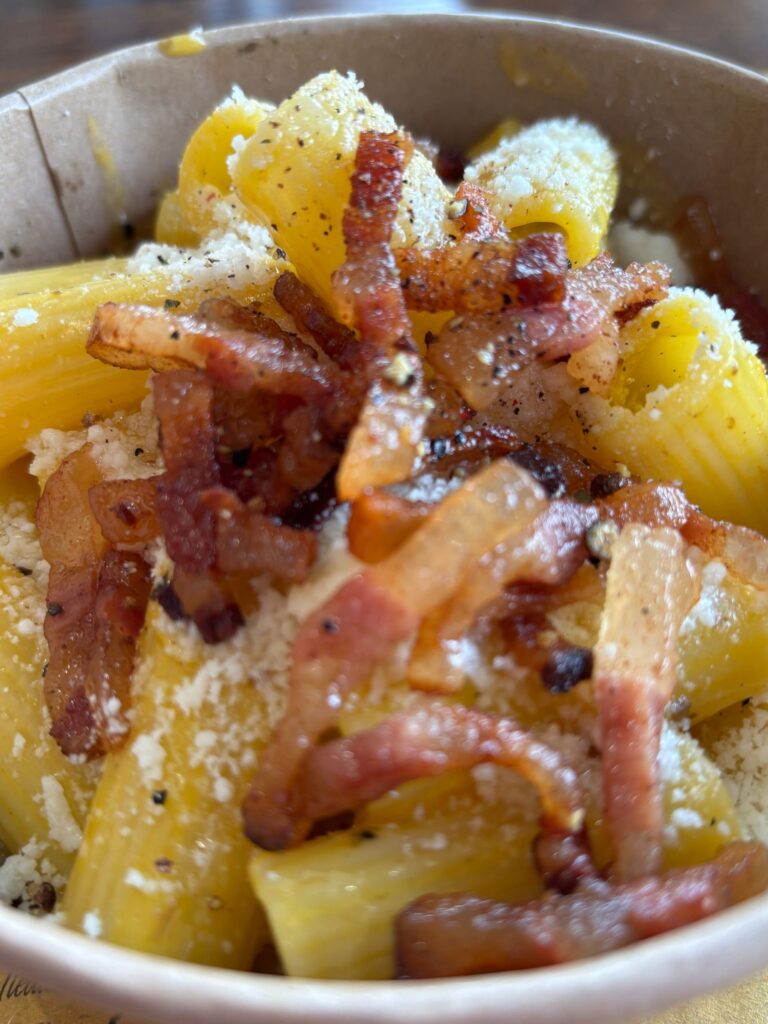
They were on lunch break from their jobs, so Inge and I traveled to their area of town. We met at an outdoor market at a restaurant called Mejo! Cucina Romana – as of today, this place has a 4.9 rating on Google. We all ate the most popular item on the menu – Pasta Carbonara – and it was spectacular. Don’t be fooled by the surroundings – it was some of the best pasta I’ve eaten in Italy.
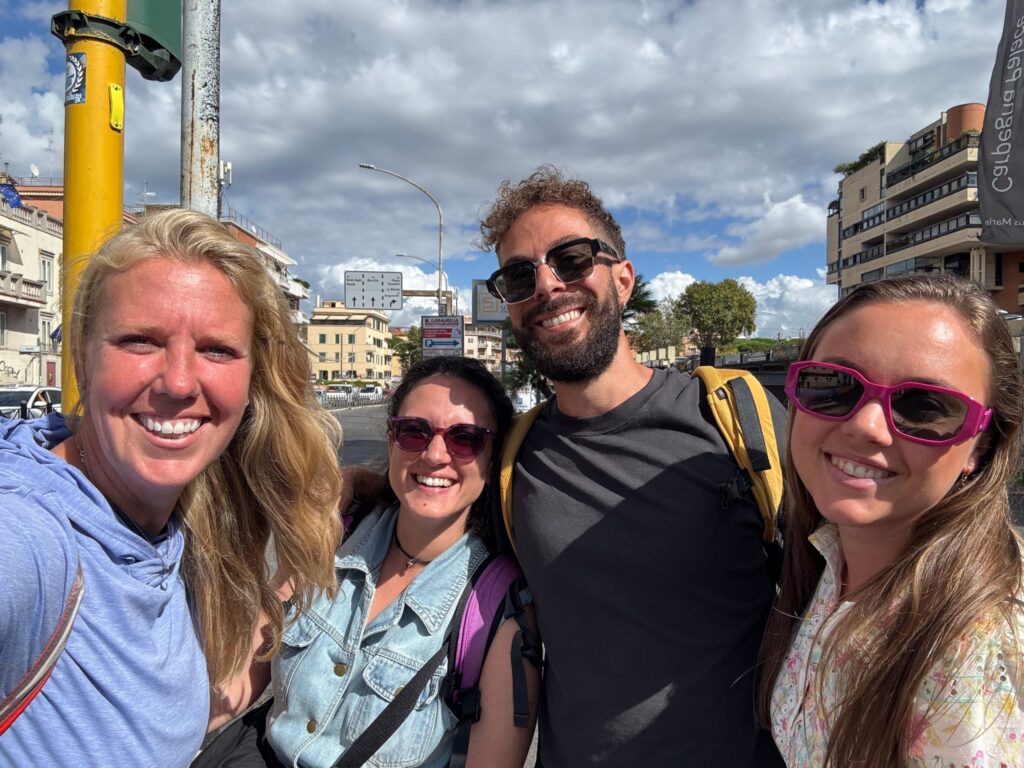
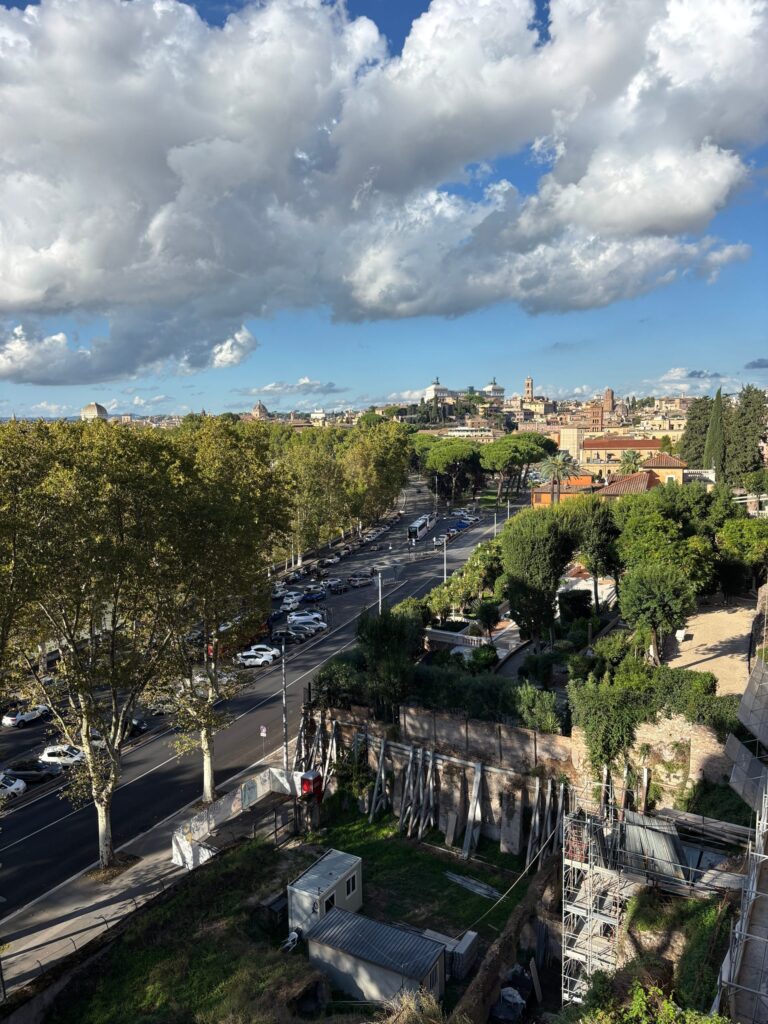
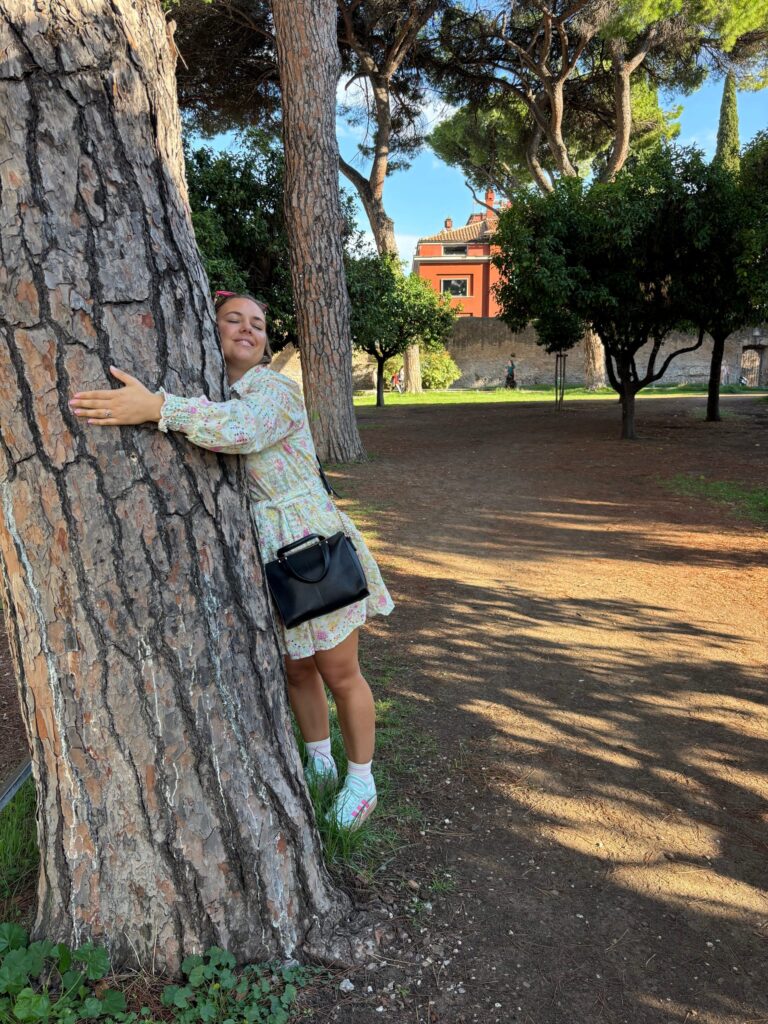
Later, Inge and I met back up with James, Mo, and Martina. Martina wanted to show us around a different section of Rome. We walked to Giardino degli Aranci – a beautiful park overlooking the city. I’ve only been here once before with my dad in 2022.
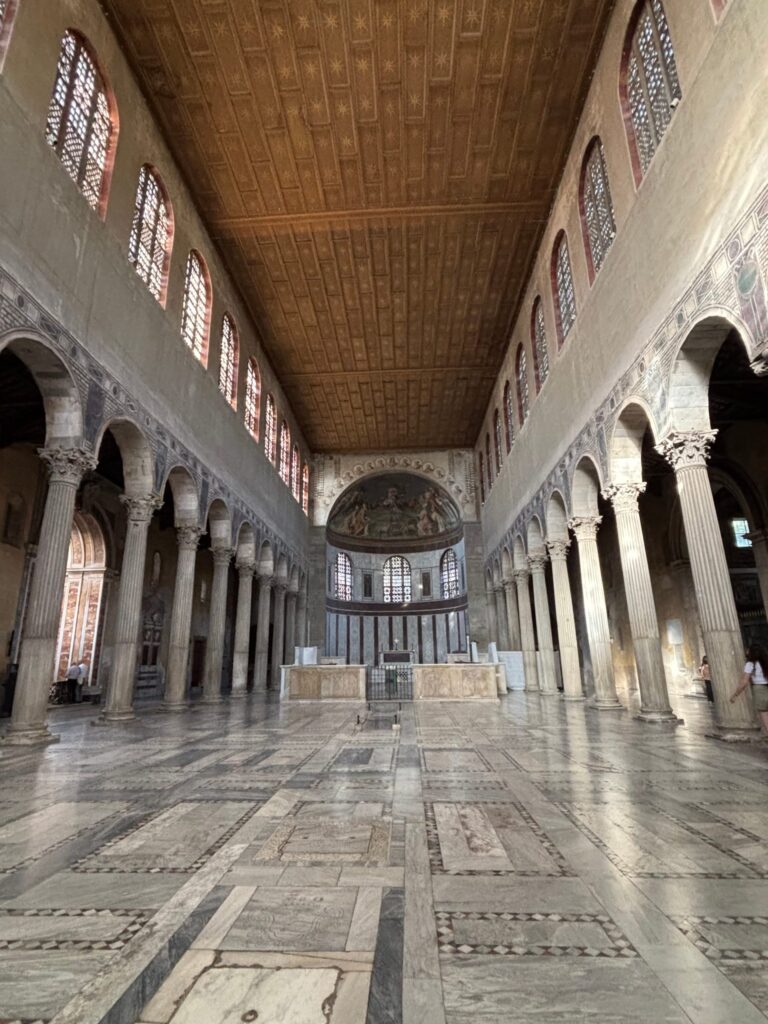
Basilica di Santa Sabina all’Aventino (422 A.D.), is a church where many wealthy people are married. It was beautiful inside with a long aisle – perfect for a wedding.
We took a peek inside Basilica dei Santi Bonifacio e Alessio, located next door, and they were setting up the venue for a marriage vow renewal.
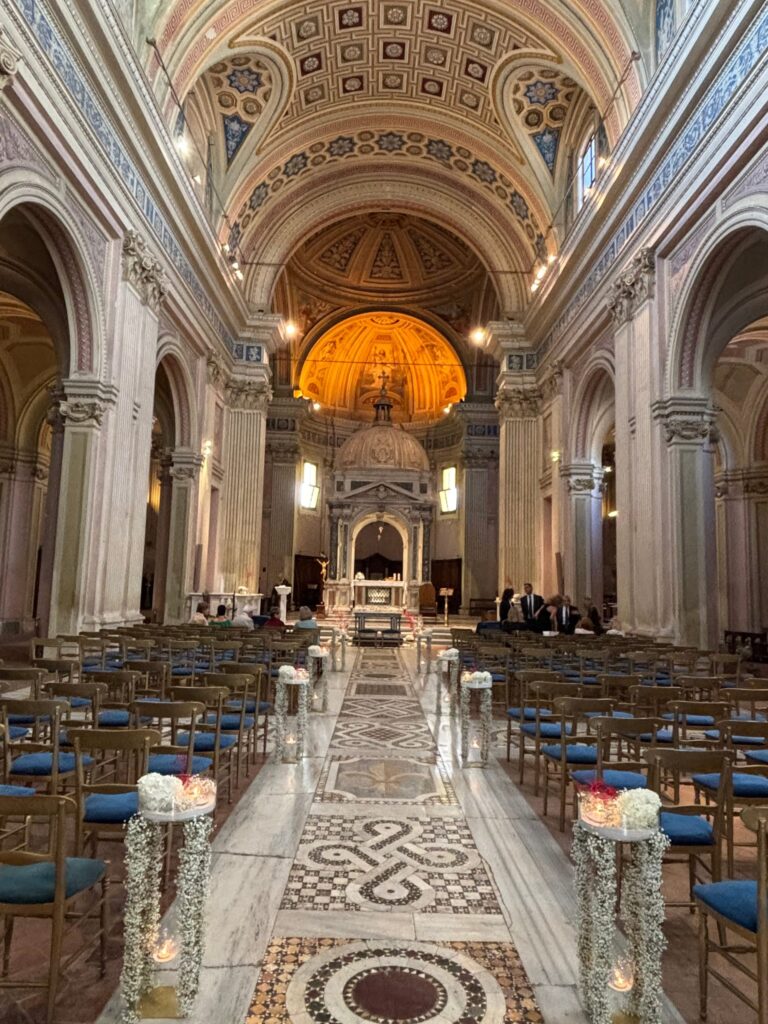
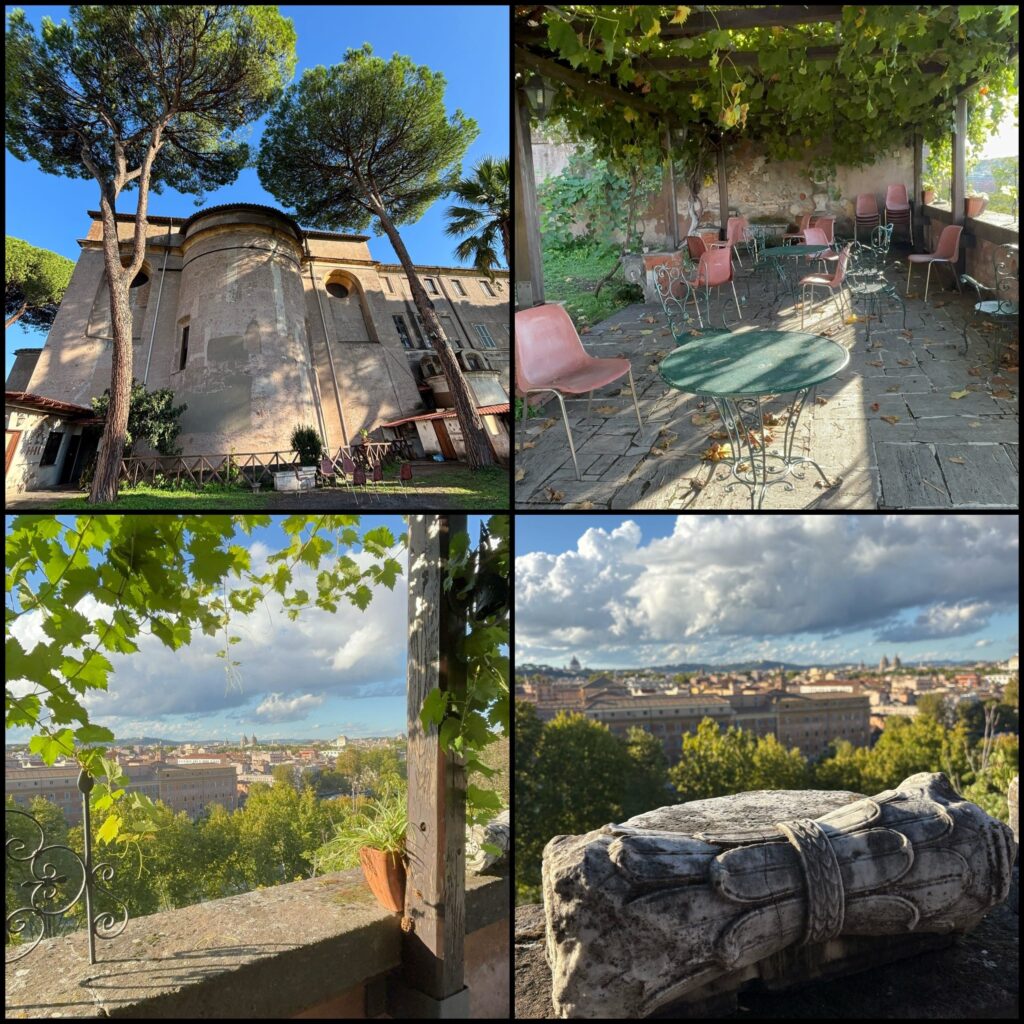
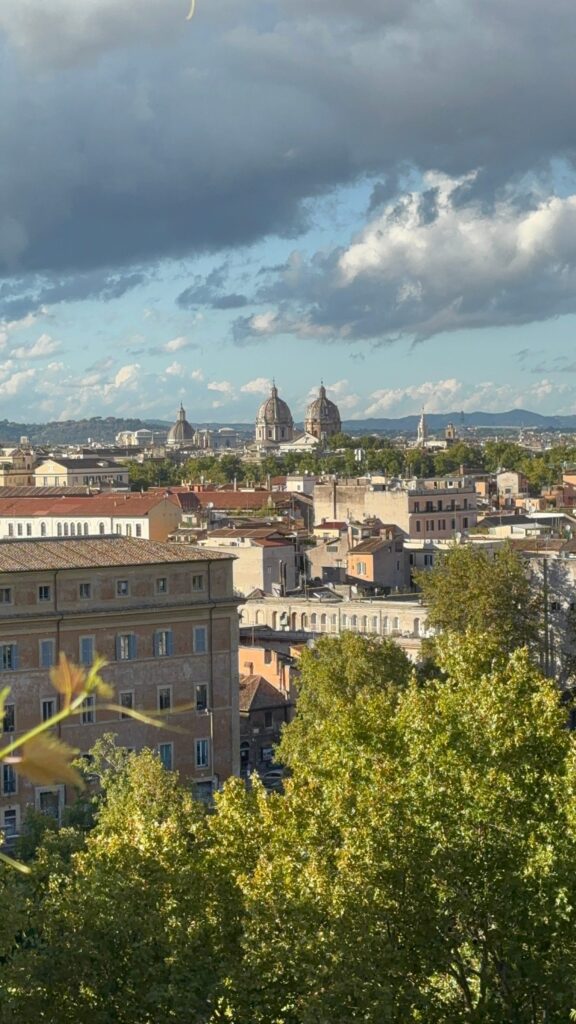
Which turned out to be our lucky day, because Martina spoke with one of the clergy and they let us visit the backyard, which is typically off limits to the public, to see the views of the city reserved for the monks.
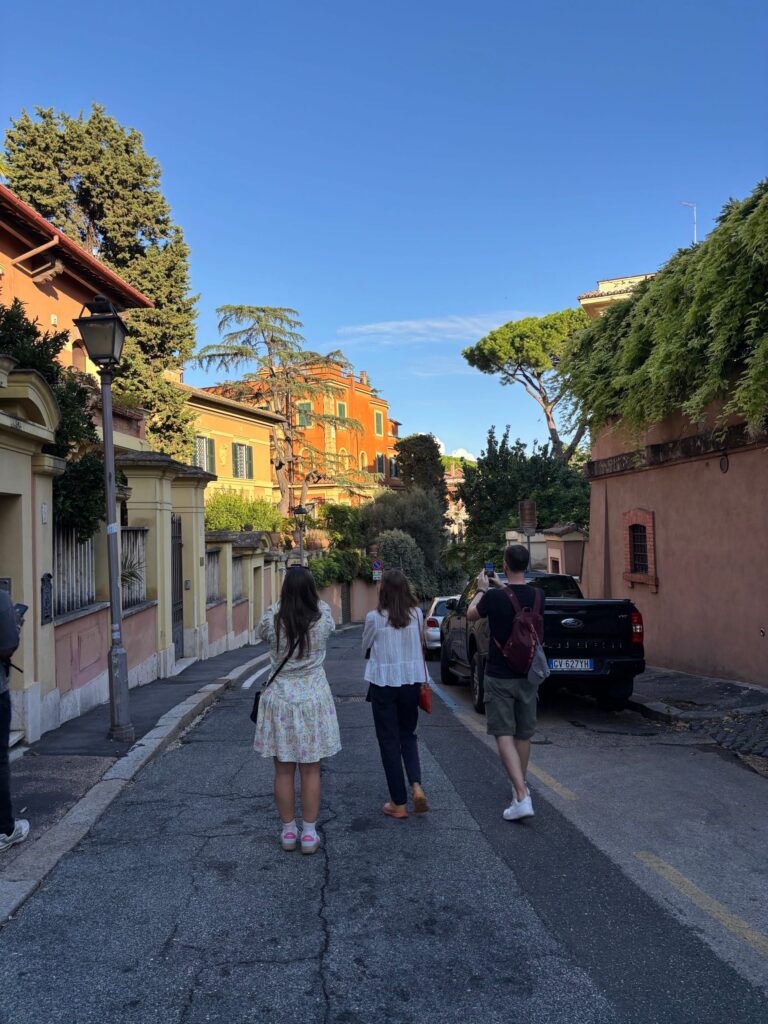
We capped off the day with a stroll through a very expensive-looking neighborhood before ending another fantastic day in Rome!
Much love & gratitude. Namaste 🙏
Don’t forget to like and share this post, please. Thank you.
To see more photos and videos from my adventures, follow me on social media. Facebook, Instagram, YouTube, TikTok, and Threads or connect with me on LinkedIn. New to BlueSky so check it out!
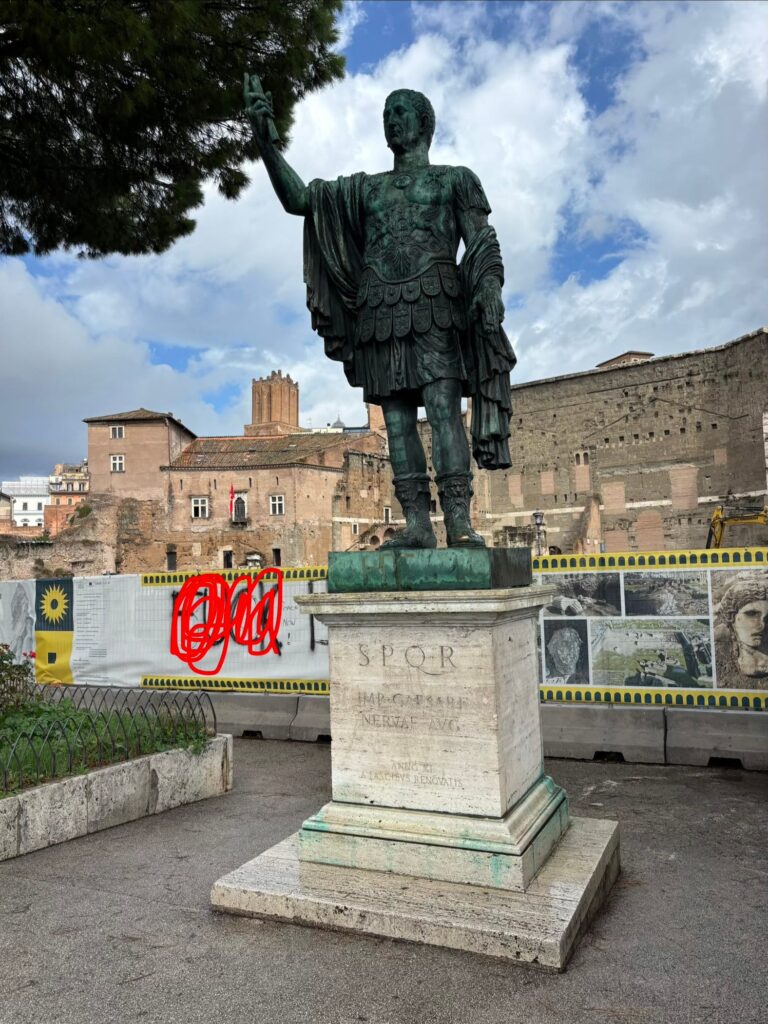
Statue of Caesar. I’ve crossed out the graffiti curse words…you’re welcome.