*These events took place in September 2025.
*This post is very long, so if it is cut off, be sure to click “View Entire Message” at the end.
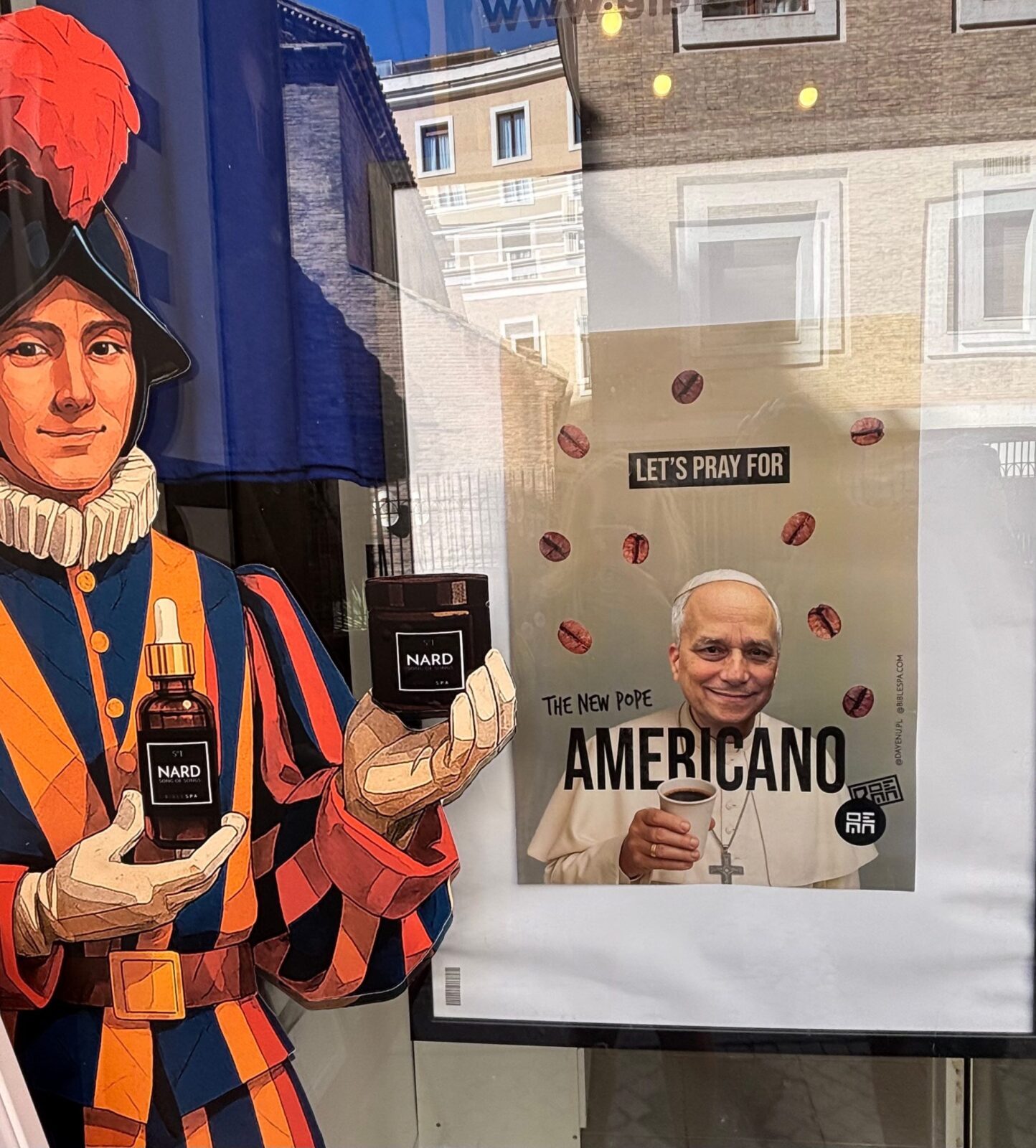
“Cappuccino, Macchiato…Americano.” A handwritten sign on the window of a cafe in Rome – referencing the new American Pope Leo.
One of the top, bolded, underlined items on James’s Roman bucket list was a guided tour of the Vaticano. Not “see it from afar.” A full-on, official, headset-wearing guided tour.
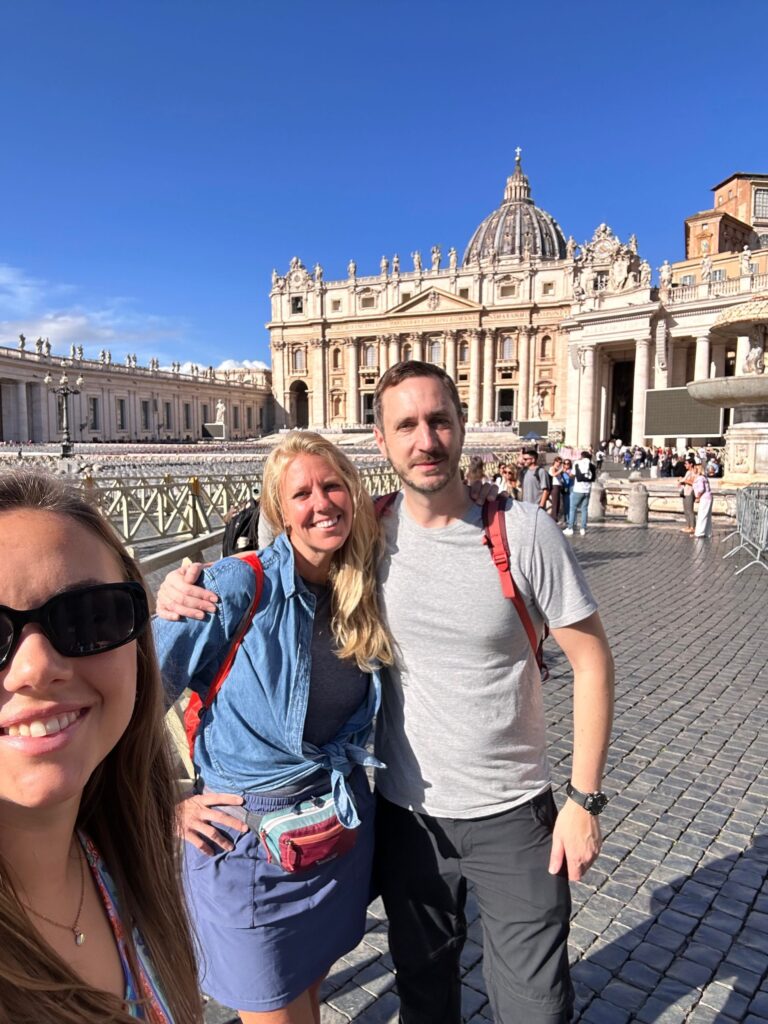
So it should surprise absolutely no one that he nearly ended me (with a pizza cutting wheel) when I confidently led him and Ingeborg to the wrong entrance of the building.
The front of the building is not where one enters for a guided tour of the Vatican Museum. That would be the back. Minor detail. I actually knew this, but forgot with all the excitement. My bad. I am clearly thriving in my new role as International Tour Guide.
Here we were, smiling sweetly for a photo, blissfully unaware that we were standing in the wrong place.
Picture it: already running a little behind, tickets stating in bold letters that the tour starts exactly on time. Italians are generally relaxed about such things, but the Vatican is its own country. It has boundaries. Rules. Standards. It starts when it says it starts, and not one minute later – this must be because of the Swiss Guards.
I personally prefer the more relaxed, casual start times, but I don’t get a say in this.
Off we went, sprinting around the perimeter of Vatican City to the back entrance. Steam may or may not have been coming out of James’s ears because of his annoyance with me and my massive error. Meanwhile, Inge and I exchanged knowing smirks because we had zero doubt we’d make it. We always do. Chaos is just part of the process.
And we did make it! God was on my team for this one. “Thank you,” I muttered under my breath while winking to the heavens.
Pizza wheel homicide: officially avoided.
Once safely inside with our tickets scanned and little earpieces intact, James had returned to a baseline level of calm. For the life of me, I don’t know why he stresses so much. What could possibly go wrong with me at the helm of the ship? (Don’t answer that.)
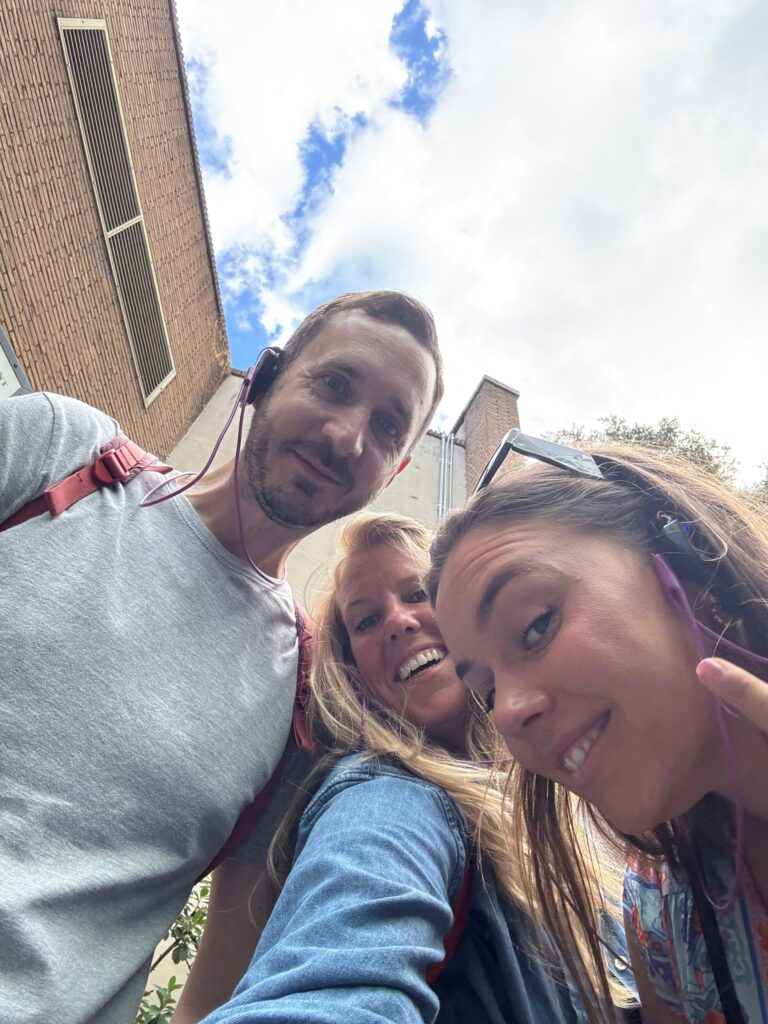
Our tour guide was Francesca – an intelligent, beautiful woman from Massa, a small coastal town in Tuscany that I happened to pass through while walking the Via Francigena. I mentioned to her that I’d spent a night there.
She stared at me…blank-faced. “Nobody goes there. It’s not touristy.”
I whipped out my Google Maps to show her the little hostel near the town center where I stayed.
She screamed with excitement and smiled a huge smile.
Who knew that a random American wandering through her hometown would cause that level of excitement? But it did…and just like that, we weren’t just tourists with headsets. We were new friends swapping stories.
Francesca speaks flawless English, so naturally, I asked how she learned.
“Modern Family,” she said. “It was my favorite show growing up.”
Of course it was.
“And your favorite character?” I asked with a hidden agenda.
“Cam. Of course.”
Naturally. Everyone loves Cam. He truly was the best character on the show.
I told her that Eric Stonestreet, the actor who played Cam, is from my city and that I’m friends with his sister. She gave me the same look she gave when I said I’d been to Massa. Skeptical. I asked her if I could share this little tidbit of info with his sister and a photo of us. I figured Eric would appreciate knowing that the TV show and his character specifically had such an impact on a young woman from a tiny town in Italy.
I messaged my friend. Thankfully, she responded immediately despite the time difference. Proof secured. No lies. No name-dropping fraud. Just worlds colliding in the most delightful way.
I showed Francesca the message, and she squealed again with excitement.
And that’s what I love most about travel. Yes, the art is magnificent. Yes, the history is mind-blowing. But the best moments are the unexpected human connections…the ones that remind you how small and wonderfully intertwined the world really is.
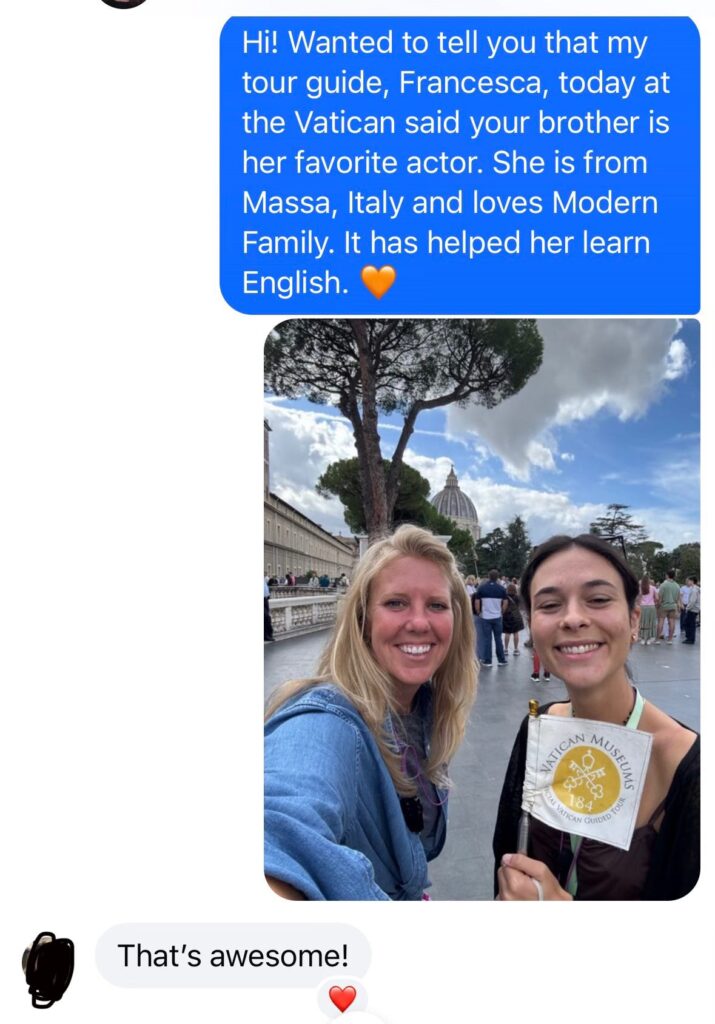
Francesa was a fabulous tour guide and truly knows her history of the Vatican and the art that flows seamlessly throughout the building…and she tells it all in a beautiful story while perfectly speaking in a second language.
Before I get to the beauty that is securely protected inside the building. Here are a few fun (and somewhat obscure) facts about the Vatican and Vatican City.
-
The Vatican City is the smallest country in the world – about 110 acres. You can walk across it in about 20 minutes.
-
It became an independent state in 1929 thanks to the Lateran Treaty with Italy. Sadly, no passport stamp for crossing this International border. Bummer.
-
The Holy See is the governing body of the Catholic Church and Vatican City.
-
The Vatican has its own military: the Pontifical Swiss Guard. Oldest Standing Army in the World: The Swiss Guard has been protecting the Pope since 1506, making it one of the oldest military units still in operation today.
-
To be a Swiss Guard there are strict requirements: To join, recruits must be Swiss citizens, Catholic, single, and have completed basic military training in Switzerland. They must also be between 19 and 30 years old. (Wild fact I found about the Guards during my research: Many recruits actually get Vatican-themed tattoos after serving, but they must keep them discreet during duty – so most tourists never see this personal side of the guards.)
-
Inside Vatican City, you can withdraw cash from an ATM that offers instructions in Latin.
-
The Vatican Museums contain over 70,000 works of art (with about 20,000 on display).
-
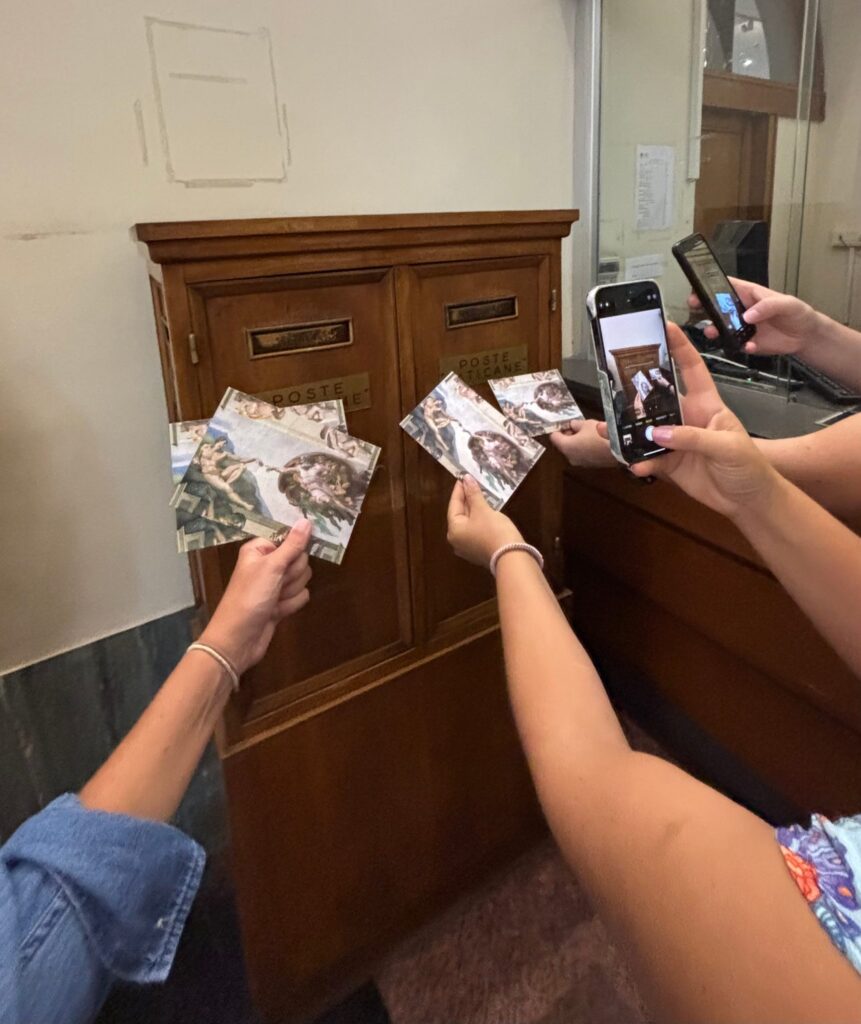
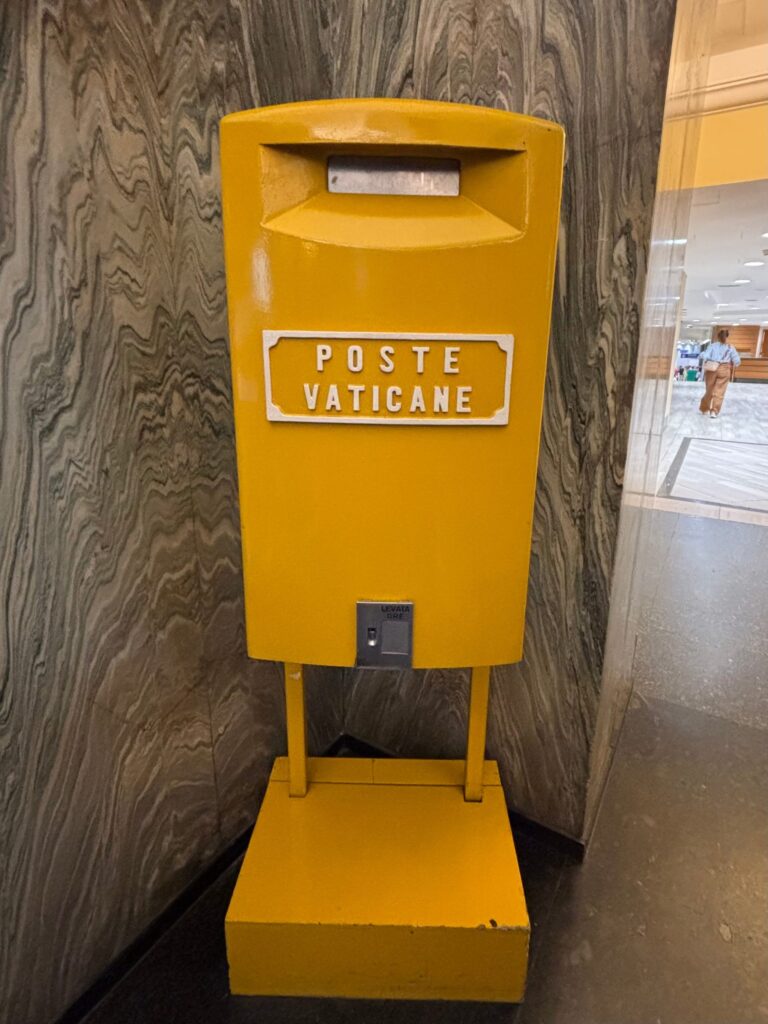
The Vatican runs its own post office, and Romans often prefer mailing letters from there because it’s reportedly more reliable than the Italian system. (Scroll down to see our postcards!)
-
Vatican City has a railway station and about 300 meters of track. It’s mostly ceremonial and rarely used for regular passenger service.
-
When a new pope is elected in the Sistine Chapel, the ballots are burned.
-
Black smoke = no decision
-
White smoke = Habemus Papam
-
-
Technically, it has (Almost) no permanent citizens. Citizenship isn’t based on birth. It’s granted based on your job…clergy, Swiss Guard, or certain Vatican officials. When you stop working there, you typically lose citizenship.
Personally, (being raised Catholic), I have a love/hate relationship with the Church and the Vatican.
On one hand, I respect its centuries of prayer, ritual, and tradition…the reverence is undeniable. But I can’t ignore the staggering wealth: donations, prime global real estate, and one of the world’s largest private art collections, all untaxed. Not to mention their stance on LGBTQIA+ – for men who are living together and wearing couture made by some of the most famous designers (many of them LGBTQIA+) in the world, and then telling others that they cannot express themselves (specifically in marriage) seems quite hypocritical.
Even more difficult to reconcile is my strong opposition to the way the Church has handled the crimes committed against children. The moral authority it claims makes those failures feel heavier, not lighter. While visiting Catholic Churches, I frequently light candles without paying for them and say prayers for the victims as my little way of getting some sort of retribution for these kids and their families.
While visiting the Vatican, I feel conflicting emotions of both awe and anger. Beauty and abuse, devotion and greed, all in the same space. It’s impossible to separate one from the other.
Maybe that’s part of the human experience: holding beauty and brokenness in the same space. Admiring the art. Questioning the institution. Respecting the faith of millions while still demanding accountability.
For me, the Vatican and the church aren’t simple. They are extremely complicated. A place that inspires more questions than it provides answers.
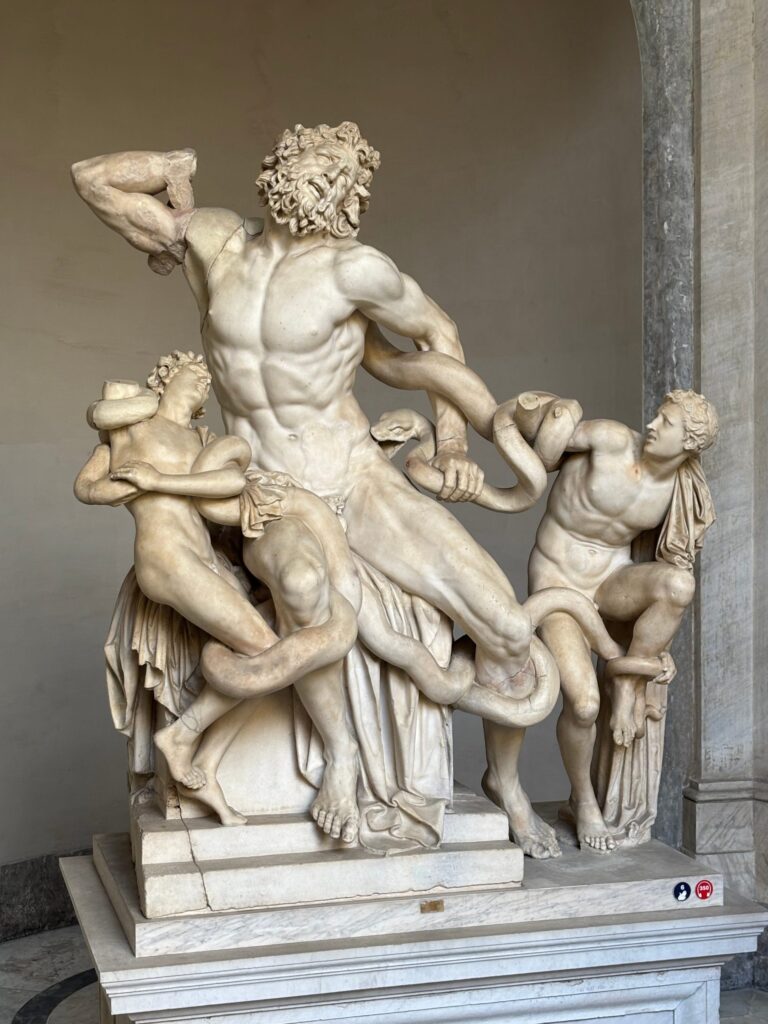
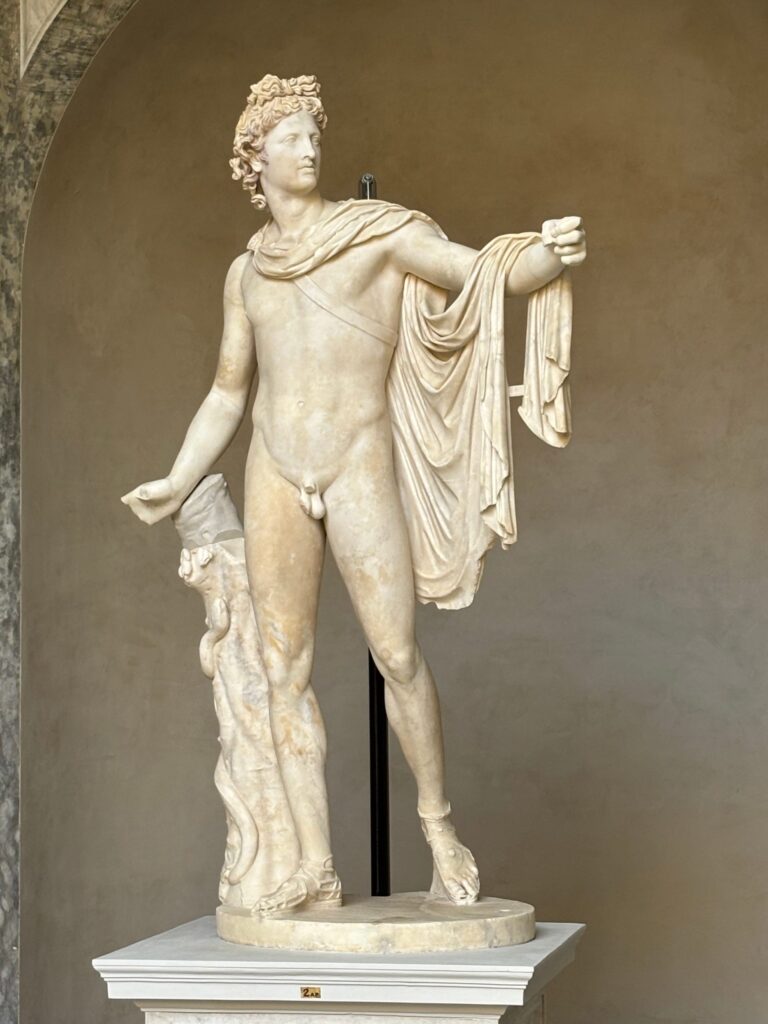
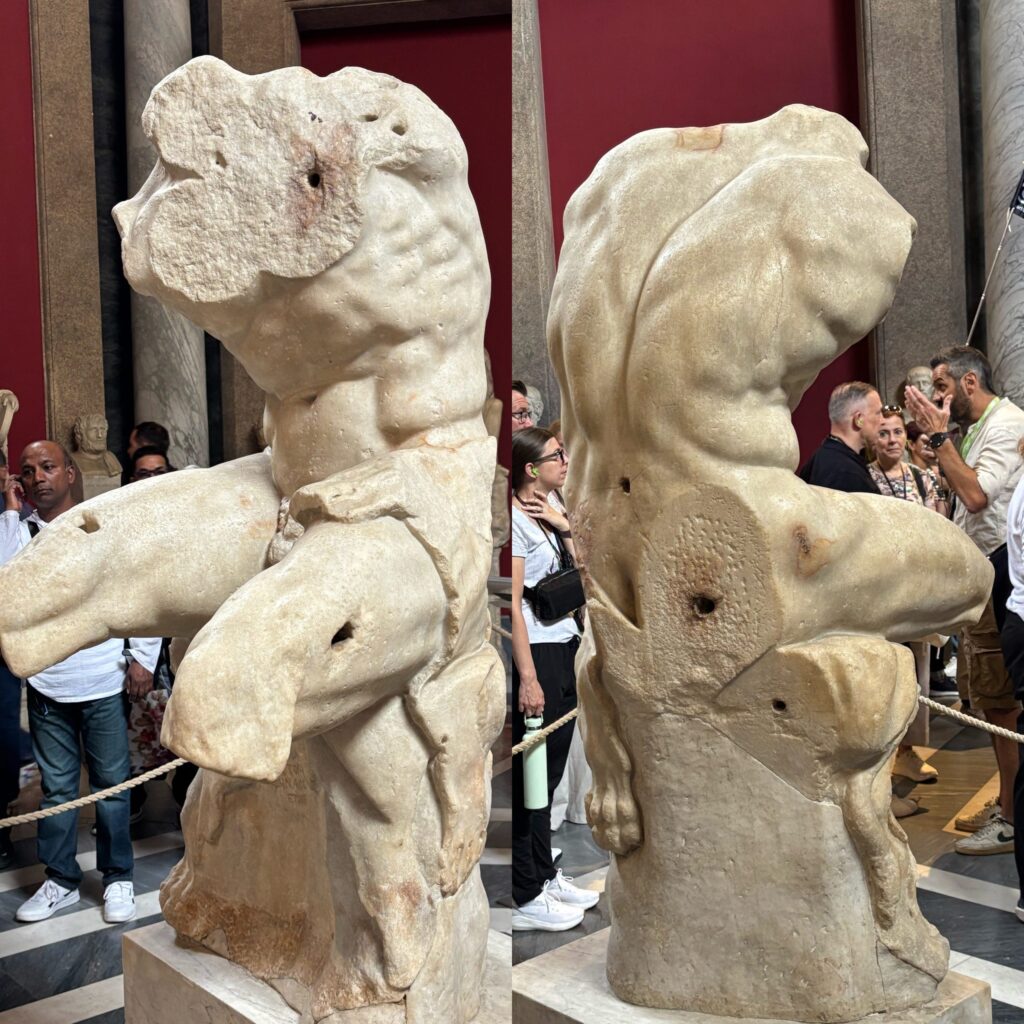
One of the most profound collections in the museum is the statues, not only lining the inside of the buildings but also all around the grounds.
This particular statue, shown below, is called The Belvedere Torso.
This famous marble torso, documented since the 15” century, entered the Vatican collections between 1530 and 1536, where it immediately became one of the ancient sculptures most greatly admired by artists down to the present day. Interpreted in various ways over the centuries, today the sculpture is believed to represent the Greek hero Ajax Telamonius contemplating suicide.
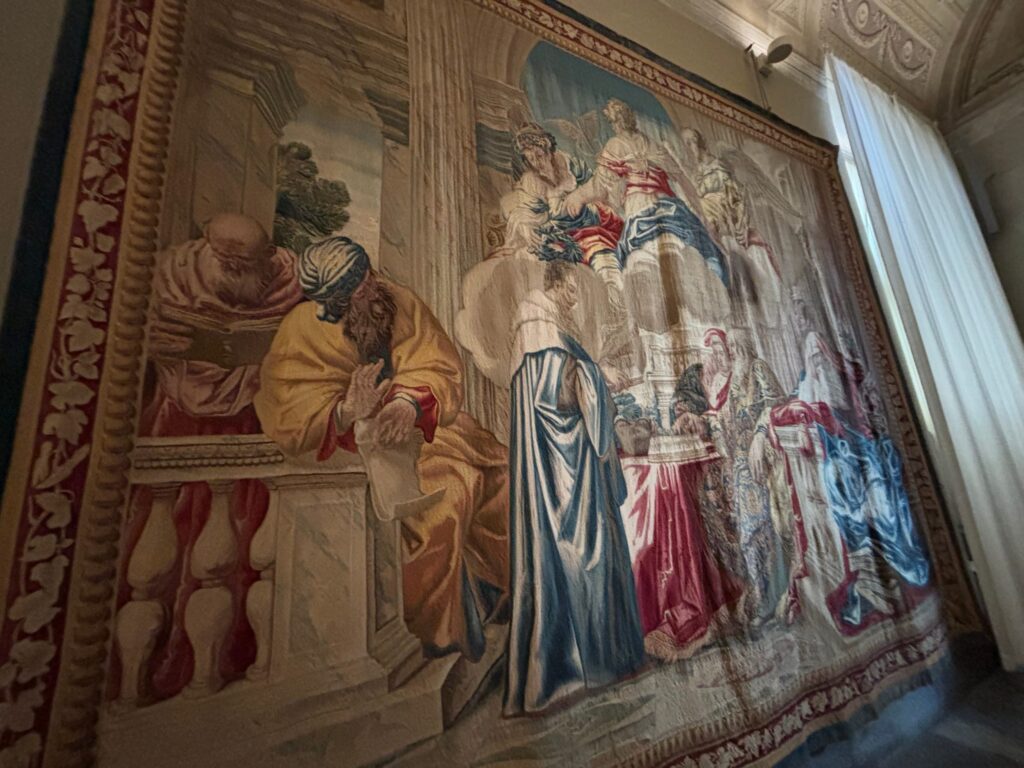
Larger-than-life handwoven tapestries adorn the walls from floor to ceiling.
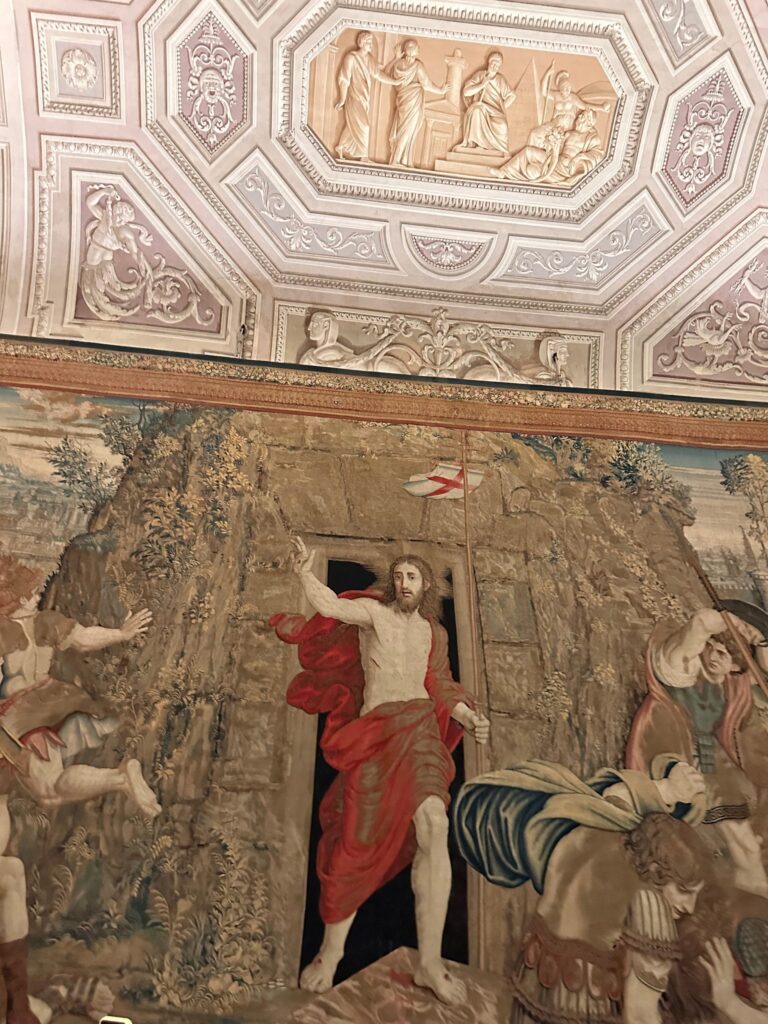
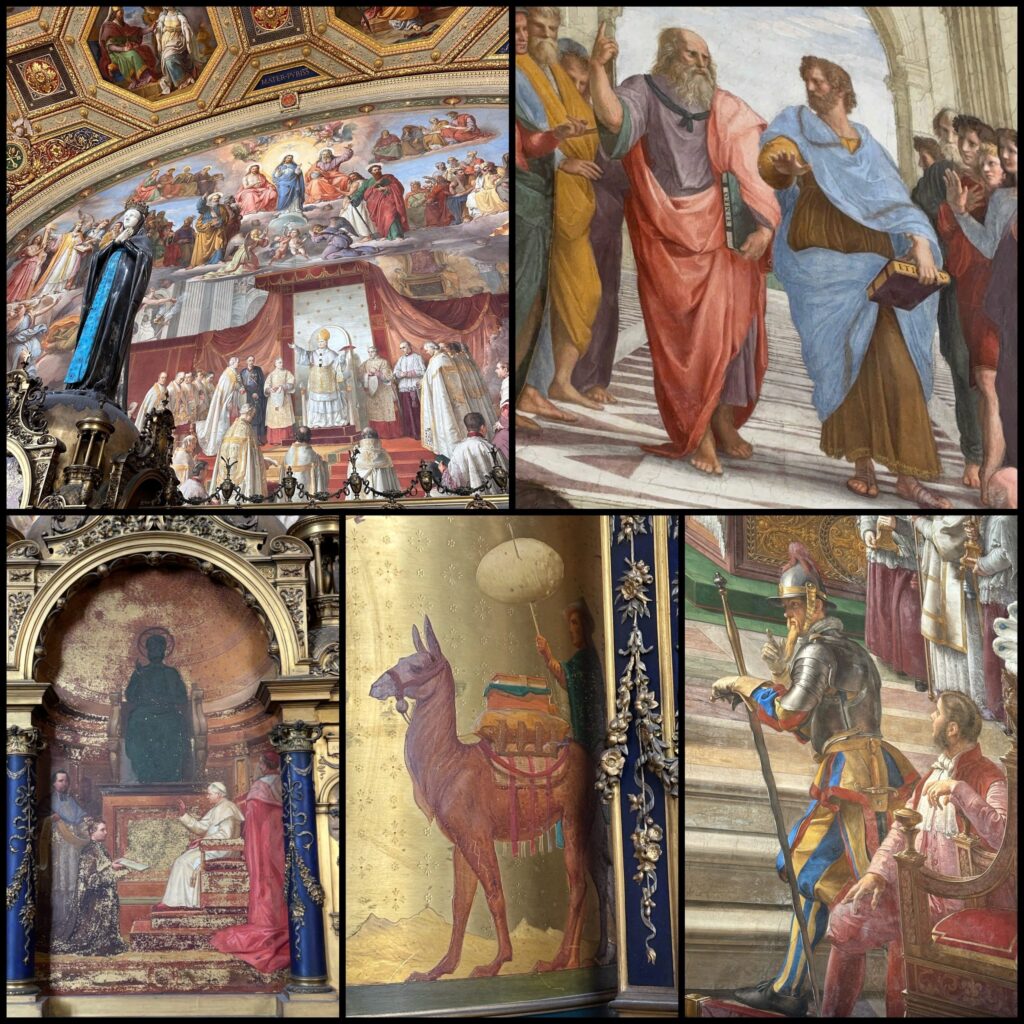
The frescoes filling what could be blank spaces and are created by some of the most famous painters in the world. The details are extraordinary.
One of my favorite rooms in the building is the hallway of maps. It’s filled with ancient maps of Italy – before unification- that depict landscapes from long ago.
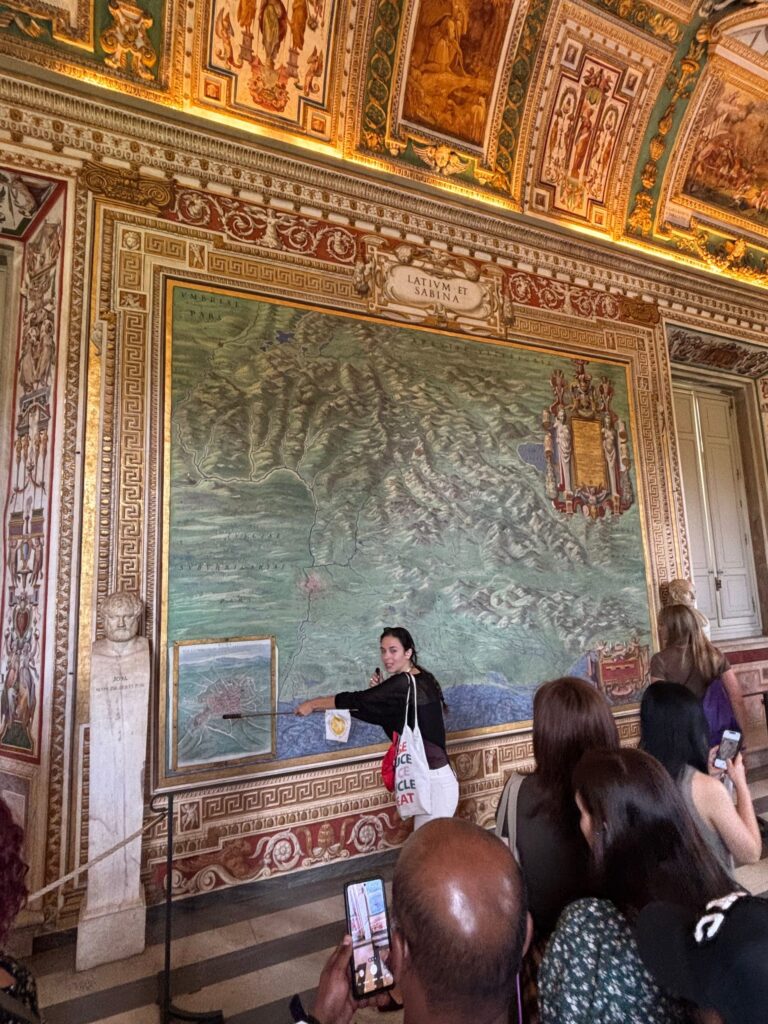
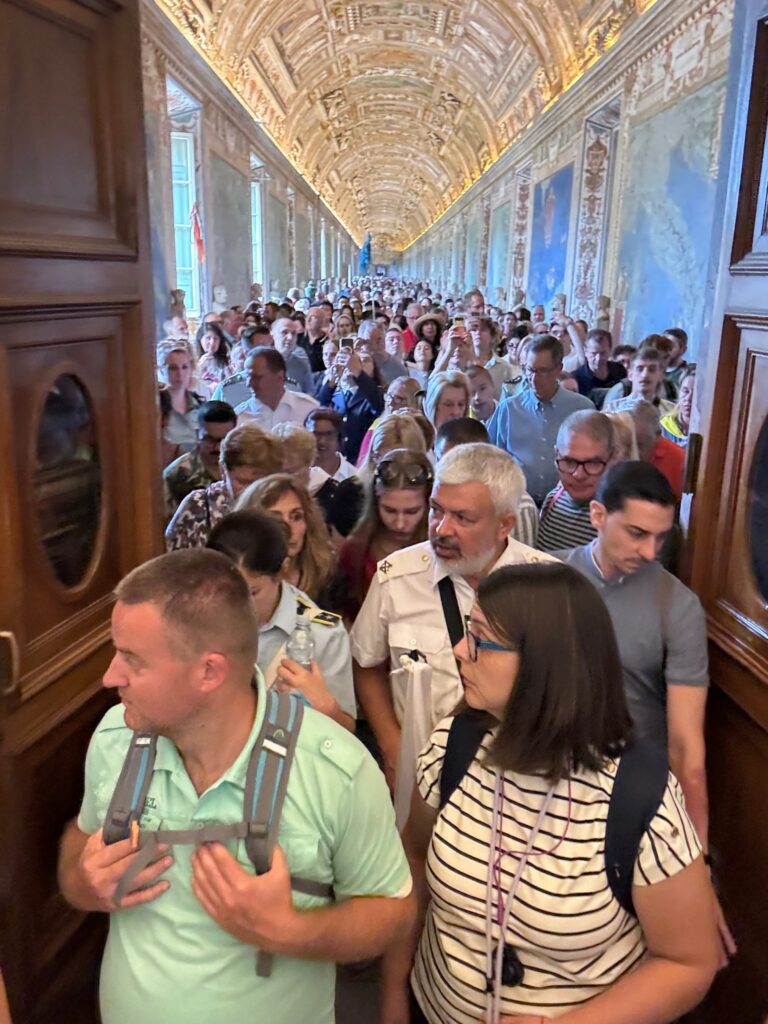
It was difficult to take photos, period, but especially in the map room because it was just a wee bit crowded. Traveler tip: Visit during the off-season – it will be more enjoyable and less rushed.
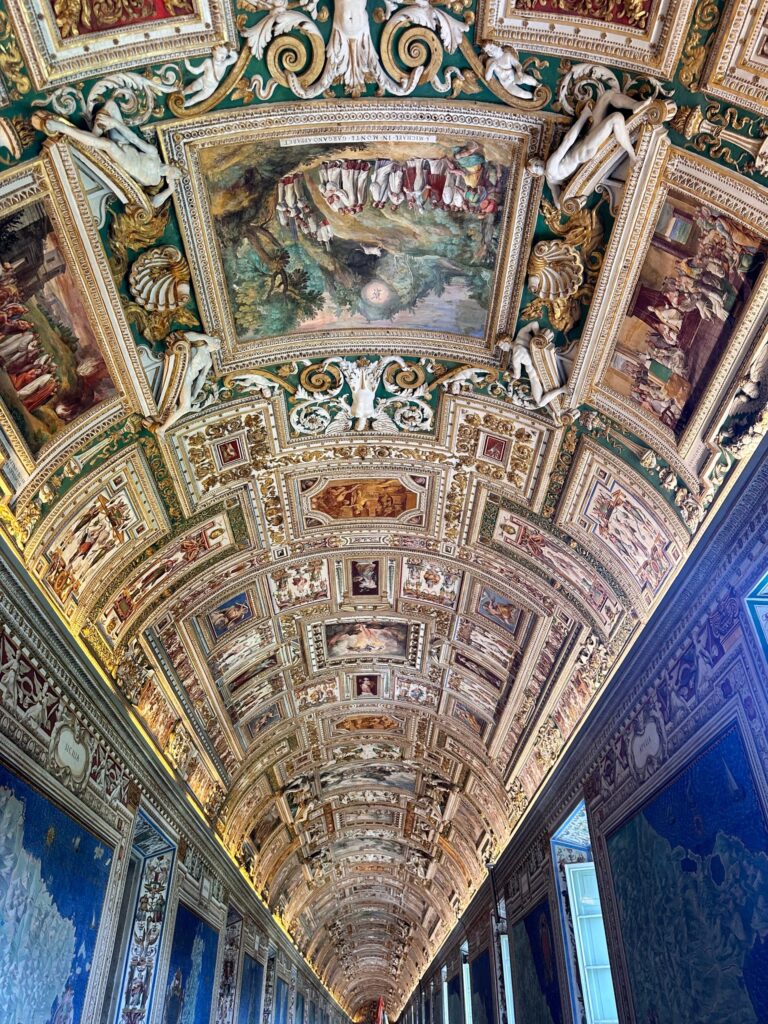
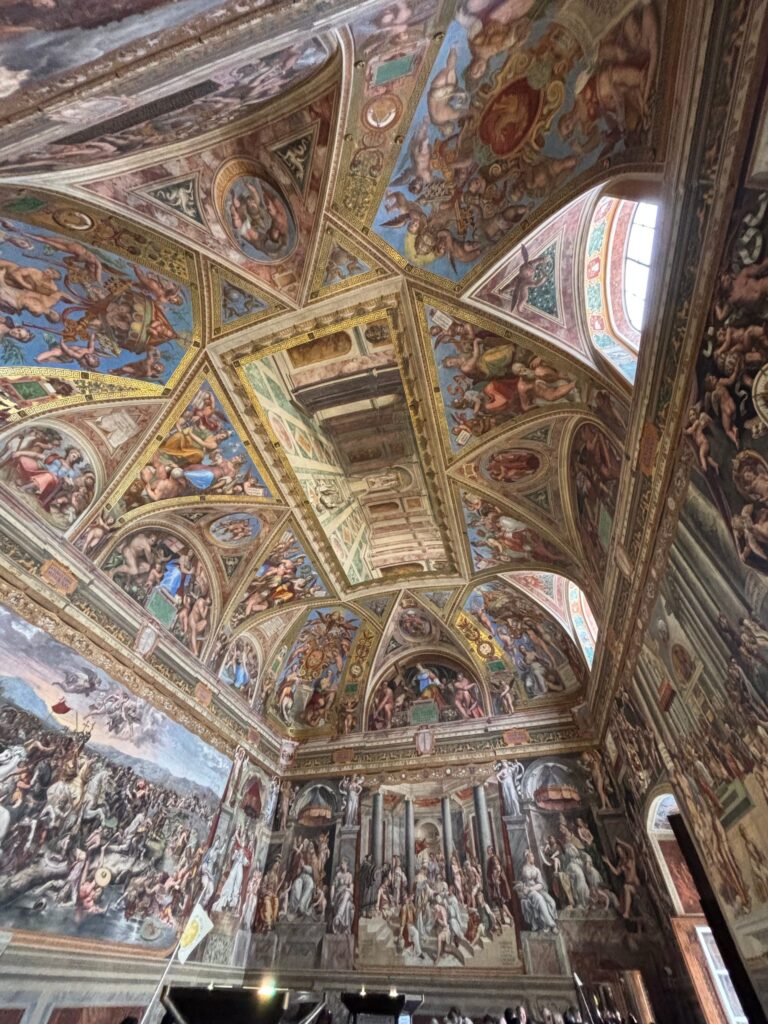
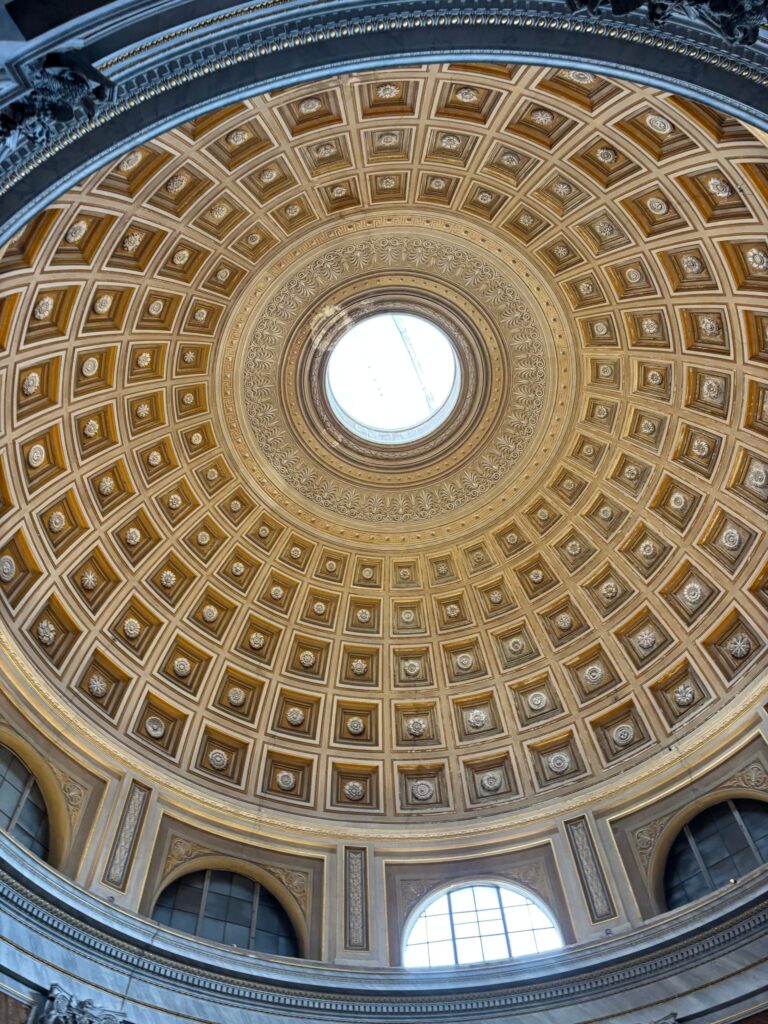
The ceilings are magnificent! Ahhh, the detail and the storytelling within each little section. It is tremendous…and neck-breaking.
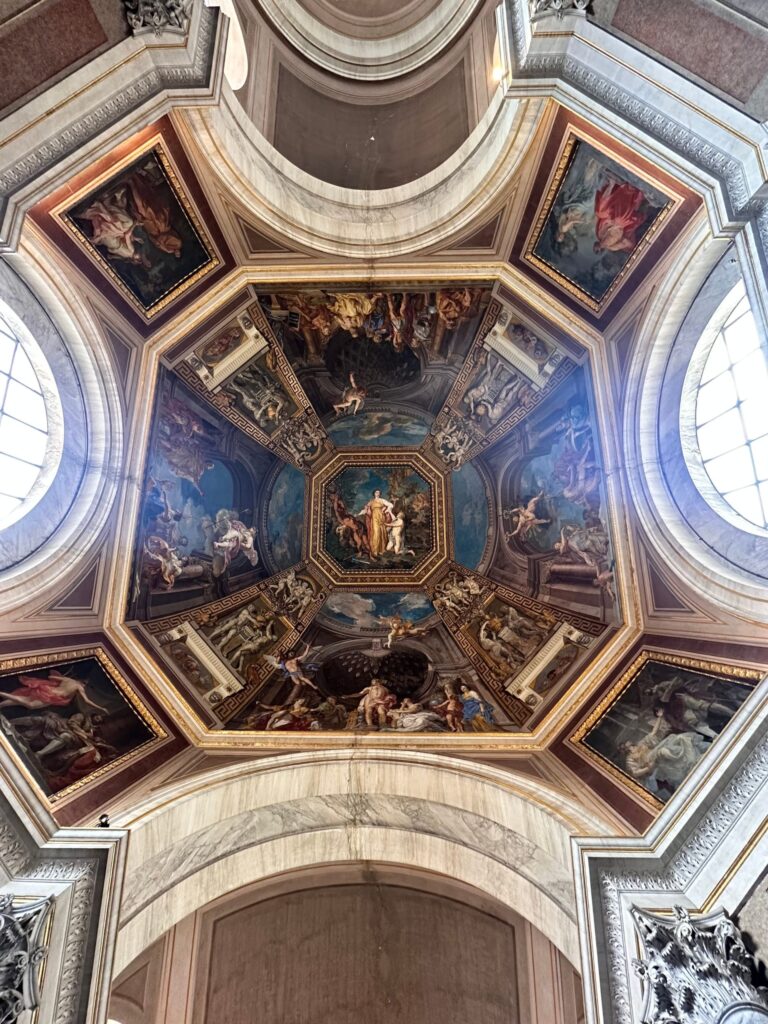
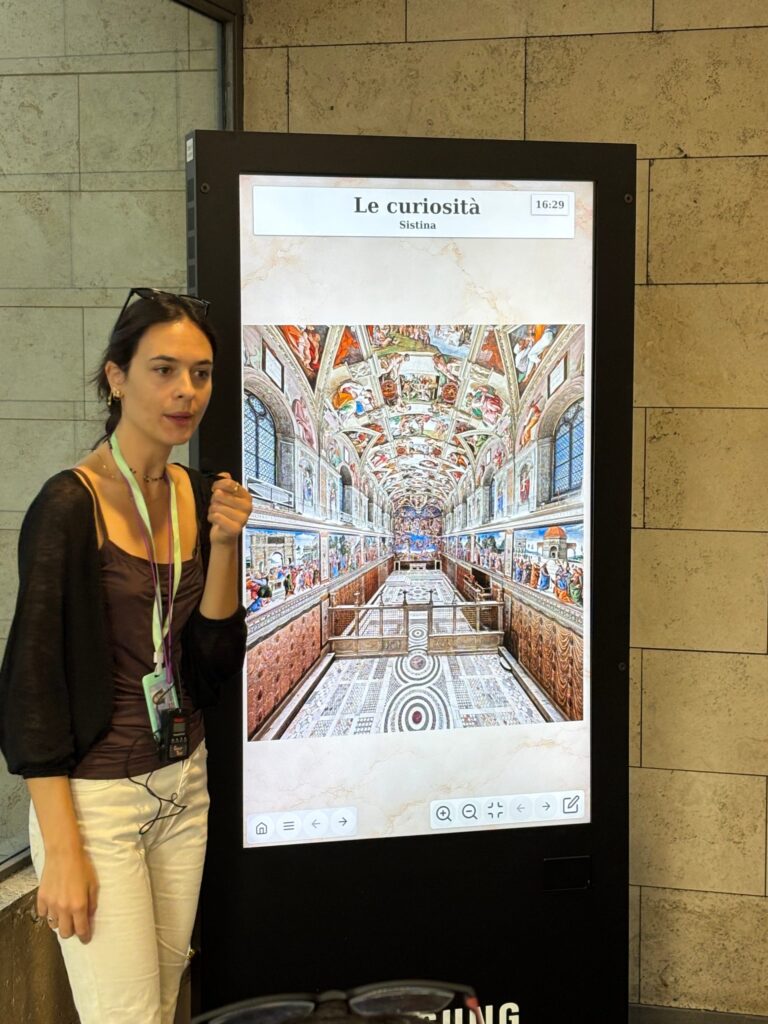
Obviously, the one ceiling that I would love to show you (with my own photos) is not allowed to be photographed, so below are photos and fun facts from online of the most famous ceiling in the world – the Sistine Chapel.
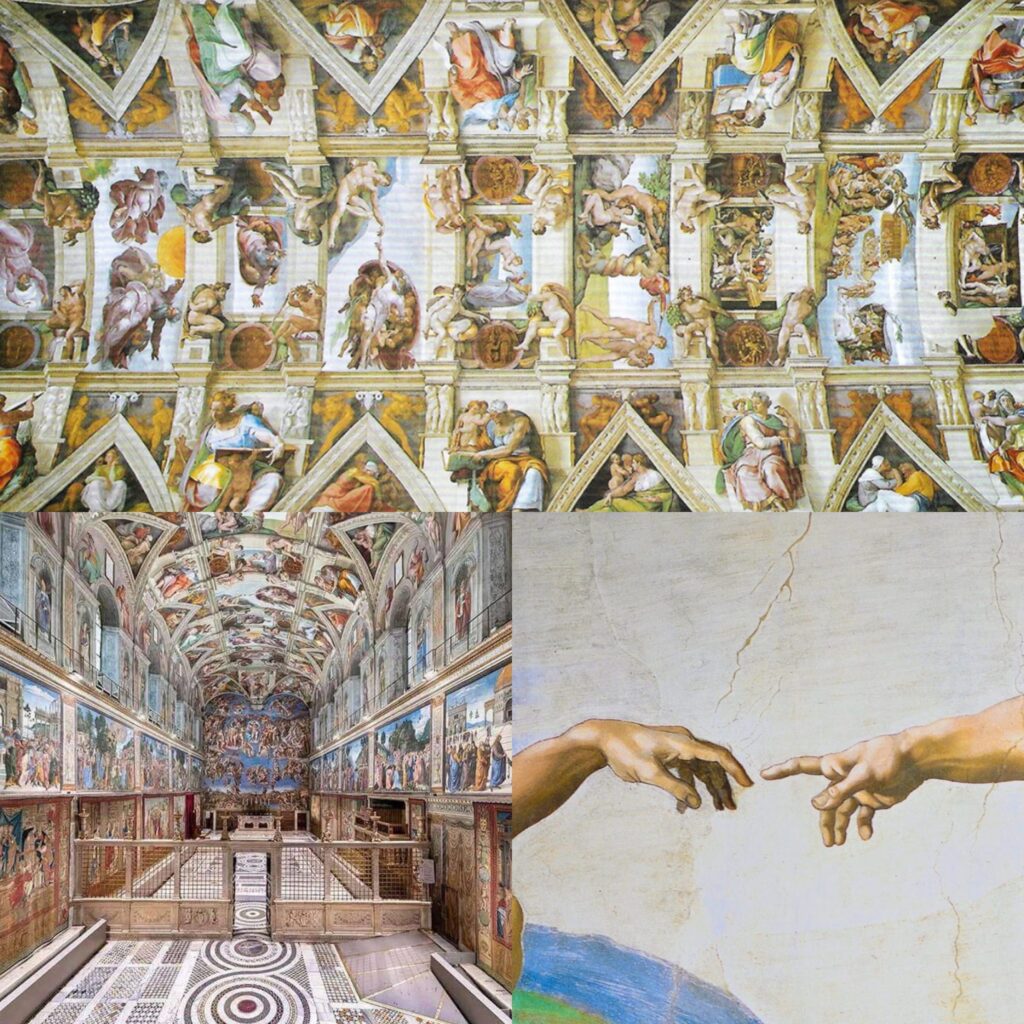
10 Mind-Blowing Facts About Michelangelo and the Sistine Chapel
-
He Didn’t Want the Job. He Hated It… At First – Michelangelo considered himself a sculptor, not a painter. When Pope Julius II commissioned him to paint the Sistine Chapel ceiling in 1508, he was reportedly reluctant and grumbled about the “terrible” work ahead.
-
Four Years of Pain – The 5,000+ square-foot ceiling took four years (1508–1512) to complete, leaving Michelangelo with sore arms, neck, and back from painting overhead.
-
Lying on His Back… Literally – He painted while lying on scaffolding, stretching over his head for hours at a time. Some say he developed temporary blindness from the strain.
-
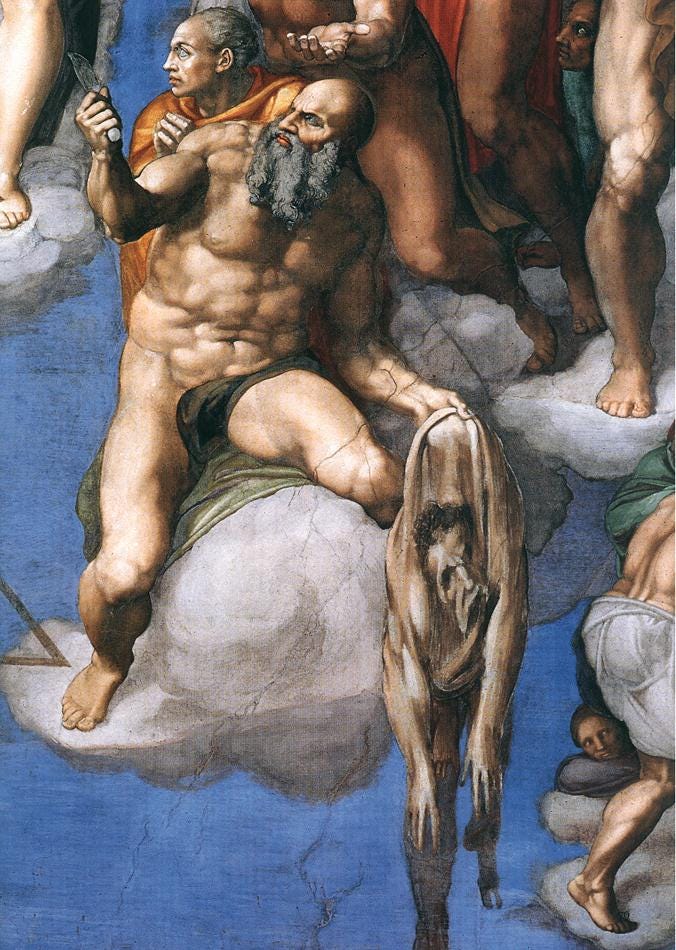
Hidden Self-Portrait – Michelangelo painted his own face onto St. Bartholomew’s flayed skin in The Last Judgment, symbolizing his personal suffering and devotion.
-
Brilliant Colors – The vibrant blues, reds, and golds we see today were hidden for centuries under layers of candle soot—restoration in the 1980s revealed their original glory.
-
Optical Illusions Galore – Using foreshortening, Michelangelo stretched and angled figures so they appear perfectly proportioned from the chapel floor.
-
The Famous Finger Touch – In The Creation of Adam, the almost-touching fingers of God and Adam symbolize divine spark, human potential, and, some believe, even the human brain.
-
Tiny Easter Eggs – Michelangelo snuck in skeletons, strange hybrid creatures, and subtle symbolic details that most visitors never notice.
-
Secret Work Hours – To avoid crowds and distractions, Michelangelo sometimes painted in the early morning or late at night, working in near solitude.
-
Sistine Chapel = Gym Workout – Painting the ceiling was physically grueling—Michelangelo described the project as a test of endurance, strength, and sheer willpower.
And one extra for good luck…
-
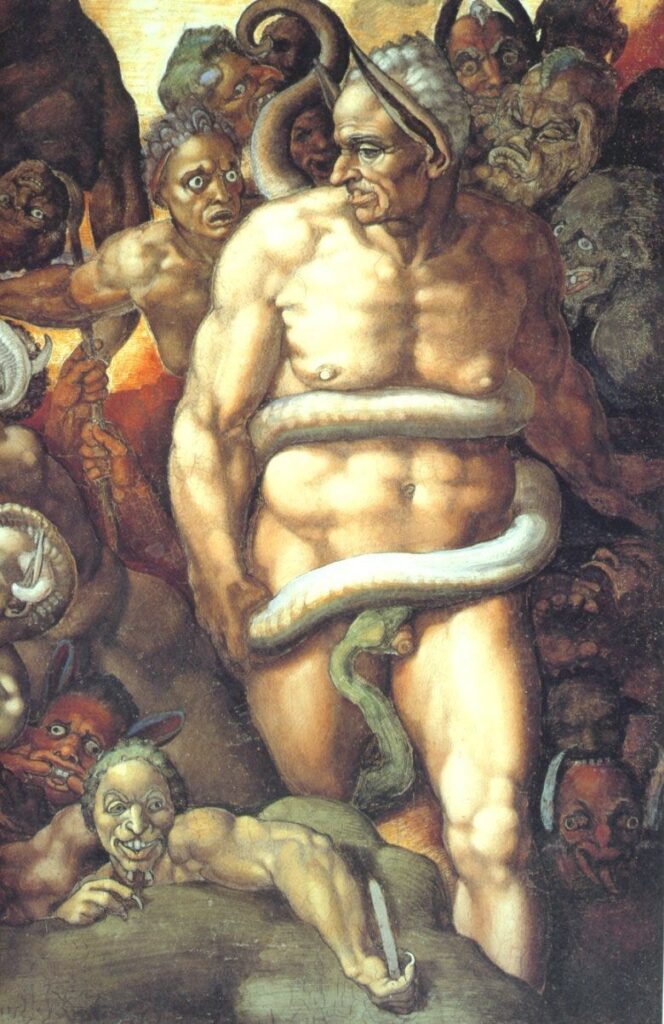
Michelangelo Got Revenge on a Critic
Michelangelo apparently had a sense of humor (and a streak of mischief). Fra Biagio de Cesena, the papal master of ceremonies, criticized the nudity in The Last Judgment, calling it inappropriate. Michelangelo responded by secretly painting Fra Biagio as Minos, the judge of the underworld, complete with donkey ears and a snake biting him (in the crotch) – essentially condemning him to Hell! When the monk protested, the Pope reportedly said: “Even I cannot remove him from Hell!”
It’s a perfect example of Michelangelo’s sly wit and rebellious streak – proof that even the greatest artist could throw some playful shade.
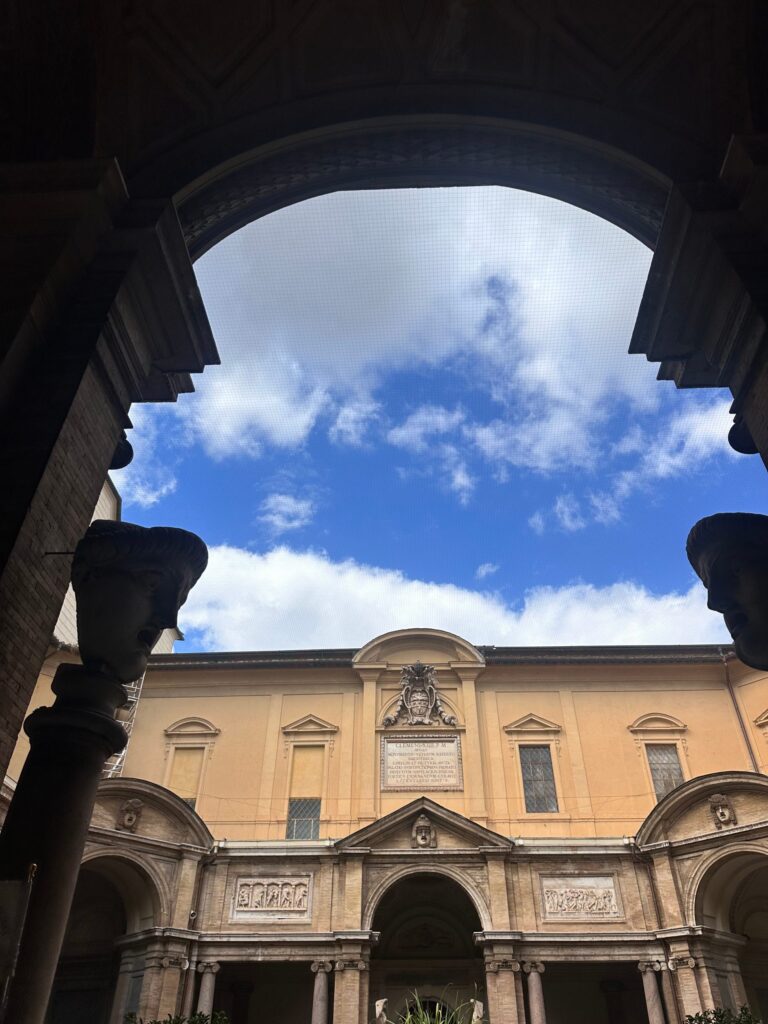
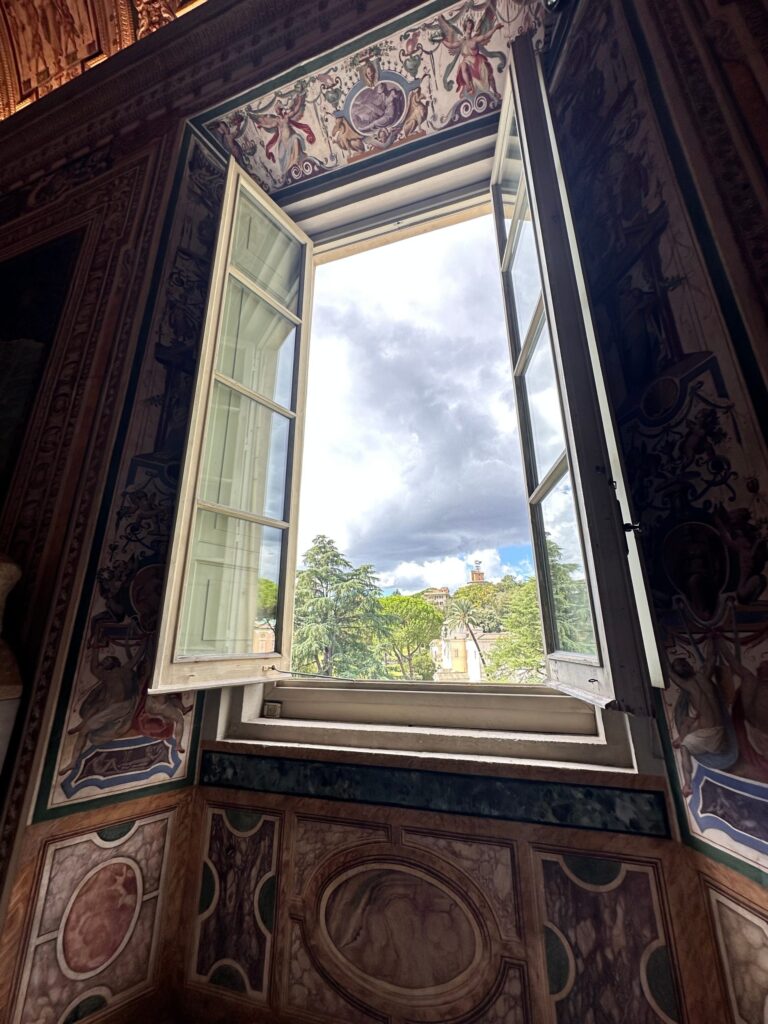
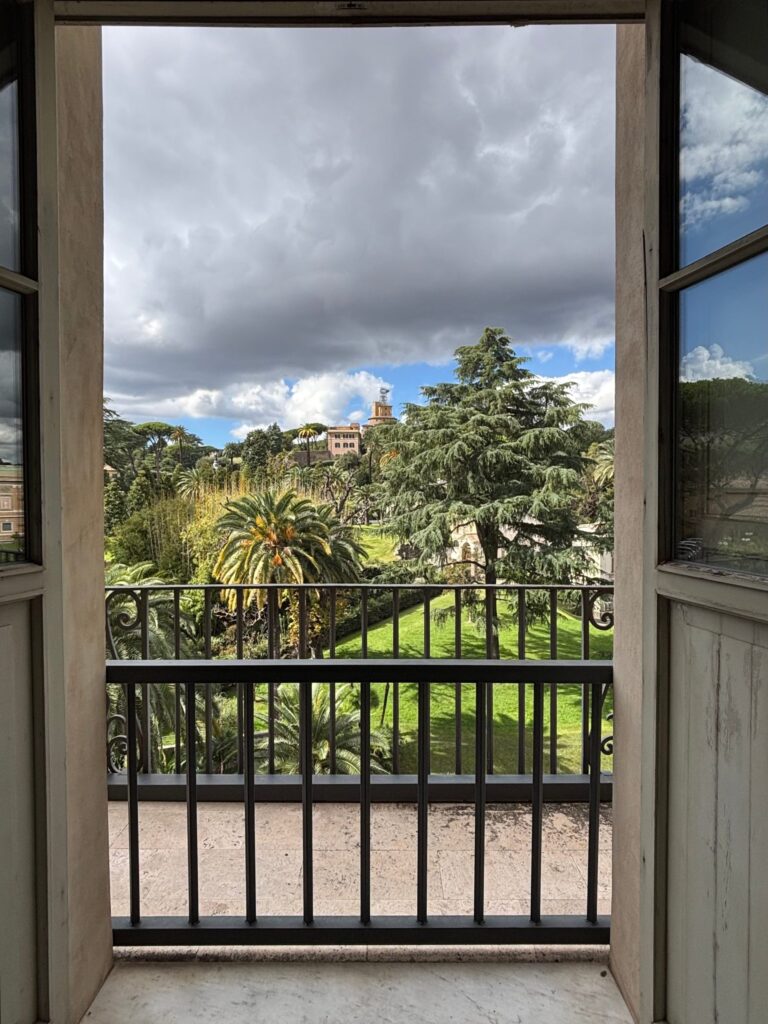
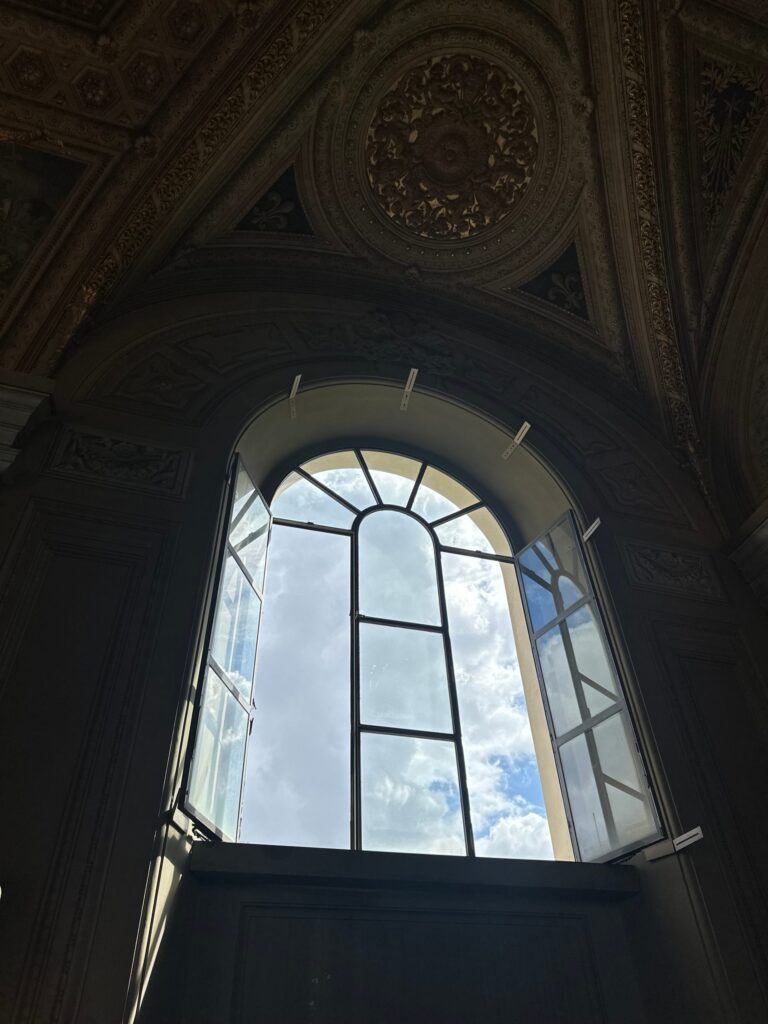
I couldn’t help but notice the windows that allow just enough light to highlight the beauty without ruining the art…all while showcasing the beautiful surroundings.
Before heading out the door, I told Inge and James that we should mail some postcards. The Vatican has its own zip code and a custom stamp of the Pope, making it a unique gift for friends/family. Unfortunately, they are still finishing up the supply of Pope Francis stamps, and the new design with Pope Leo has not yet been released.
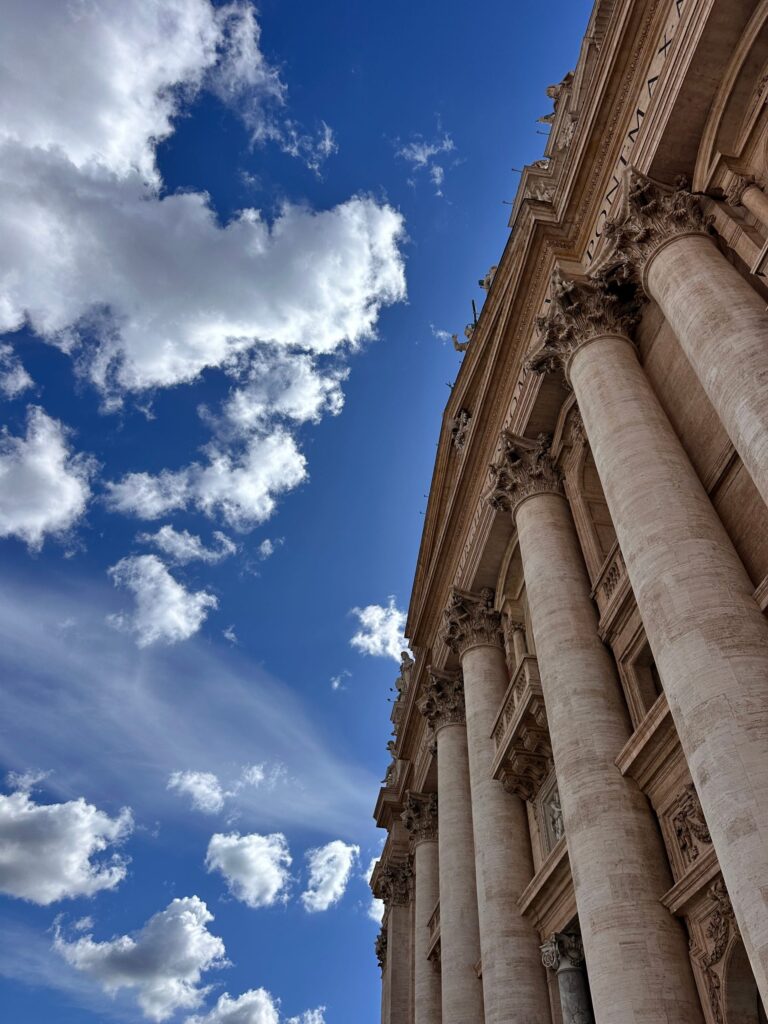
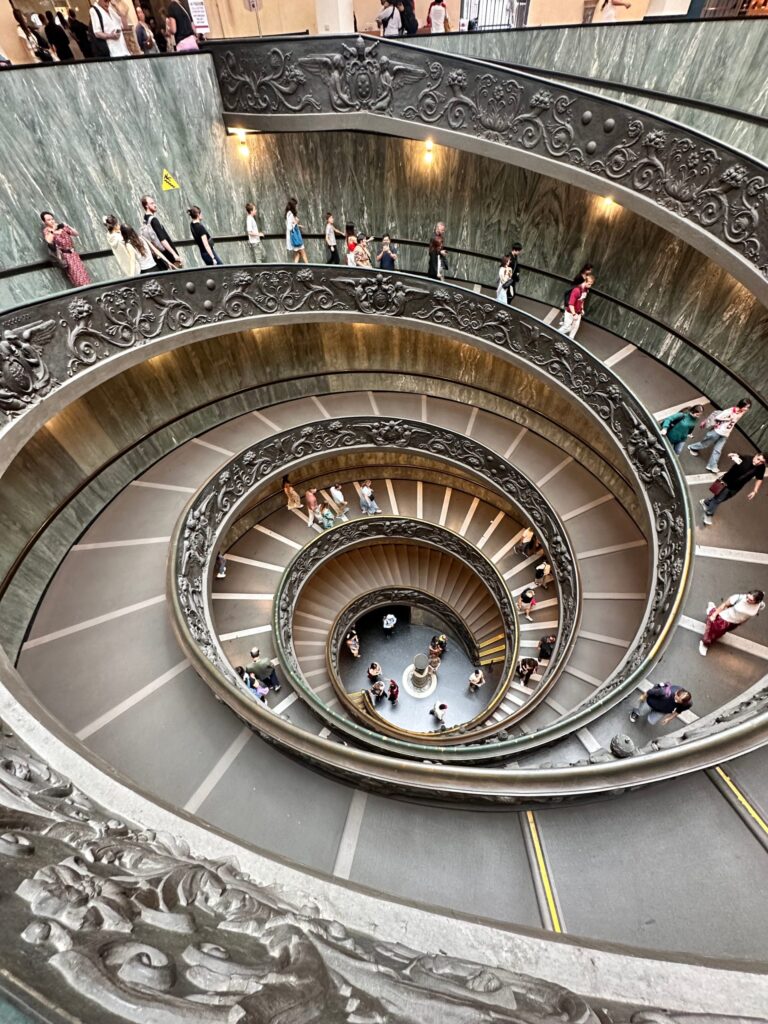
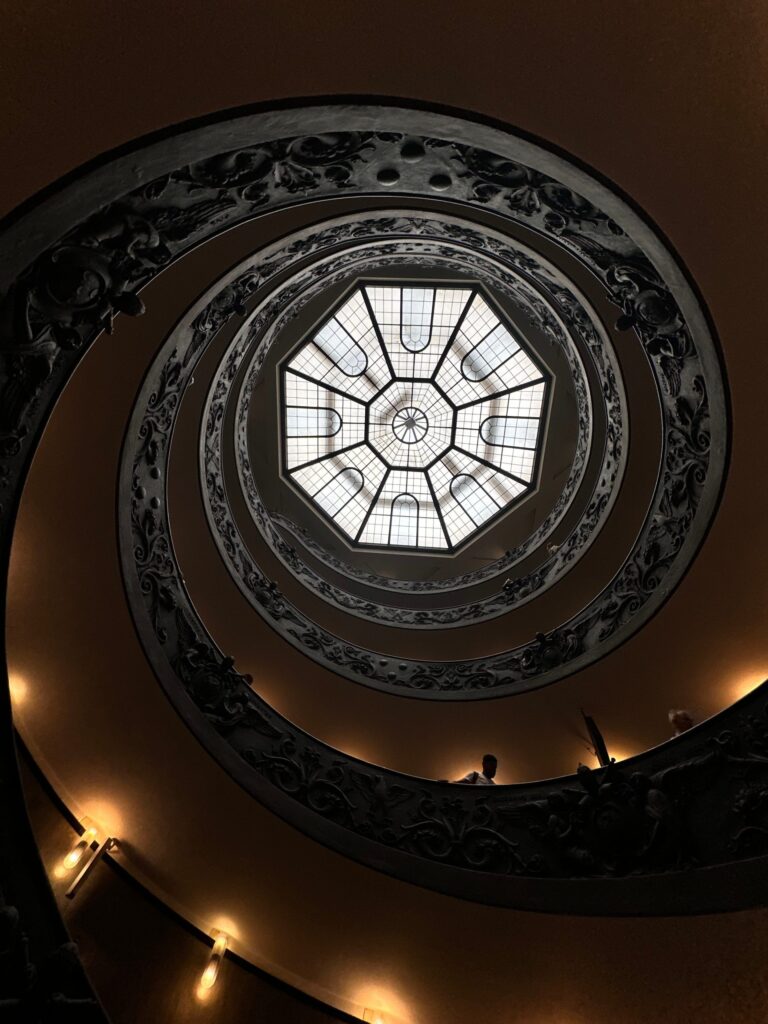
The architecture is stunning, and the use of the Fibonacci sequence is mesmerizing.
While writing this post, I did some research on the Vatican (obviously), and this is proof from ChatGPT that I am not the only one to make this nativational error in the beginning. Learn from my mistake, people!
Things I Learned the Hard Way at the Vatican
1. There Is a Correct Entrance. It Is Never the One You’re Standing At.
The guided tour entrance to the Vatican Museums is not a suggestion. It is specific. It is firm. It does not care about your confidence.
If you are smiling calmly at the “front,” you are probably wrong.
2. The Vatican Starts On Time. ON. TIME.
Italy runs on vibes. The Vatican City runs on Swiss precision.
If your ticket says 10:00, that means:
-
Not 10:03
-
Not “we’re close”
-
Not “they’ll understand”
They will not understand.
…
All in all, if you are in Rome, don’t miss an opportunity to spend a day at the Vatican, walking the grounds, taking in all the beauty, and admiring some of the most incredible art and history in the world. And if you feel so inclined, take a moment for a quiet prayer inside; it’s an experience that stays with you.
Much love & gratitude. Namaste 🙏
Don’t forget to like and share this post, please. Thank you.
To see more photos and videos from my adventures, follow me on social media. Facebook, Instagram, YouTube, TikTok, and Threads or connect with me on LinkedIn. New to BlueSky so check it out!
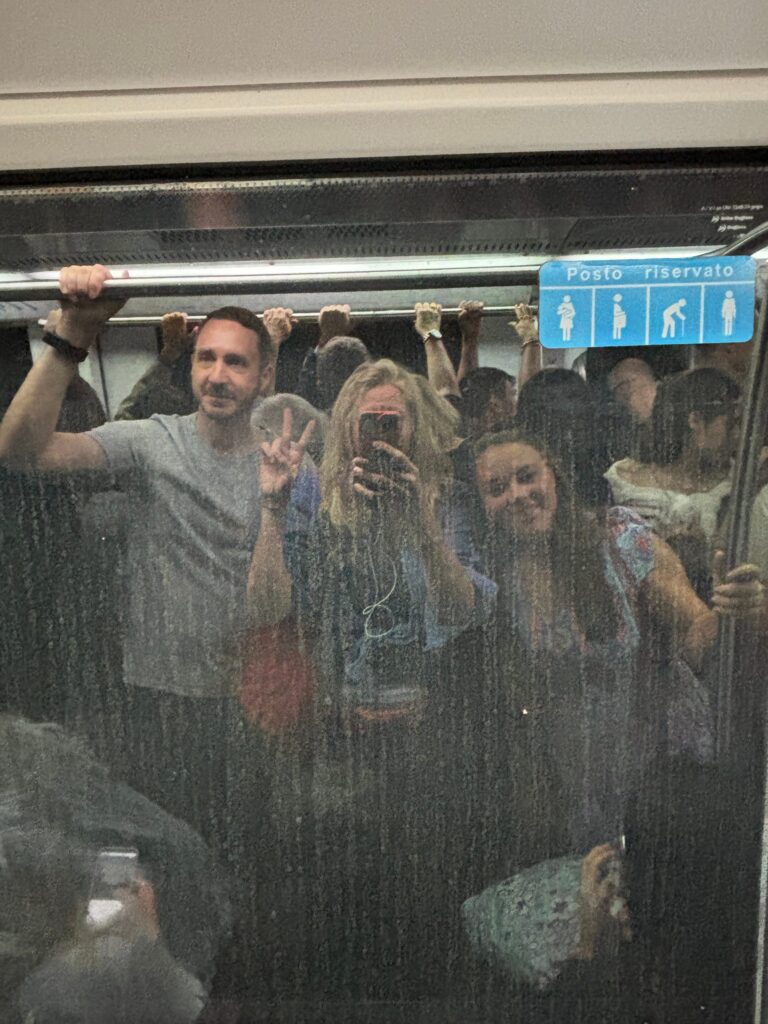
Crowded subway selfie on the way…