*These events took place in September/October 2025.
*This post is very long, so if it is cut off, be sure to click “View Entire Message” at the end.
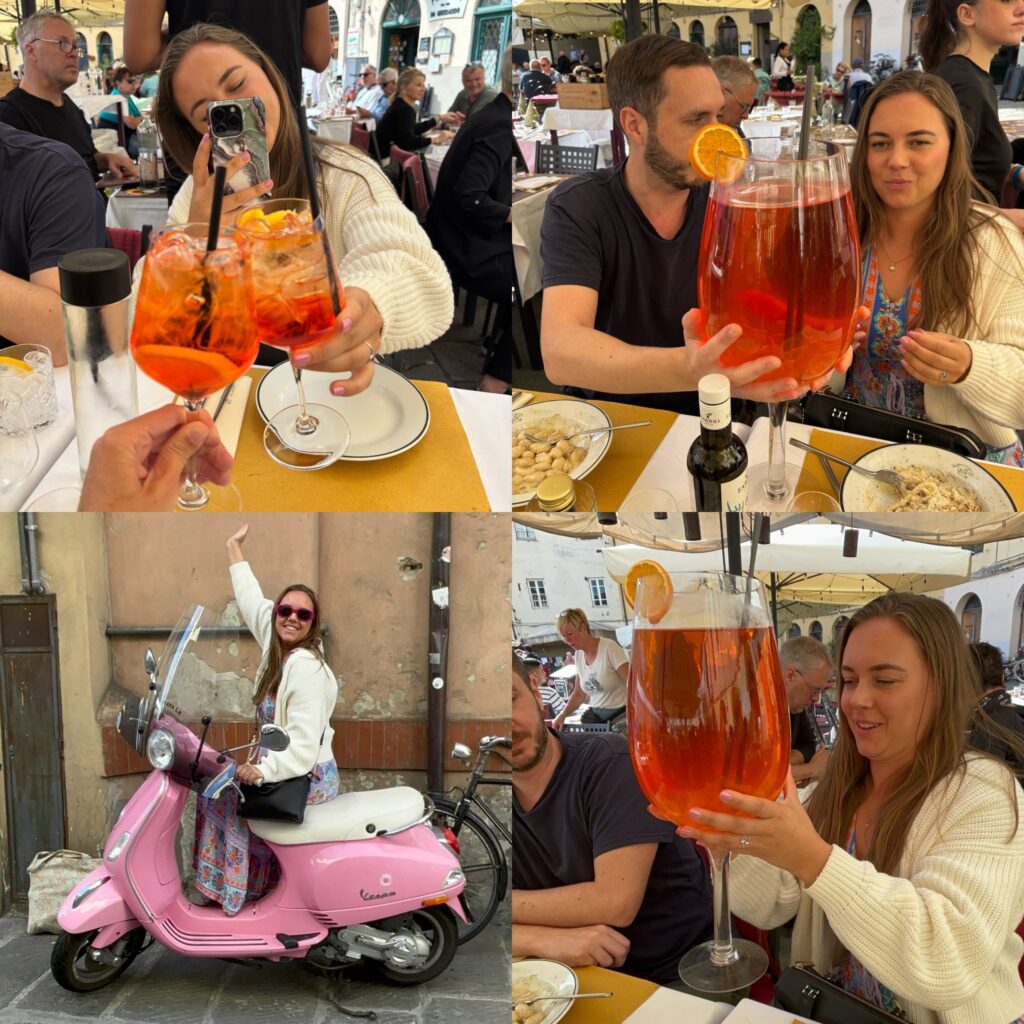
“When in doubt…order the Aperol Spritz.” Me
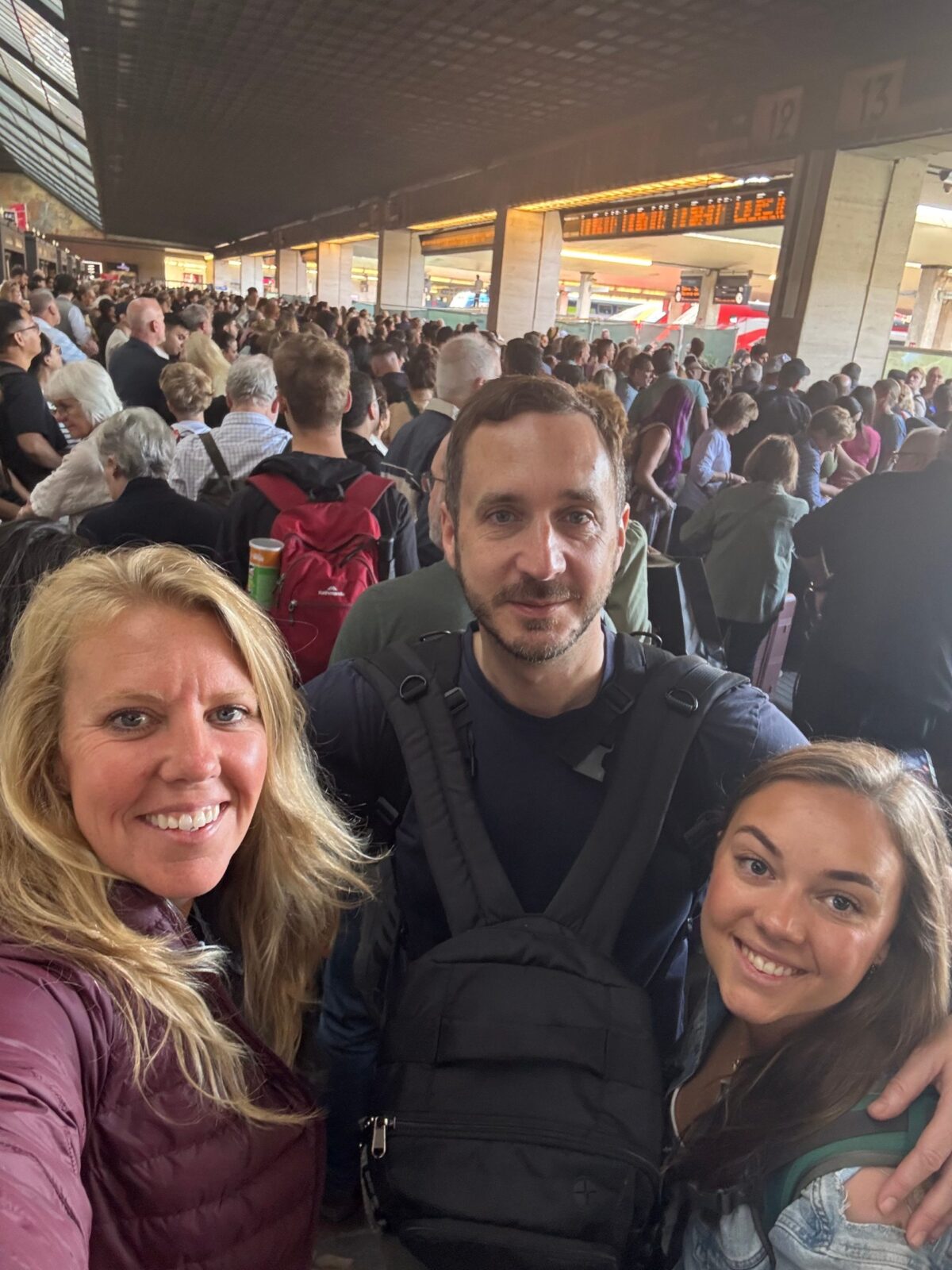
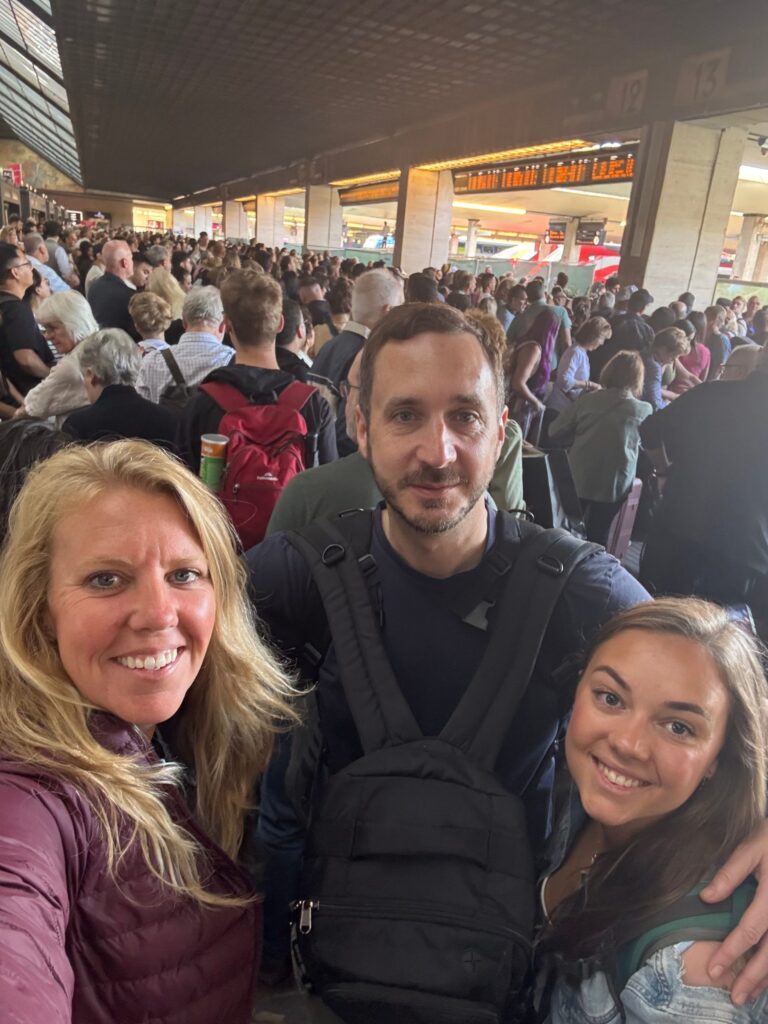
Getting out of Florence was a bit of a whirlwind. Something (we never did figure out what or why) was happening that day. The train station was absolute chaos, and many of the trains had been cancelled…thankfully not ours.
When we arrived at Santa Maria Novella Station, it was a madhouse. Crowds everywhere, confused travelers staring at departure boards, and listening for their train updates in Italian. Our train to Lucca was packed to the gills, but we made it.
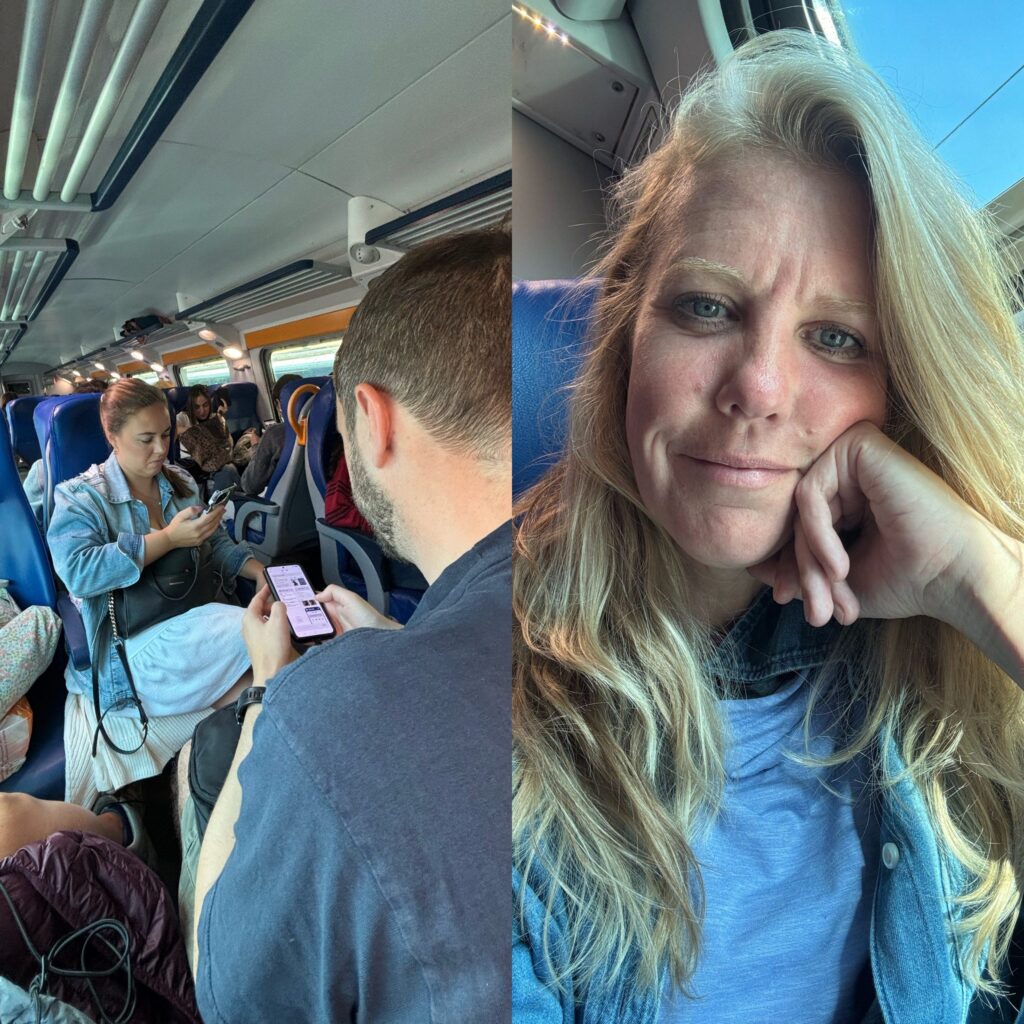
And just like that…we were in Lucca for two days. Not nearly long enough.
Ciao, ciao from Lucca, Italy! Birthplace of one of the most famous opera composers in history, Giacomo Puccini. He’s best known for operas such as La bohème (1896), Tosca (1900), Madama Butterfly (1904), and Turandot (1924).
His childhood home is now a museum, Casa Natale di Giacomo Puccini. Unfortunately, we didn’t make it there this time, which just gives me one more reason to come back.
Not that I needed an excuse.
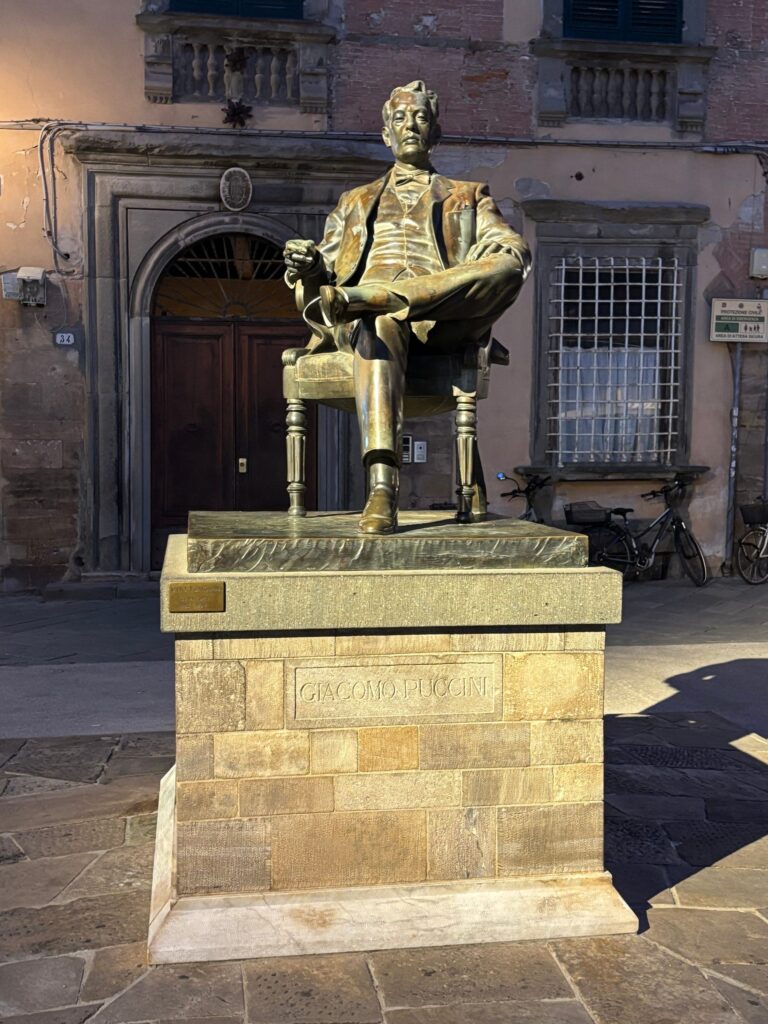
I had recently walked through Lucca on the Via Francigena and spent two nights in this charming city (population about 90,000). I purposely saved a couple of activities so I could experience them with Ingeborg and James.
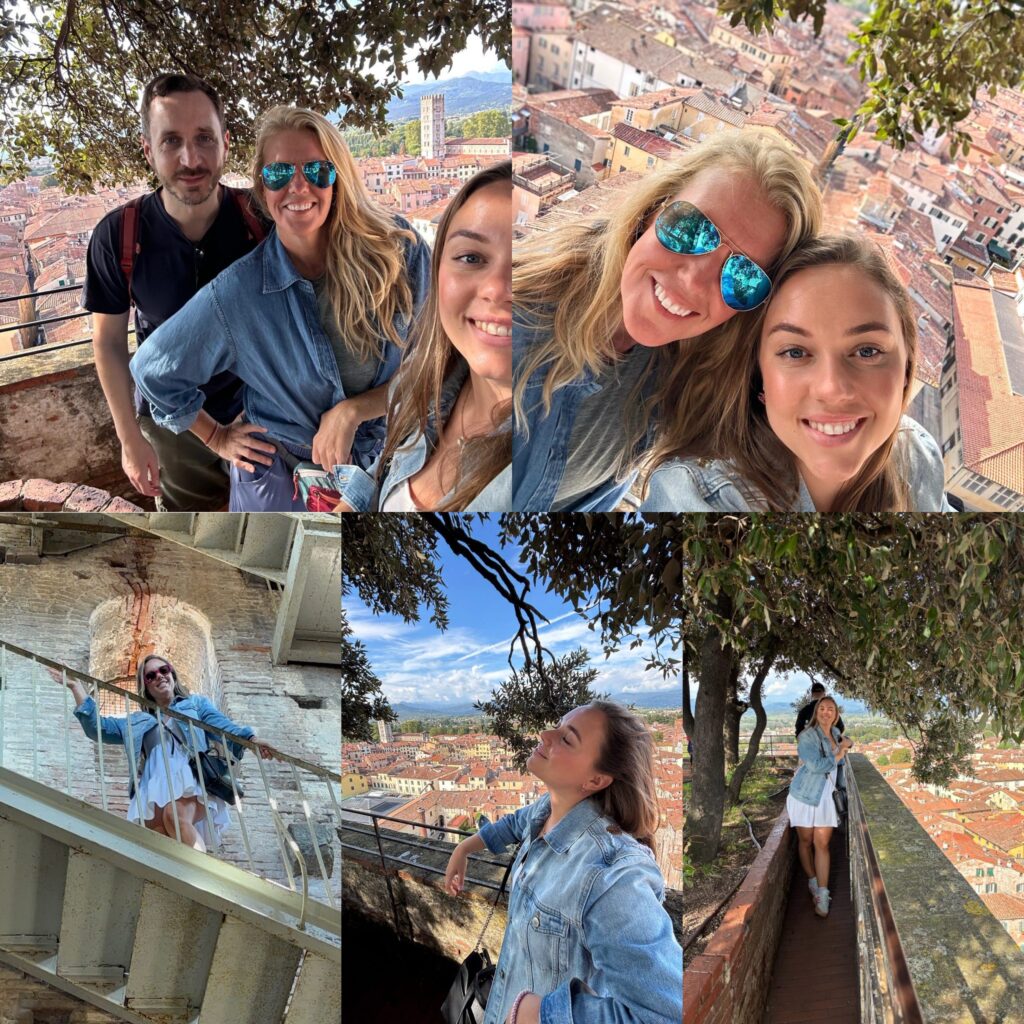
The first: climbing the famous Guinigi Tower.
This medieval structure is known for the serene little garden and oak trees growing on top. Yes. Actual trees. On Top of the Tower…and a garden!
To read my previous post about Lucca, click here.
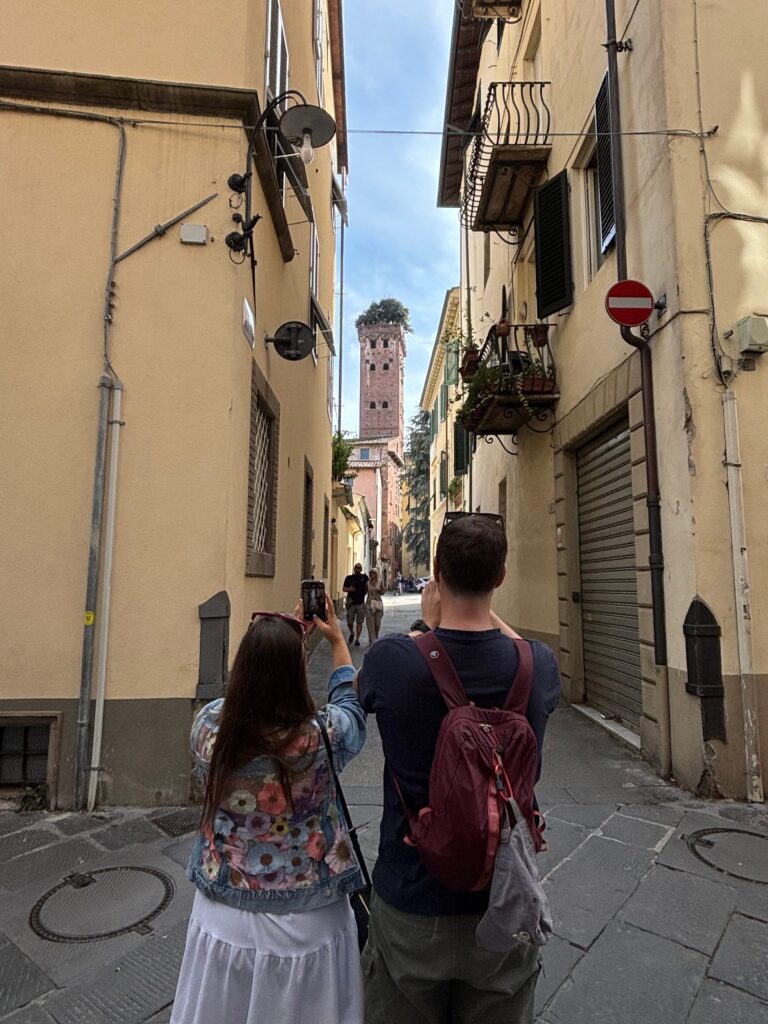
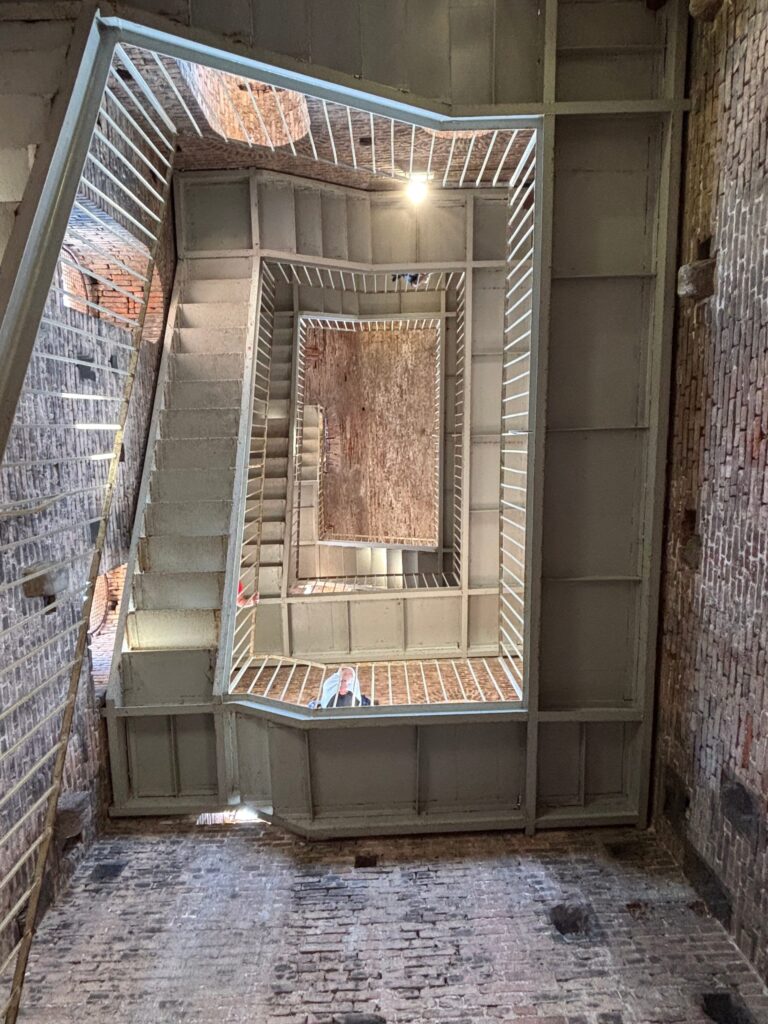
Built in the late 1300s, the powerful Guinigi family planted those trees so their tower would stand out from all the others in the city skyline. I would say they succeeded.
We climbed the 230 steps to the top and were rewarded with breathtaking panoramic views over Lucca’s terracotta rooftops. I think it is one of the most gorgeous cities in Italy – and somewhat of a hidden gem since most people choose to visit Florence, Siena, or Pisa when passing through Tuscany.
At one point, we accidentally spied on a couple relaxing on their rooftop patio. Sorry, neighbors.
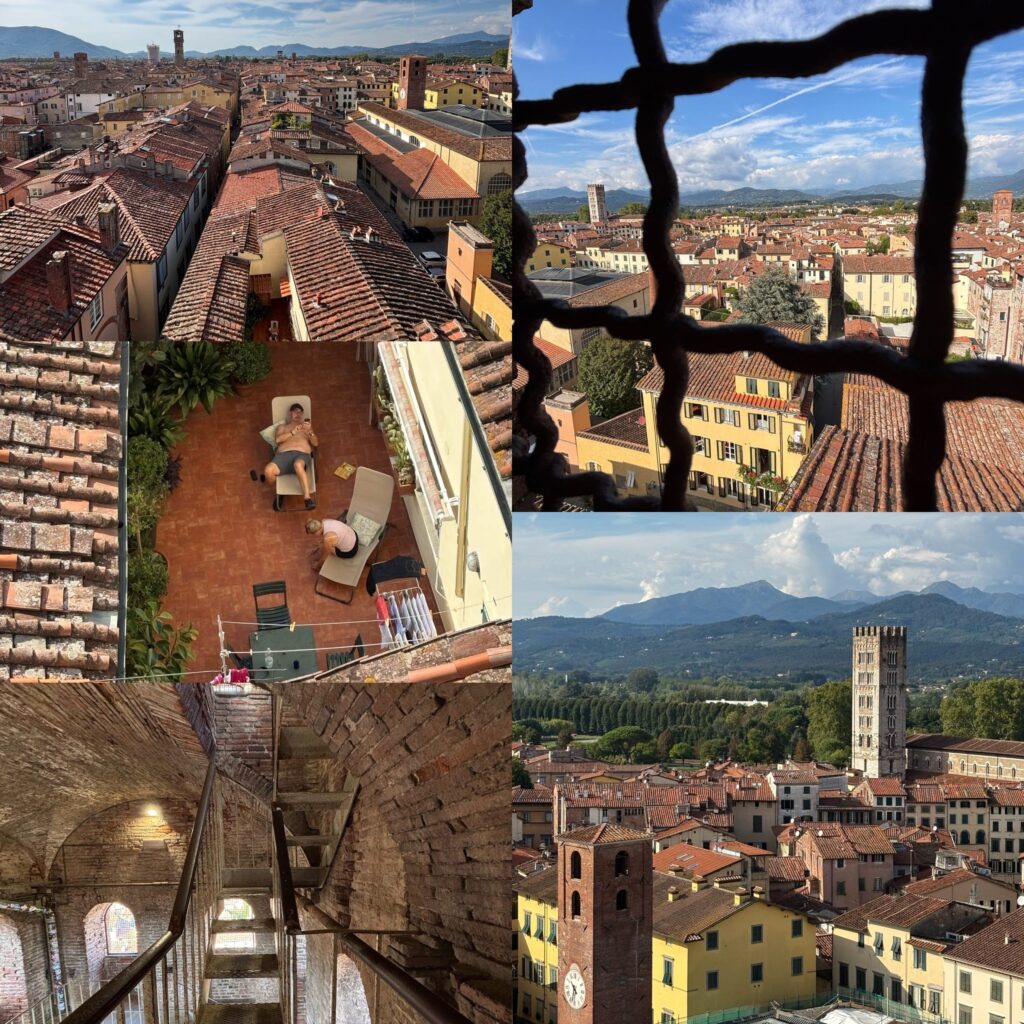
And naturally, a photo shoot is required when the views look like this.
A couple of weeks earlier, when I first passed through Lucca, I visited the Cathedral of San Martino, hoping to see the famous Volto Santo di Lucca (Holy Face of Lucca).
Unfortunately, the life-size crucifix was being moved for restoration and wasn’t on display.
BUT…this time I got to see it.
Traveler Tip: Pilgrims get in free to the Duomo with their Cammino Passport.
Click here to read about my previous visit.
Interesting information about the Volto Santo: The Volto Santo is believed to date to around the 8th–9th century, making it one of the oldest surviving wooden crucifixes in Europe. This wooden crucifix of Christ has been venerated since the Middle Ages. According to legend, it was carved by Nicodemus, the biblical figure who helped bury Jesus, and later miraculously arrived in Lucca by ship that had no crew and was set adrift in the Mediterranean. The ship eventually arrived on the Tuscan coast, and the Volto Santo was brought to Lucca, where it has been kept ever since. Whether legend or not, it became one of the most important pilgrimage relics in medieval Europe, especially for travelers on the Via Francigena.
Two things I immediately noticed while observing the carving:
-
Jesus’ eyes are open.
-
He’s wearing a robe instead of the usual loincloth.
It’s quite different from most depictions of the crucifixion. And incredibly beautiful.
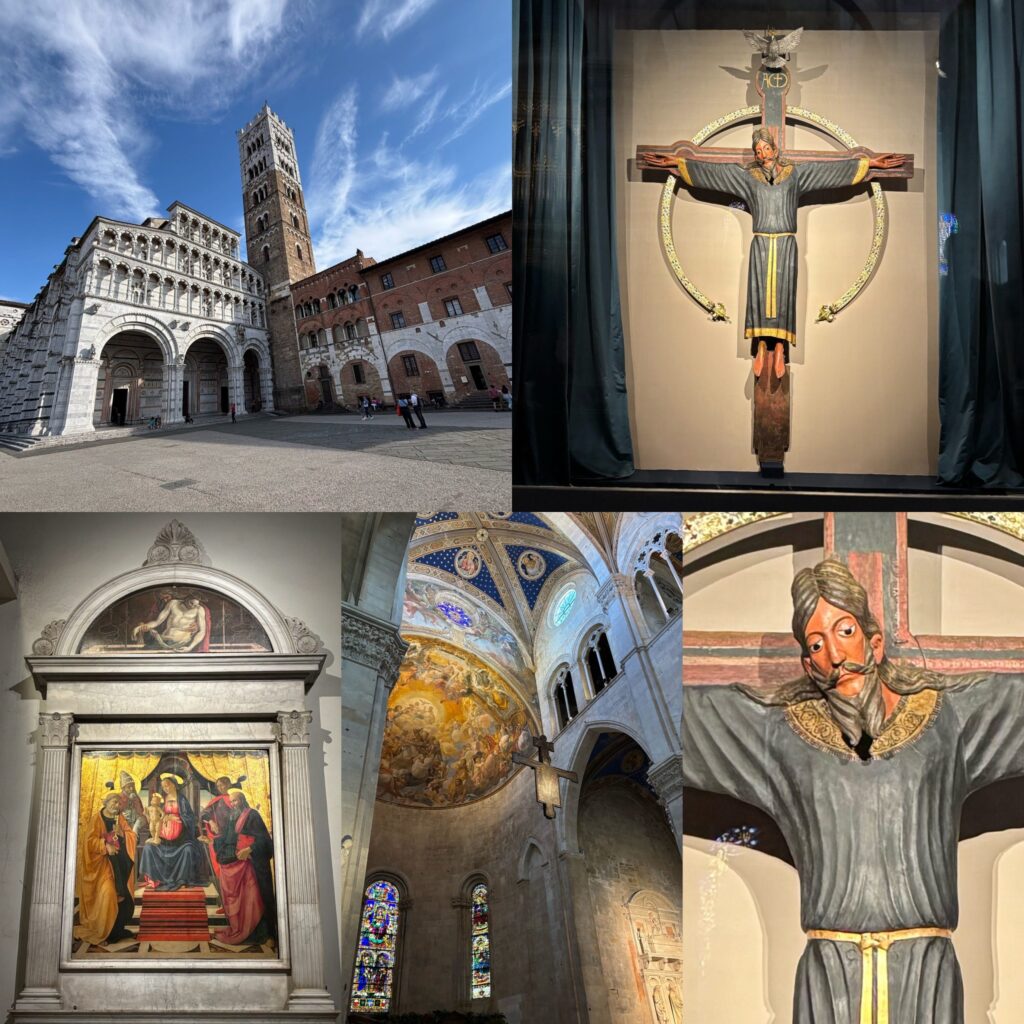
The city of Lucca has over 100 churches…for only 90,000 people, that is a lot of churches to visit. You could spend an entire day church-hopping and not see all of them. So we chose to see two of the most famous, the Duomo discussed above and the Chiesa di San Michele in Foro. I’ve been in this church twice now, so what’s the harm in visiting a third time?
Fun facts are listed below so you don’t have to do the research. You’re welcome.
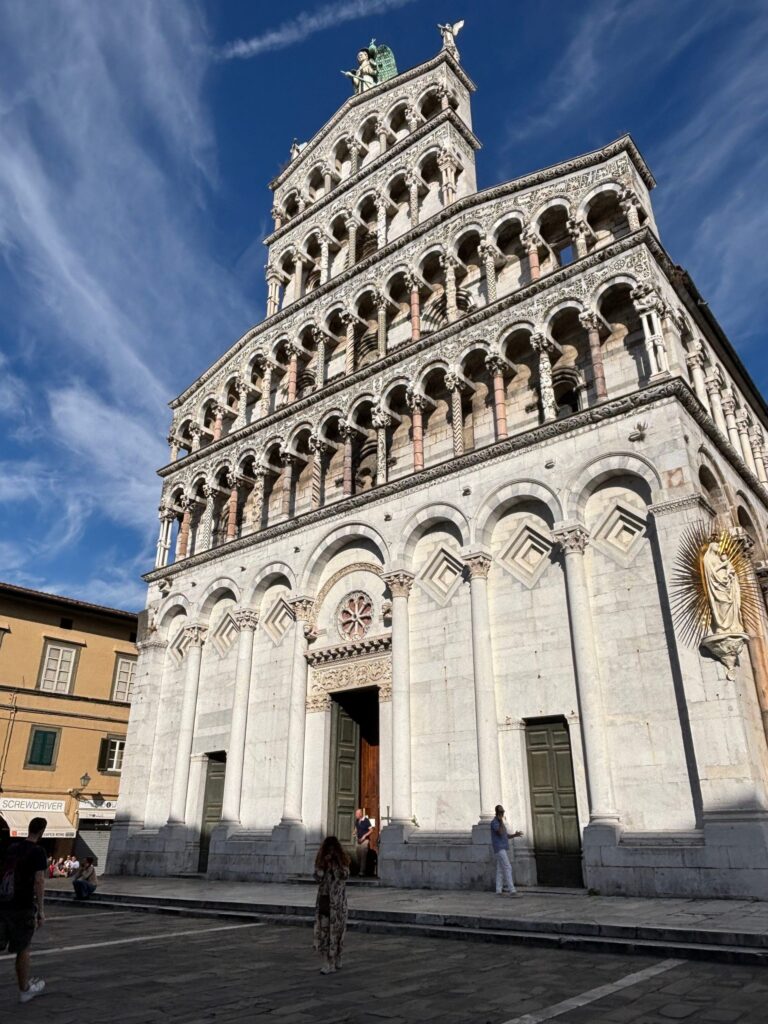
San Michele in Foro is one of the most striking churches in Lucca, located right in the heart of Piazza San Michele, the historic square that bears its name. It’s famous for its ornate Romanesque façade and for being a centerpiece of Lucca’s lively city life.
-
Built on the site of an ancient Roman forum (hence the name “in Foro”).
-
Construction began around the 11th century and continued through the 13th century.
-
The church was a civic as well as religious center, reflecting Lucca’s independence and prosperity during the Middle Ages.
-
The façade is incredibly detailed, covered with sculptures of saints, angels, and mythical creatures. Zoom in on the photo if you can – the details are incredible.
-
At the top, a stunning statue of Archangel Michael dominates the skyline.
-
The decorative columns and arches make it look almost like a cake made of marble.
It really is a masterpiece.
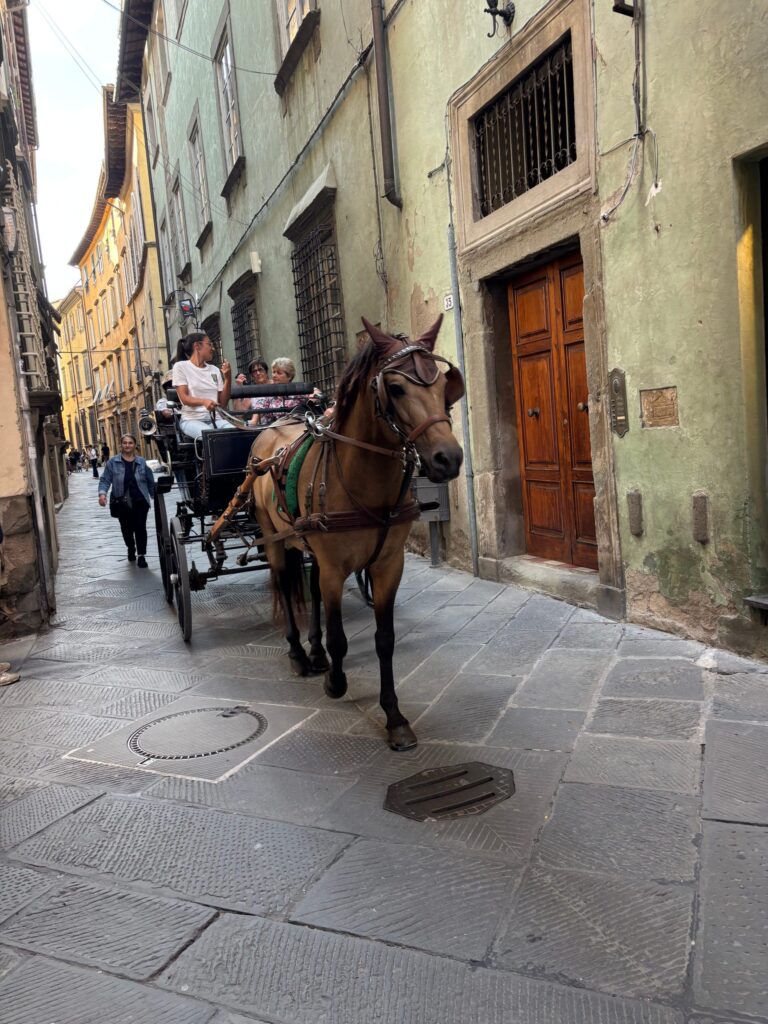
It’s not every day you see a horse having a snack in the middle of town, so of course…copious amounts of photos were required.
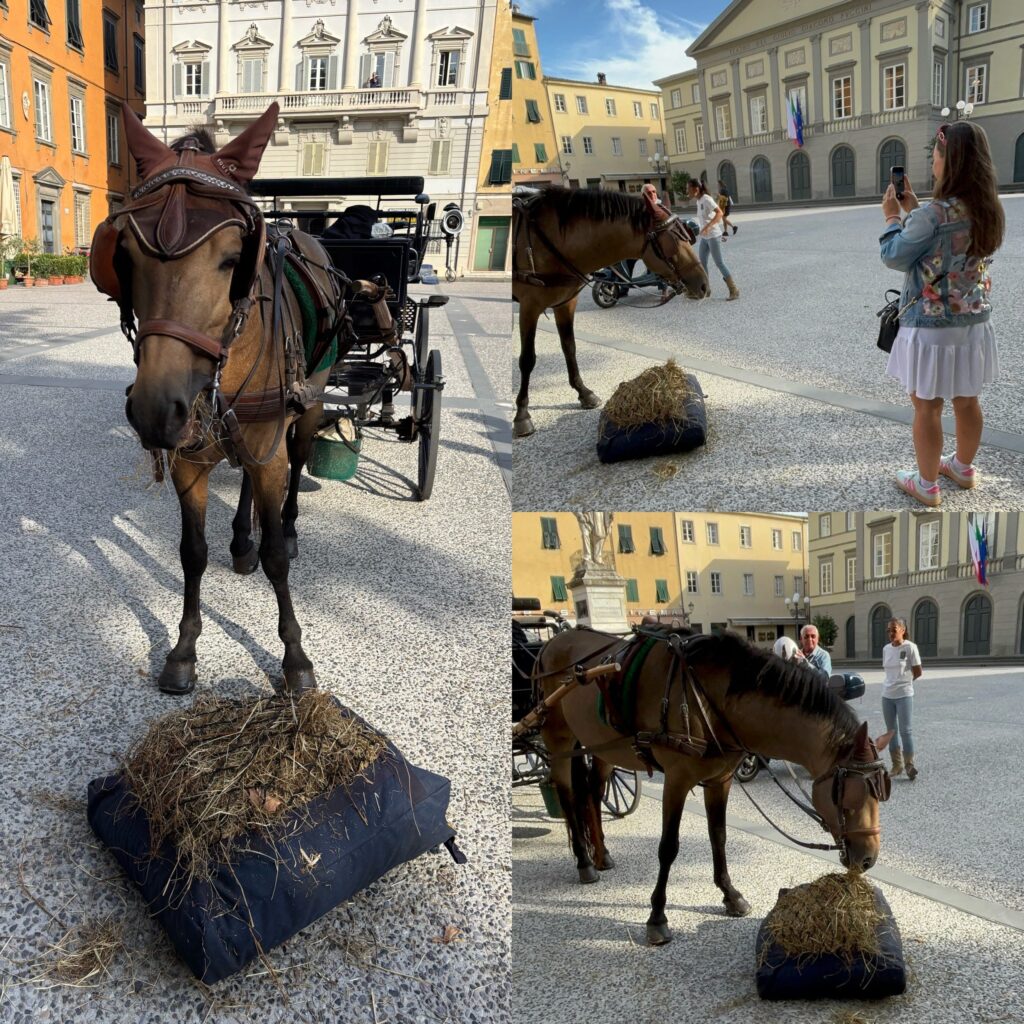
We saw him again…this time working.
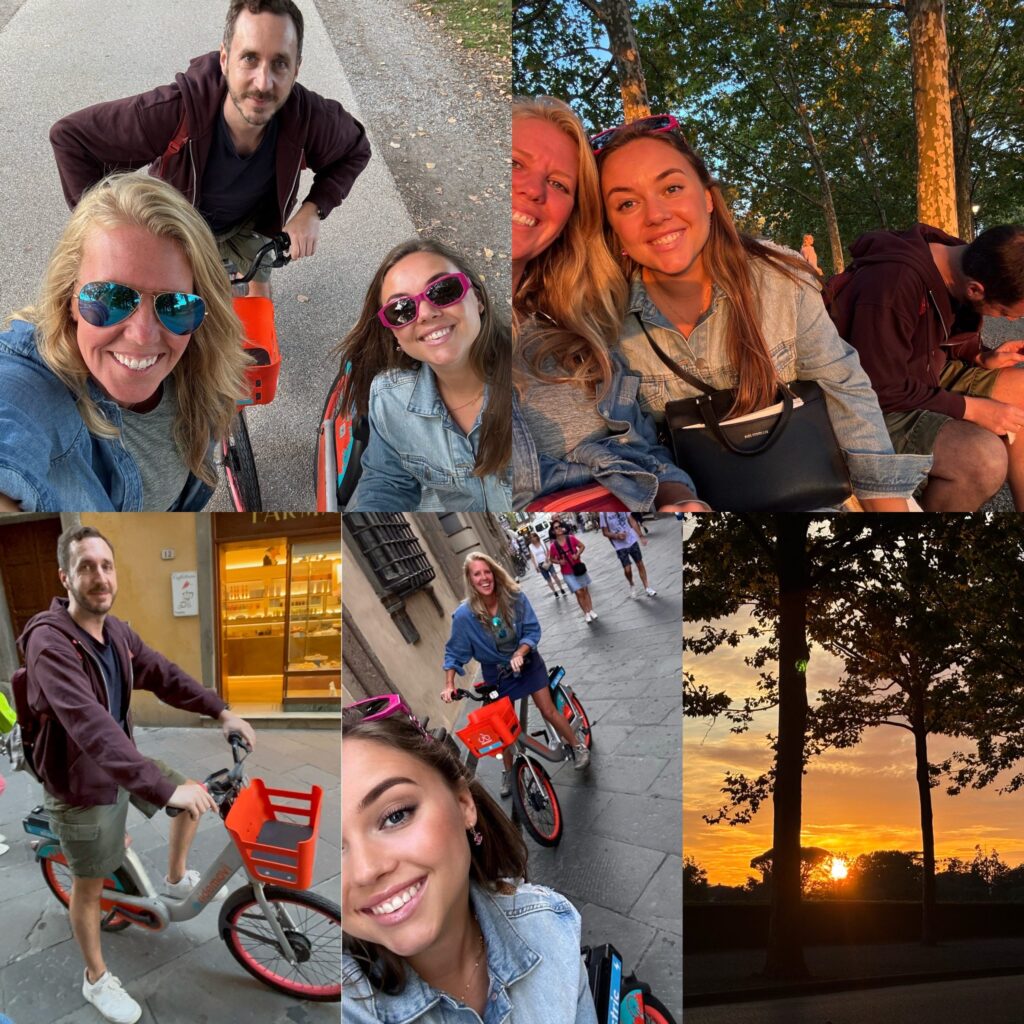
The second activity I had saved for James and Ingeborg was biking along the famous city Walls of Lucca.
The Walls of Lucca are among the best-preserved Renaissance city walls in the world. Unlike many European cities that demolished their fortifications, Lucca kept them and eventually transformed them into a public park.
And it is absolutely fantastic. We had such a fun ride – I even made you a video.
I wish more cities would preserve their historic structures and turn them into something useful and beautiful for the public. The world would be a happier (and probably healthier) place.
Here are a few quick facts about the walls:
-
Length: about 4.2 km (2.6 miles)
-
Height: about 12 meters (40 ft)
-
Thickness: up to 30 meters (98 ft) at the base
-
Construction: mainly 1544–1645
-
Style: Renaissance military fortifications
-
City Gates: 6
-
By the 1800s, the walls were no longer needed for defense. During the rule of Elisa Bonaparte (early 19th century), the walls were transformed into a tree-lined promenade used today.
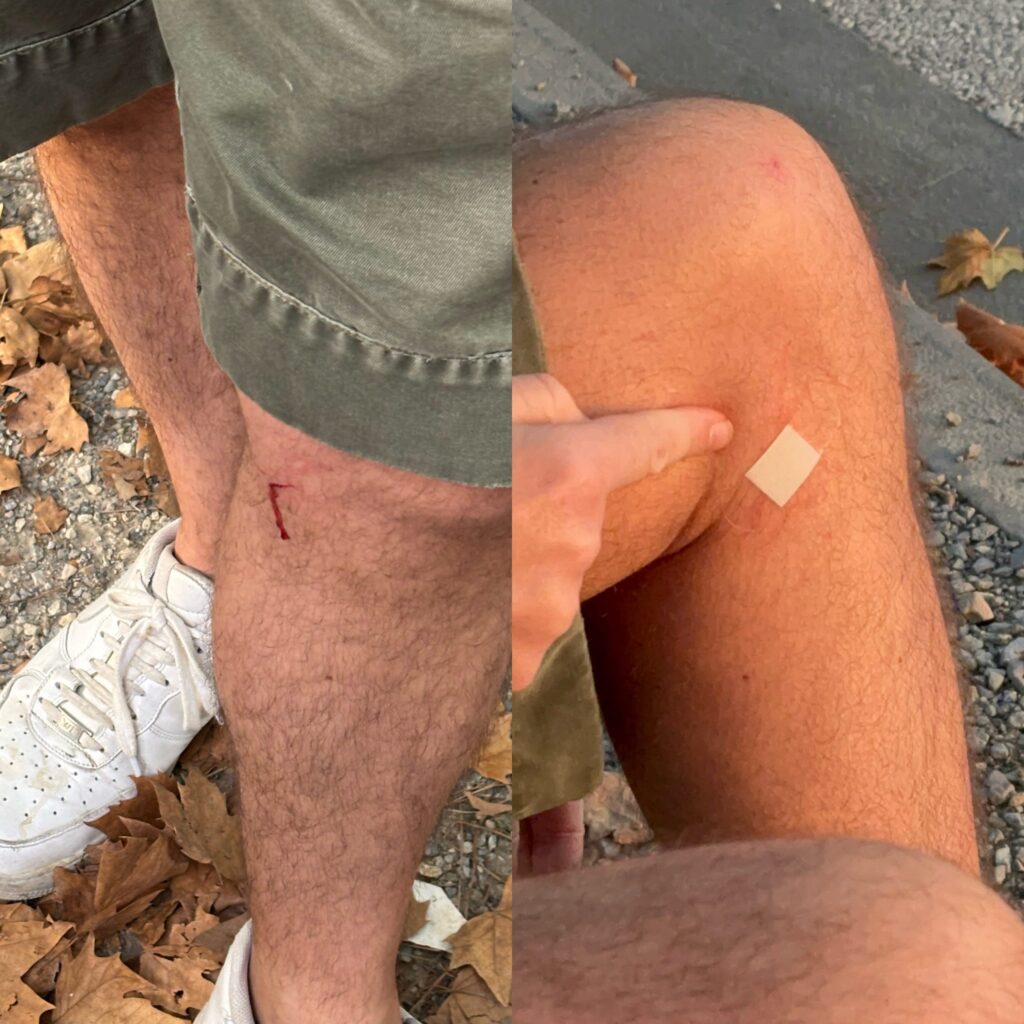
Somehow, James got an owie on the ride. Thank goodness I had one Band-Aid left over from my Cammino.
I’m becoming a bit of an expert, or at least mid-level, at this preparedness thing, thanks to the Cammino.
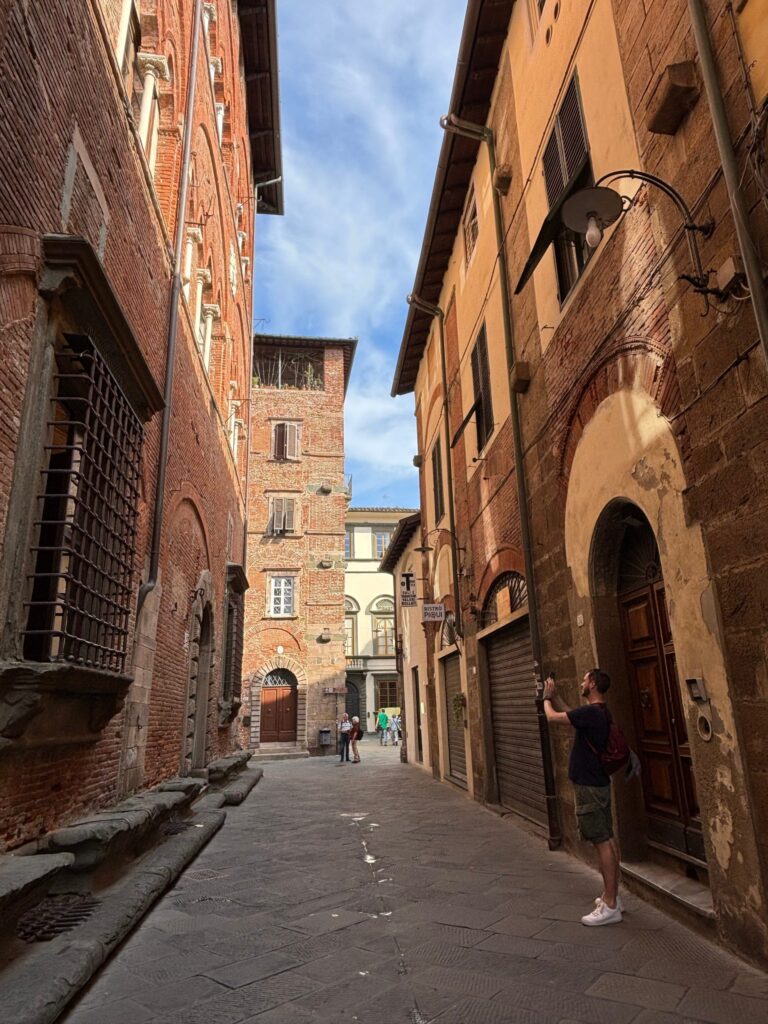
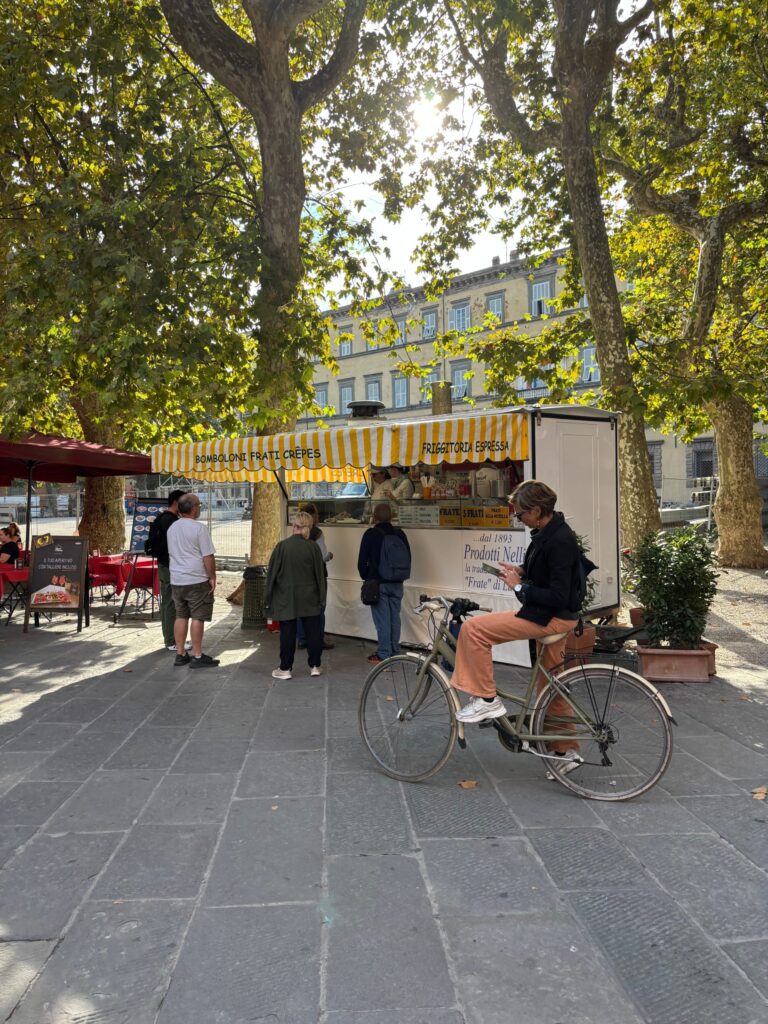
Scenes from around town.
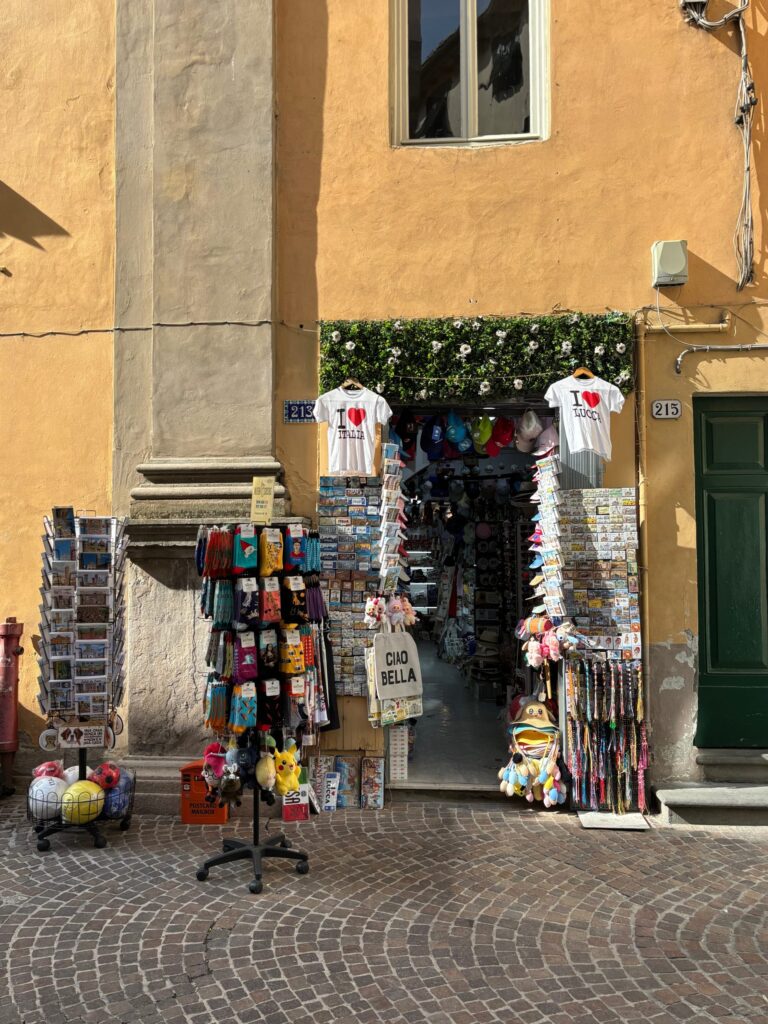
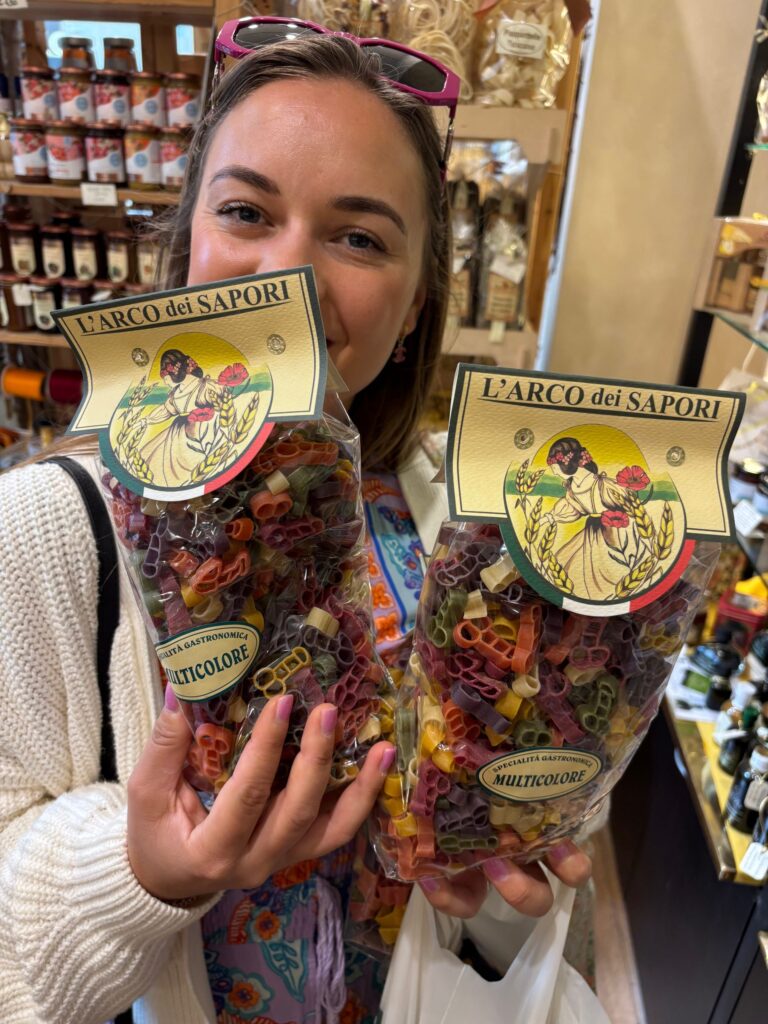
Traveler Tip: Multicolored penis-shaped pasta is a required purchase in Italy.
Two bags, please.
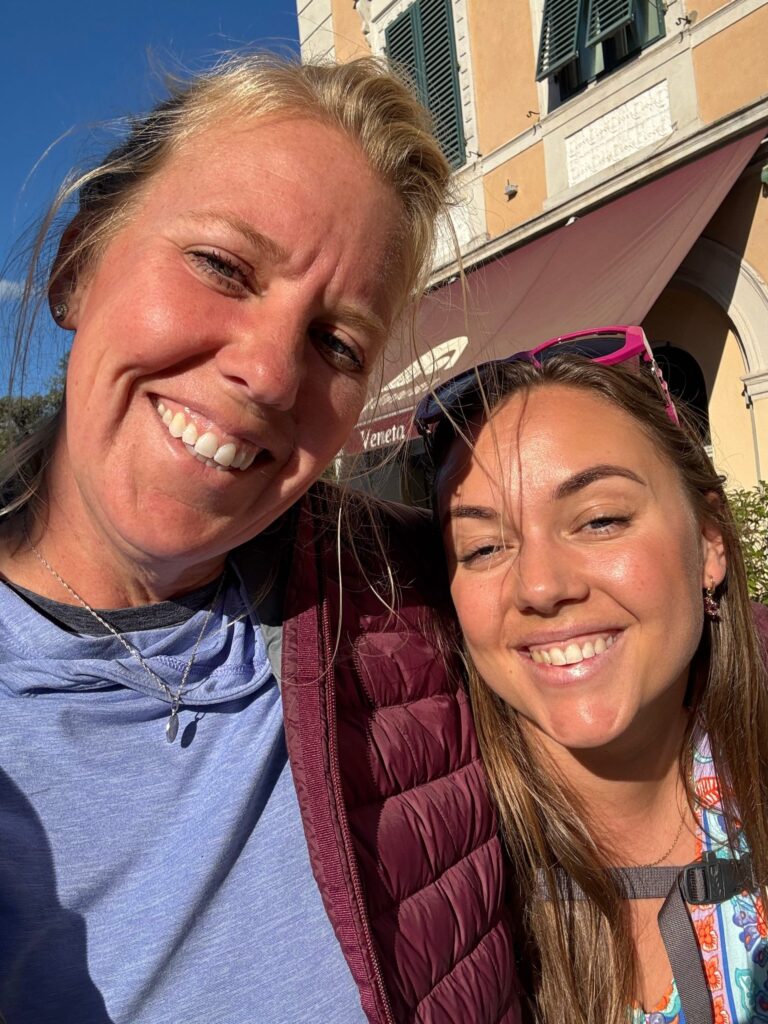
And just like that, it was the end of The Roman Empire Two-Week, Three-City Tour of Italy.
We walked Ingeborg to the train station as she made her way to Pisa to catch her flight home to Norway. James and I departed the following day.
If there’s one thing I know for certain, it’s this:
I will see these two again…no matter where in the world we happen to be.
❤️
If you are traveling through Tuscany, do not miss out on a visit to Lucca. Yes, yes, visit Florence and Siena and even Pisa…but definitely add Lucca to your list. It will be worth the extra day or two and money.
Much love & gratitude. Namaste 🙏
Don’t forget to like and share this post, please. Thank you.
To see more photos and videos from my adventures, follow me on social media. Facebook, Instagram, YouTube, TikTok, and Threads or connect with me on LinkedIn. New to BlueSky so check it out!
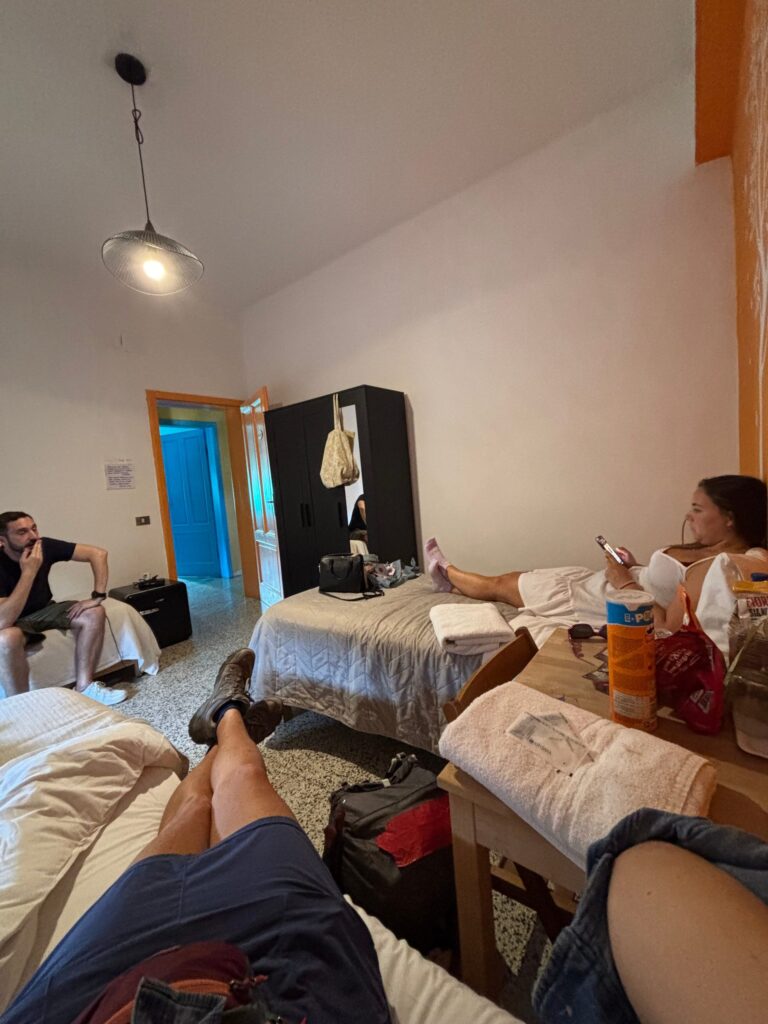
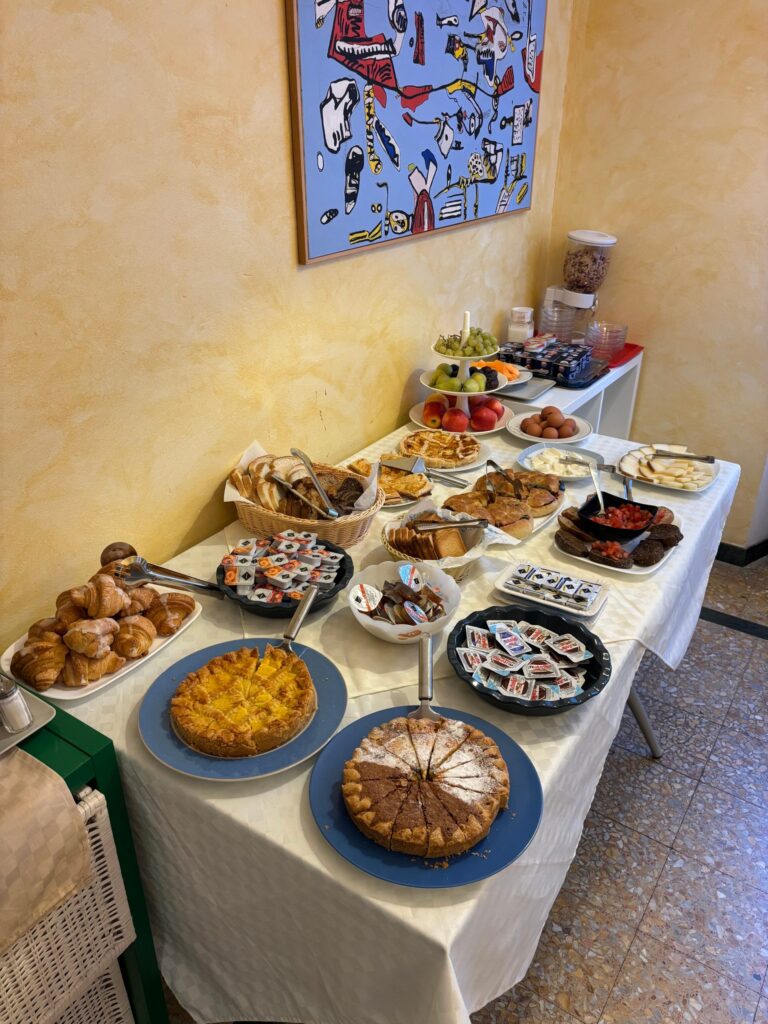
We stayed in the same accommodation that I stayed in during my hike – La Gemma di Elena. It’s a fantastic hostel with an amazing breakfast and friendly staff.
Please excuse the mess.
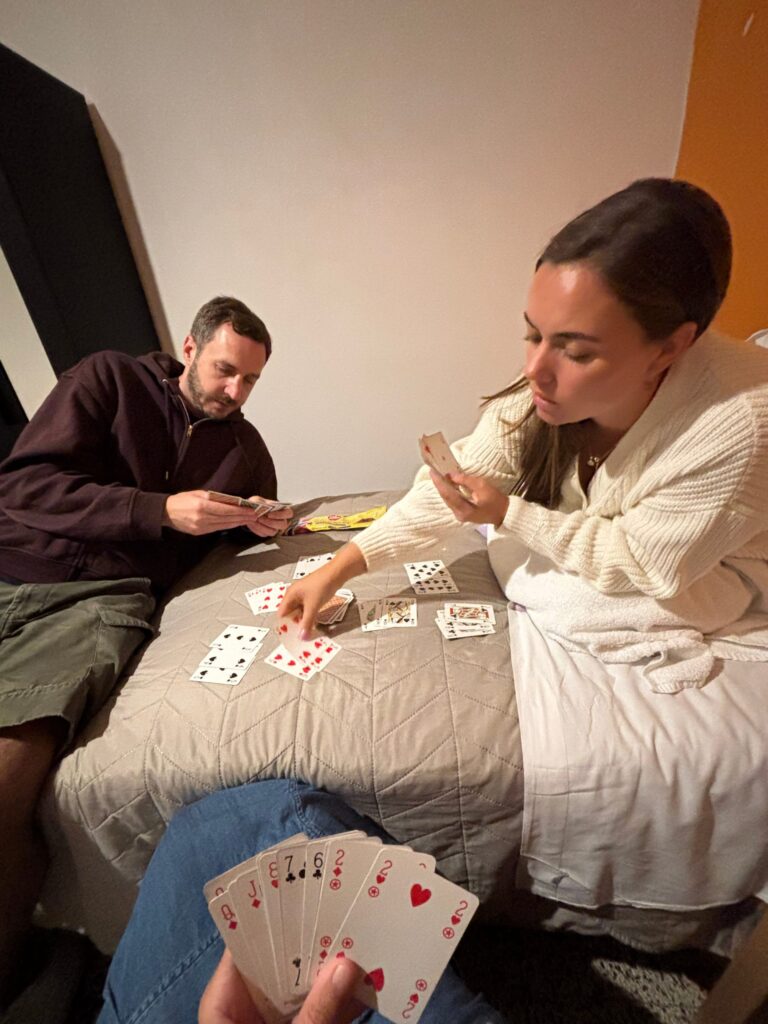
A friendly game of Machiavelli.
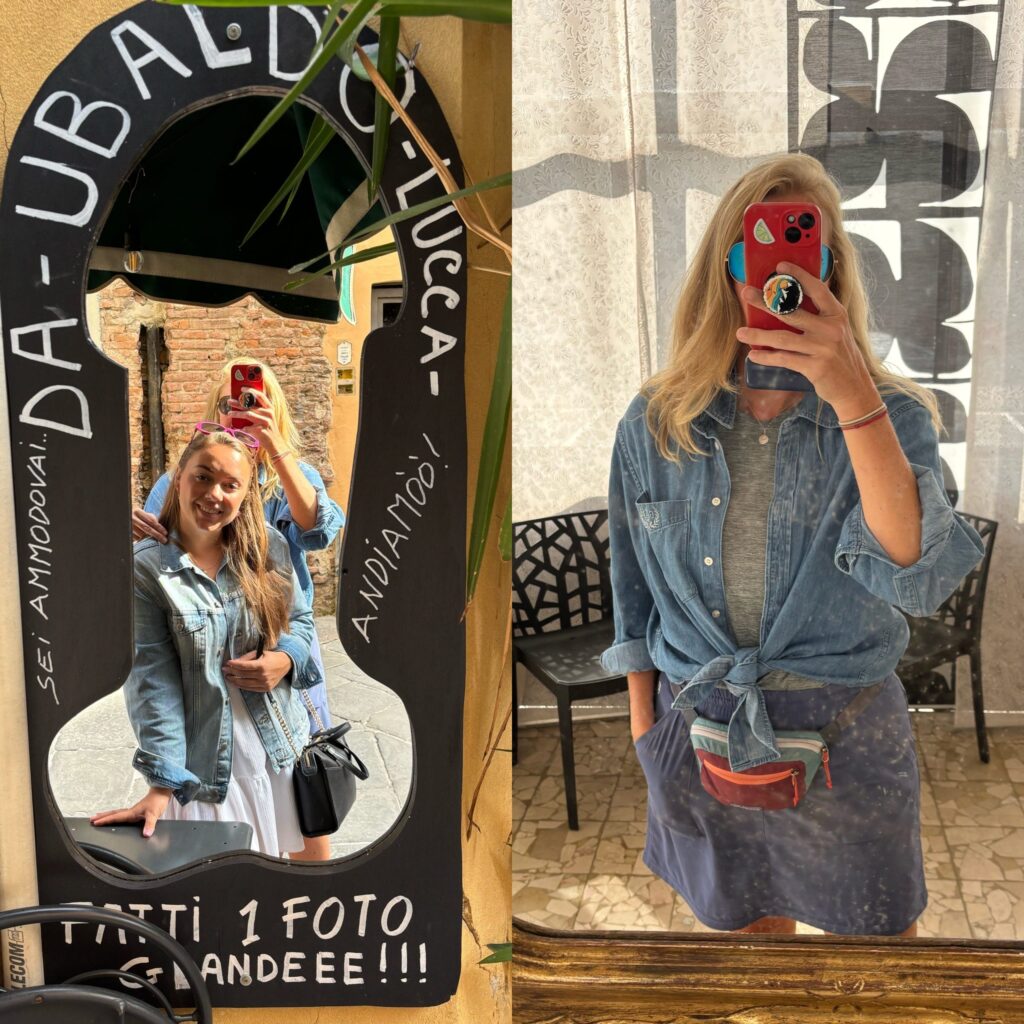
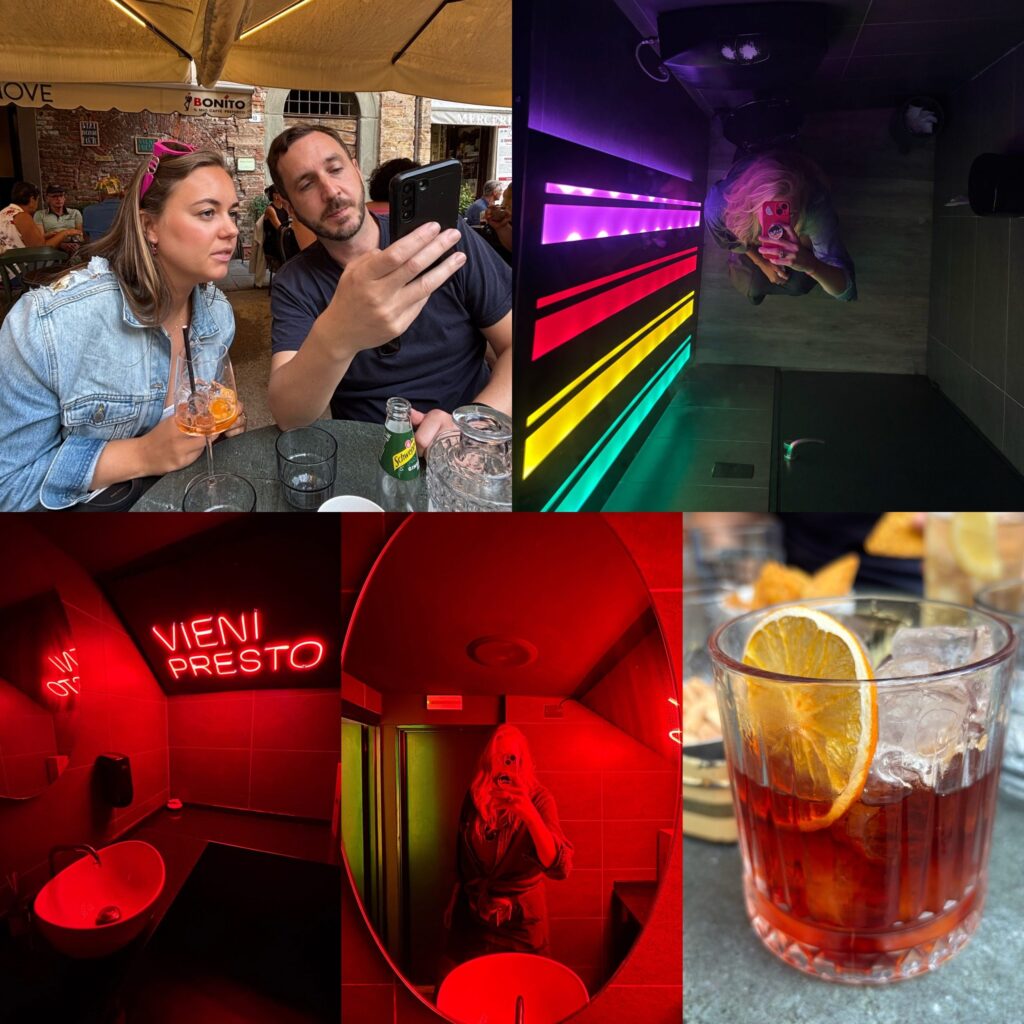
We had an aperitivo at L’Angolonove – Quellocale and discovered the most insane bathroom.
Mirrors on every wall and the ceiling, neon signs, and topped off with mood lighting that changed colors.
The Negroni was delicious.
Life is not complete without the World’s Biggest Aperol Spritz and a pink Vespa. 🩷