“Every building must have its own soul.” Louis Kahn
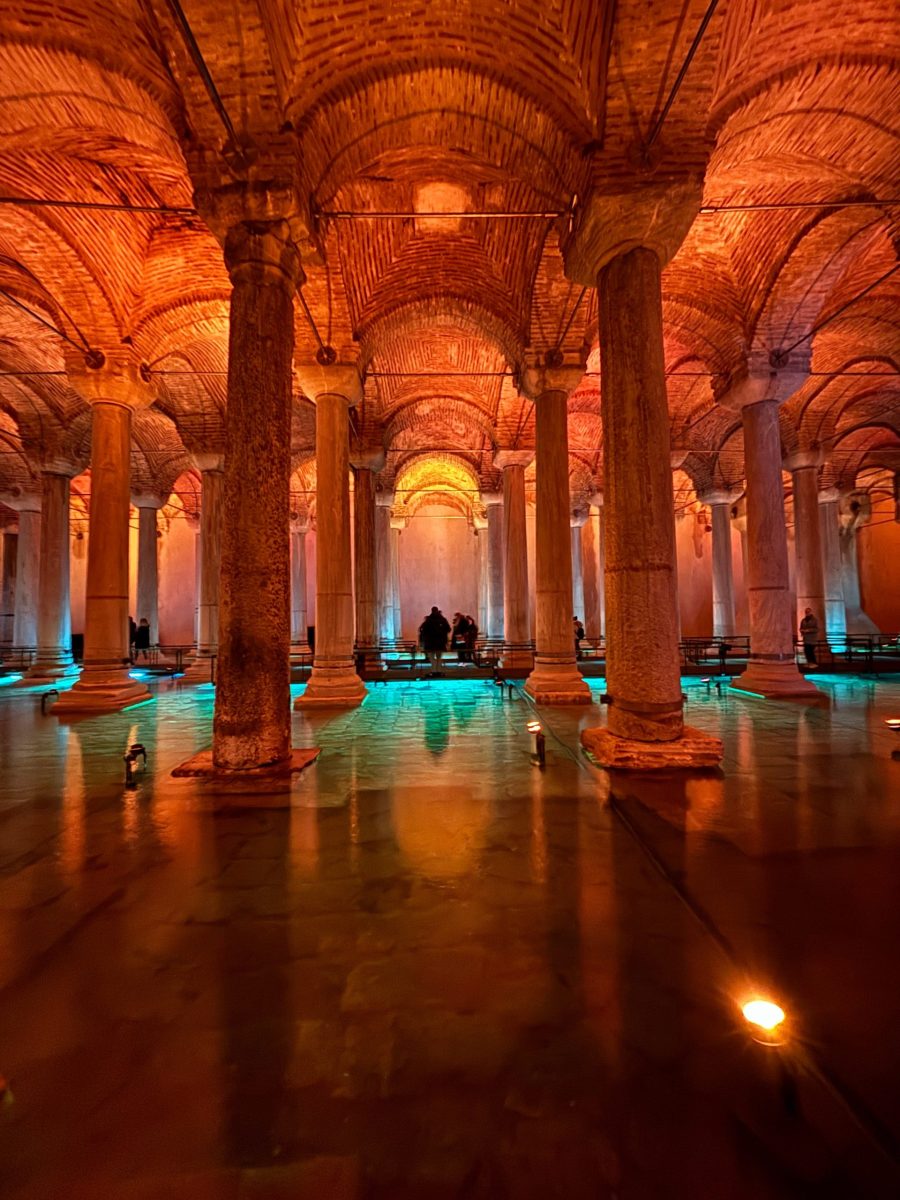
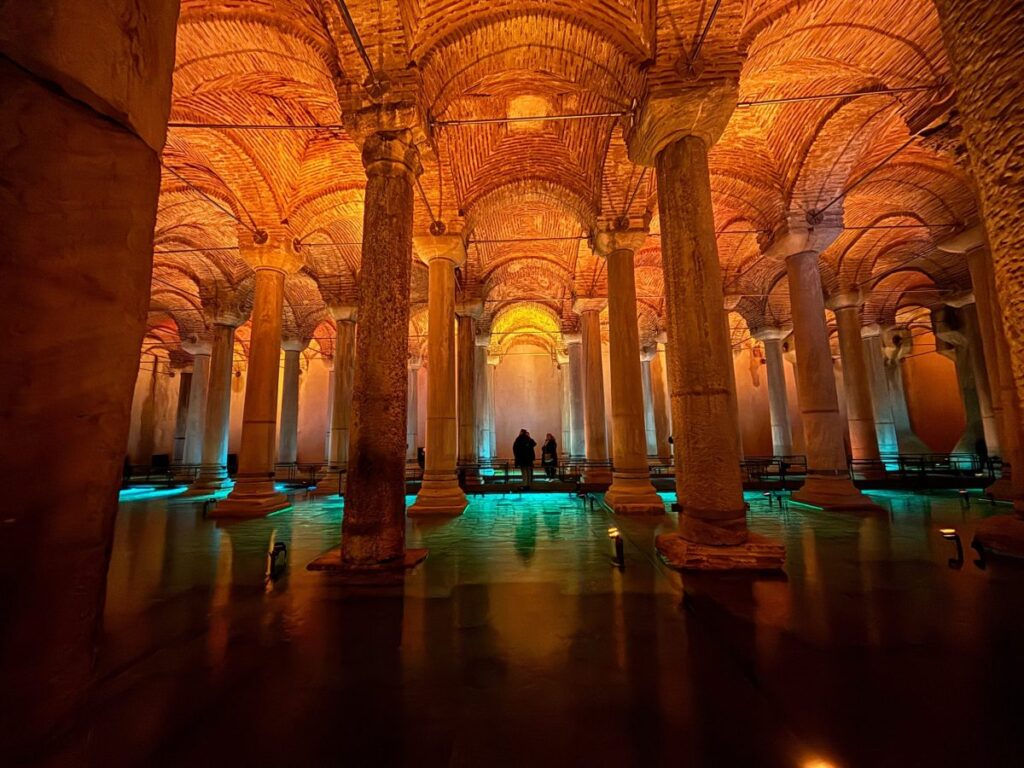
I present to you, The Basilica Cistern. It is definitely one of the most mesmerizing, interesting, stunning, fascinating, and beautiful man-made places I’ve visited in all of my travels. Throw in whatever adjective you like…it was amazing.
A few fun facts from the internet and audio guide:
-
Located near Hagia Sophia in the Sultanahmet district, it was built during the reign of Emperor Justinian I in the 6th century to supply water to the city, particularly the Great Palace of Constantinople. There are many cisterns located around Istanbul and more are being discovered. It is believed they built several in case of wars or earthquakes (or God forbid poison) cutting off the supply of drinking water.
-
Size: The cistern measures 140 meters by 70 meters and can hold up to 80,000 cubic meters of water.
-
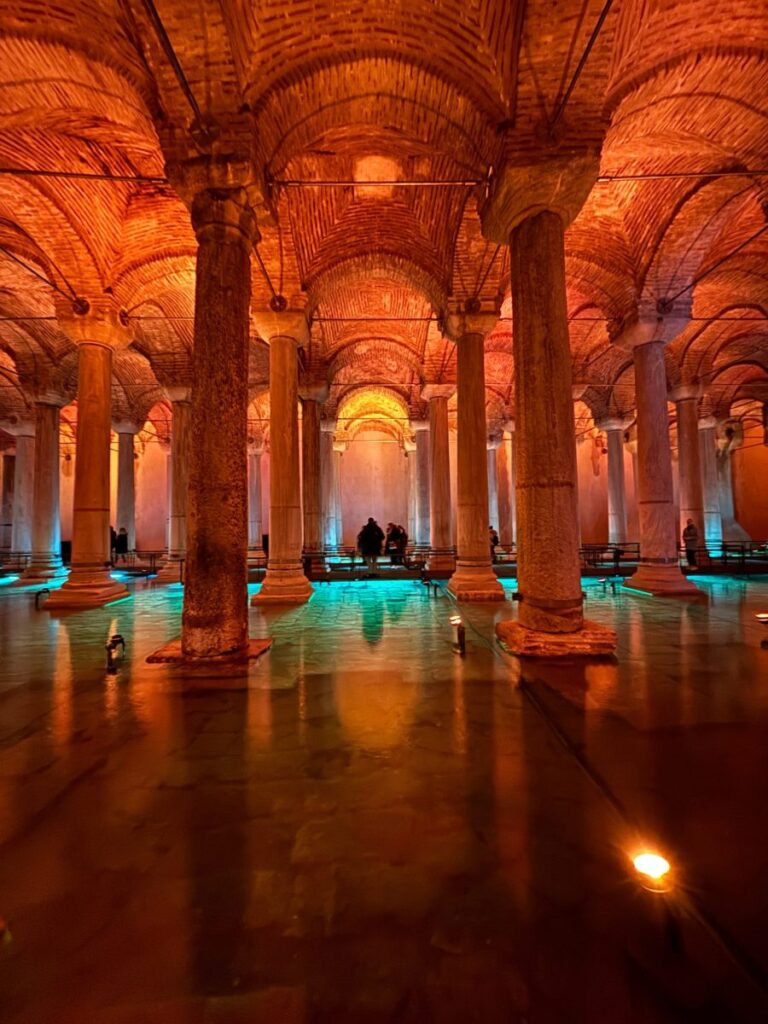
Columns: It features 336 marble columns arranged in 12 rows, each about 9 meters tall. They are primarily made of marble and granite. Most of them were repurposed from older Roman structures, reflecting the Byzantine practice of recycling architectural elements (known as spolia).
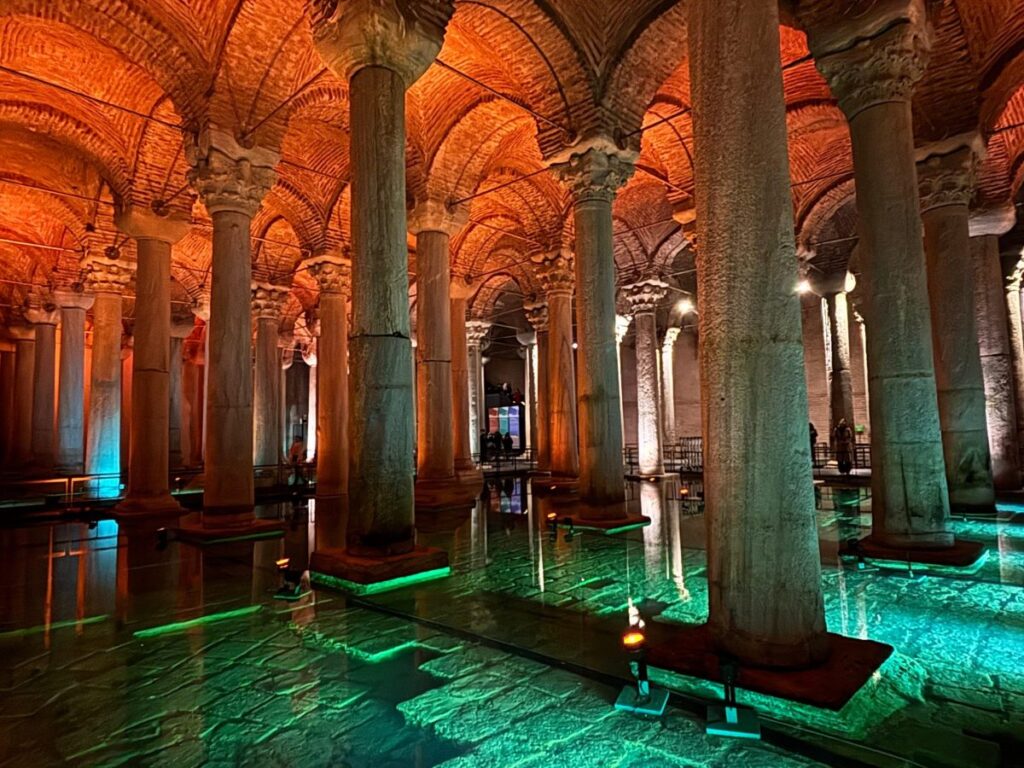
It’s kind of sad that such beautiful architecture was hidden underground and known by only a few for many years. It has only been open to the public since 1987. Prior to that it was basically forgotten about. A massive restoration project was completed to make it safe for the public to explore.
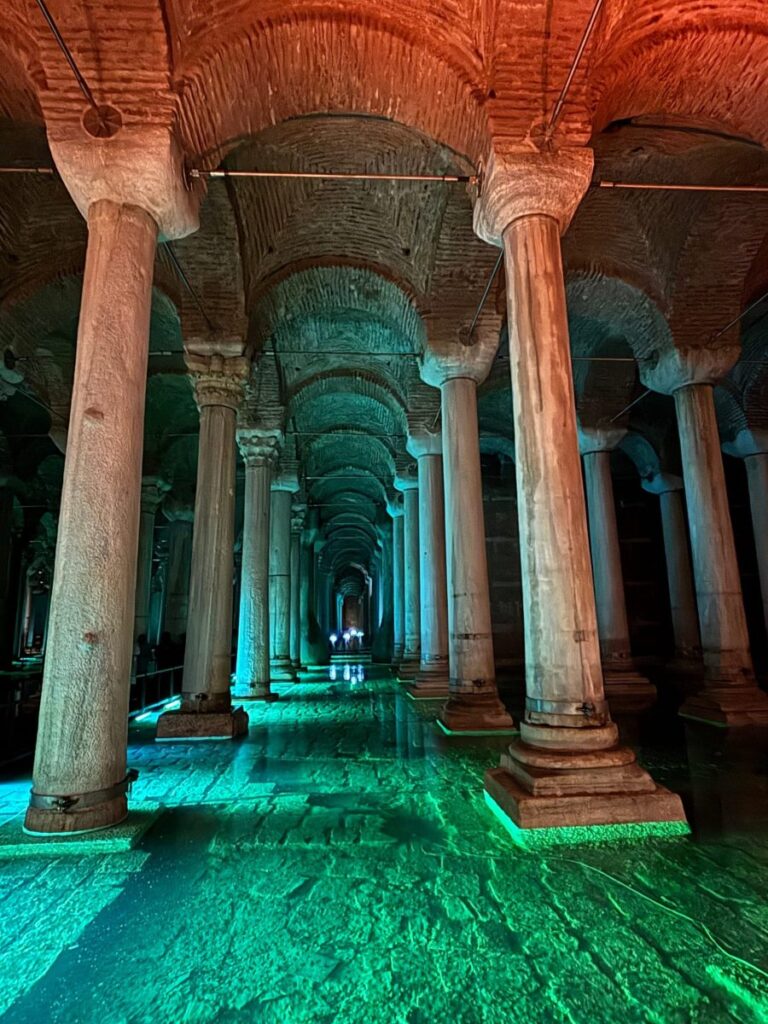
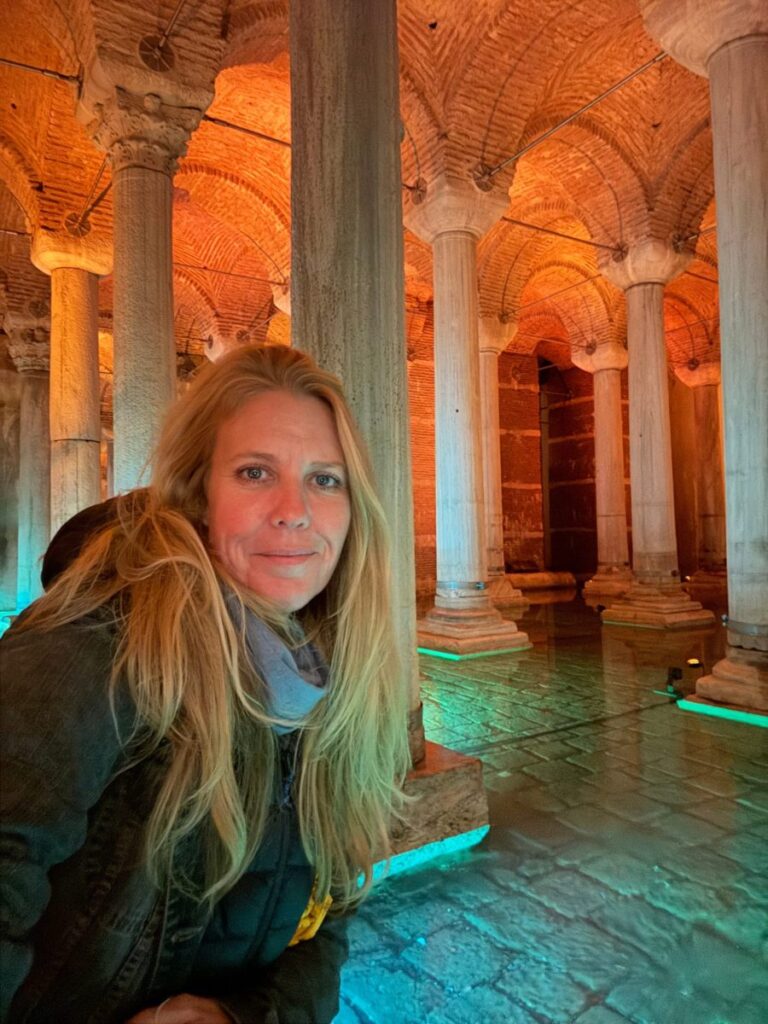
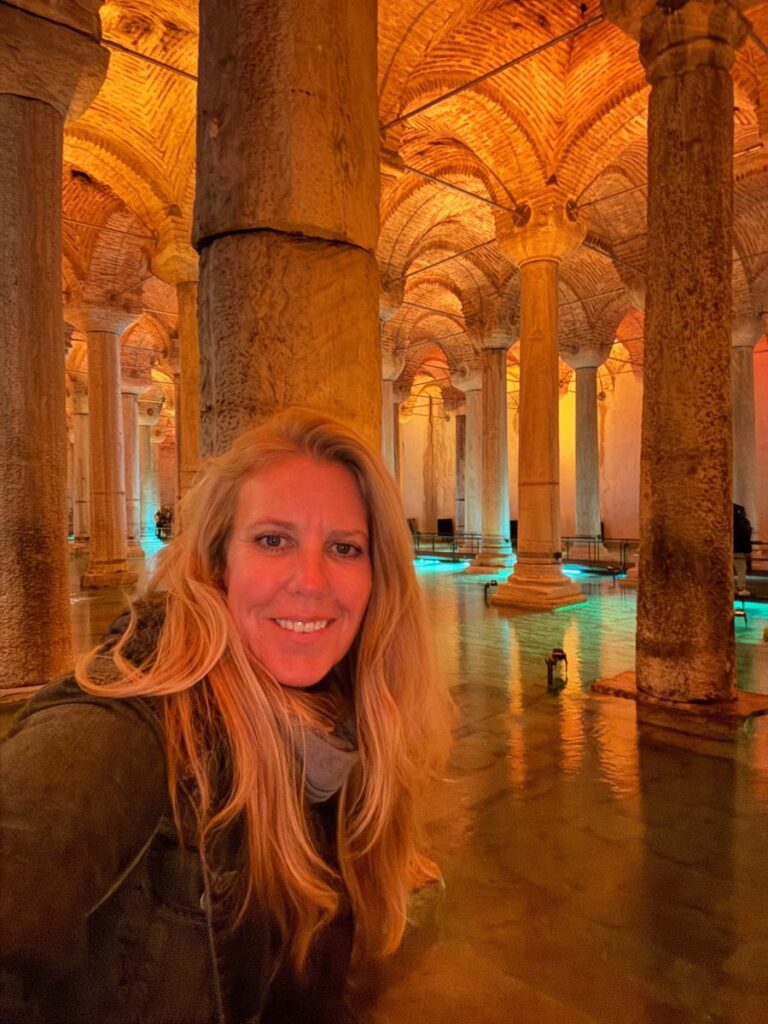
I will say, without the lighting, it isn’t as grand. The feeling and vibe isn’t as warm as when is it illuminated. The lights are on a cycle so you can see it in all different types of lighting.
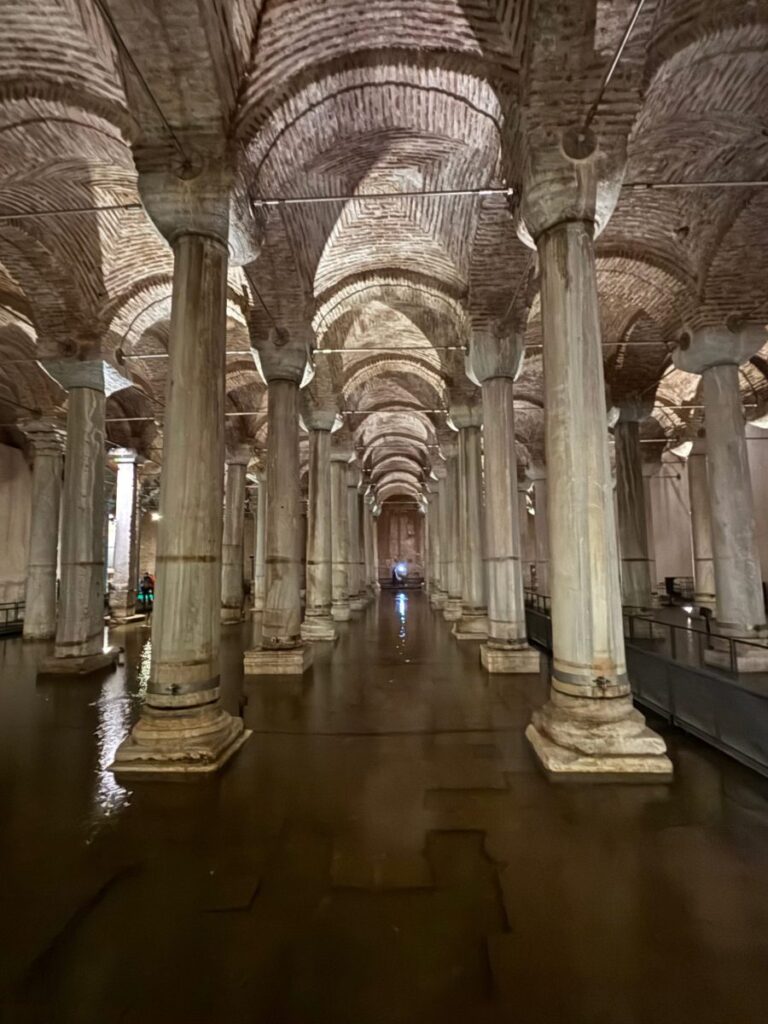
I didn’t see any but the audio guide said that there are still a few fish living in the cistern and were deliberately used back in the day for several reasons.
-
Fish helped control the growth of algae and small aquatic organisms that could accumulate in the cistern, aiding in maintaining the cleanliness of the stored water.
-
Fish acted as a natural indicator of water quality. If the fish were healthy and thriving, it suggested that the water was clean and free from contaminants. If the fish died, it could be an indication that the water had become poisonous.
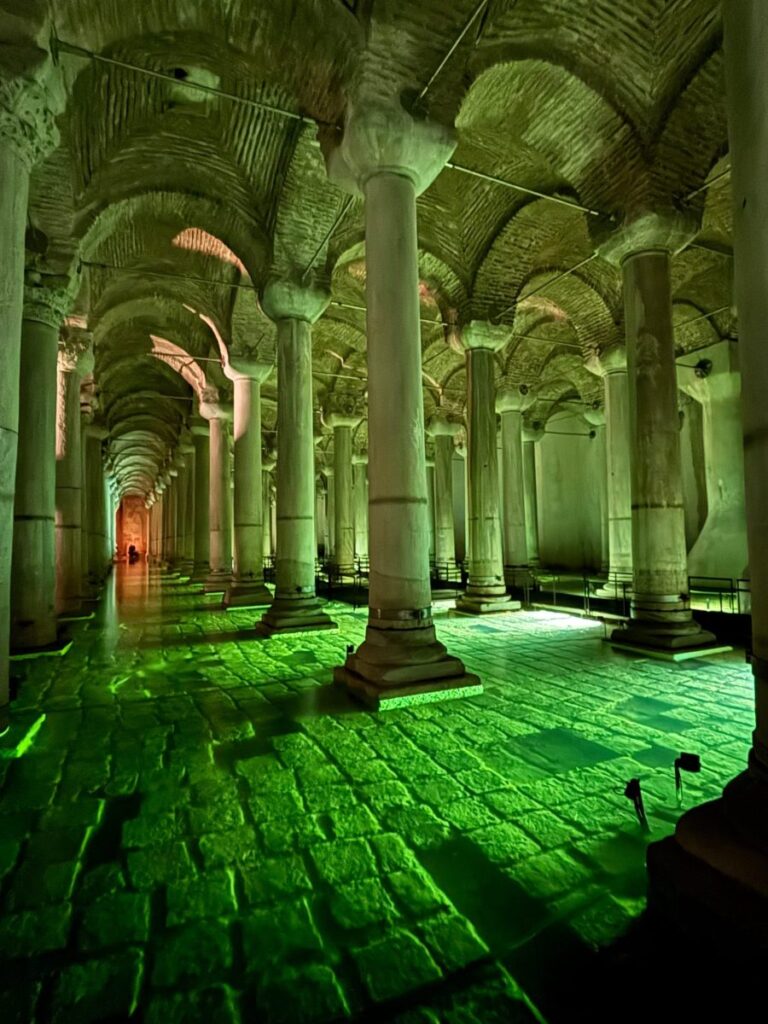
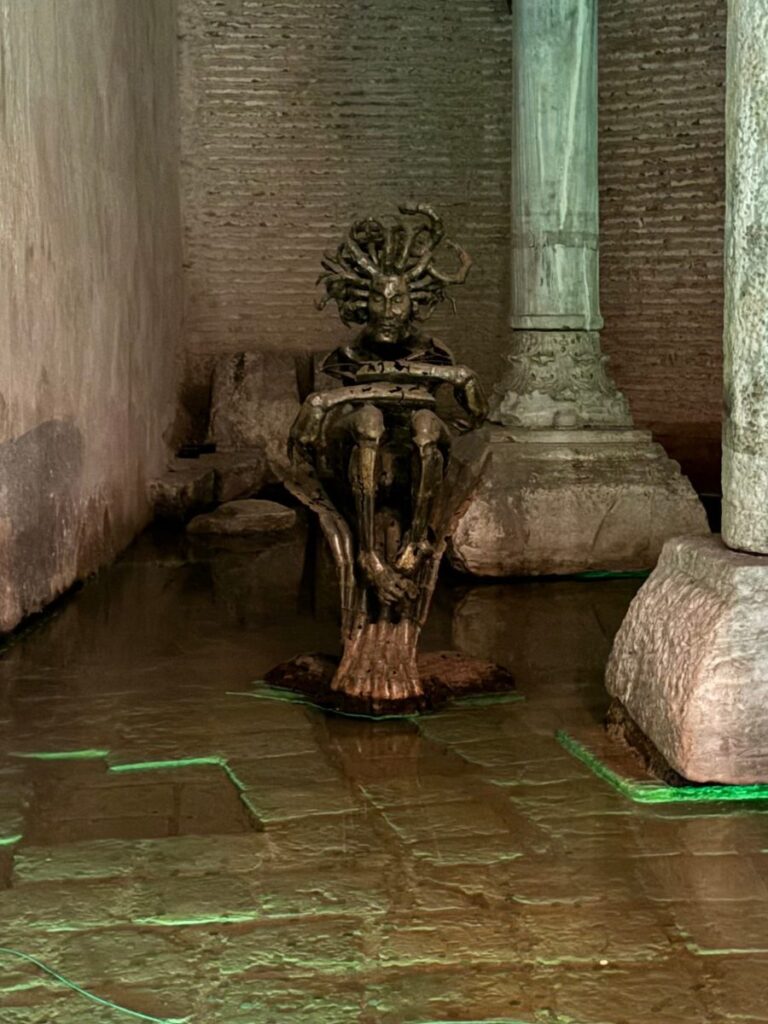
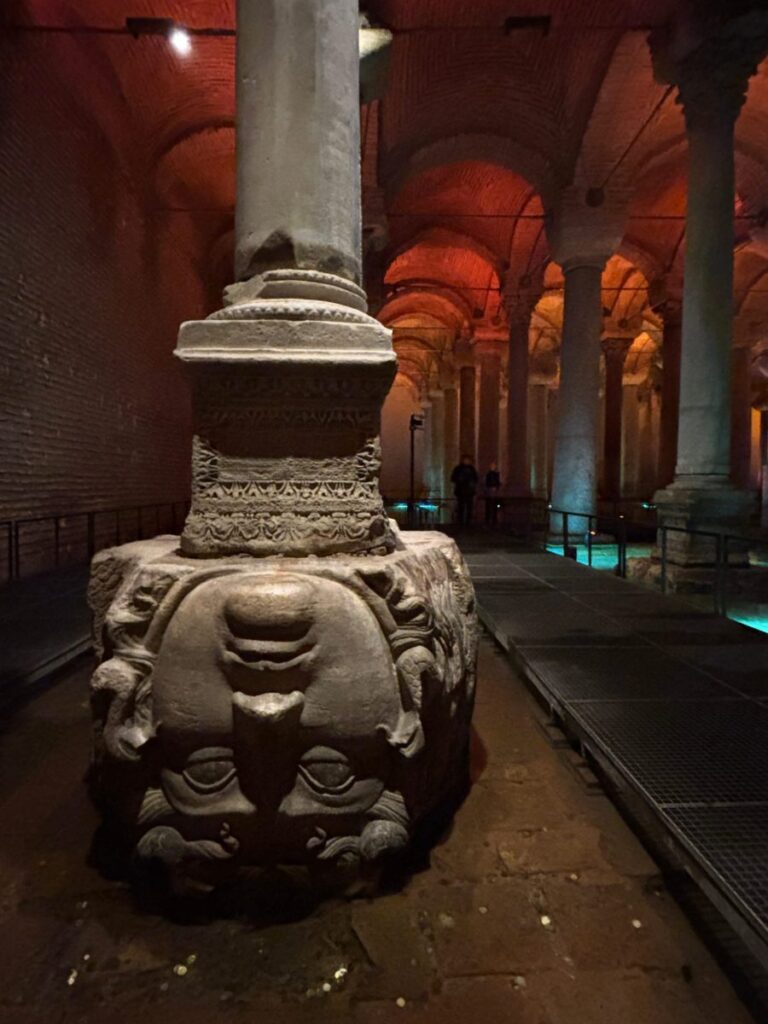
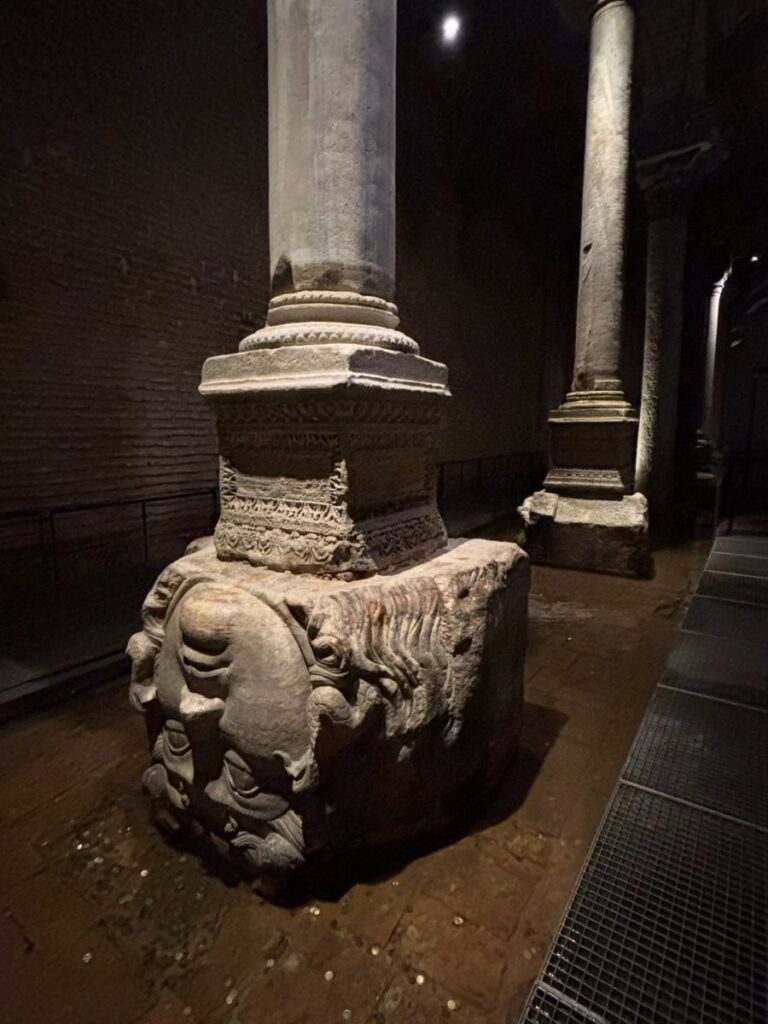
The Medusa figure originates from Greek mythology. It was believed that Medusa, one of the three Gorgons, could turn onlookers to stone with her gaze. The use of her image was thought to ward off evil.
-
Medusa Heads: Two famous Medusa head sculptures are used as column bases, with one positioned sideways and the other upside down.
-
Some historians speculate that their placement in the cistern was either for practical reasons (recycling materials from older buildings) or for symbolic protection.
-
Pragmatic Theory: The Medusa heads may have been reused solely for structural purposes, without much thought to their mythological significance.
-
Symbolic Theory: Their unconventional positioning (sideways and upside down) could signify a deliberate effort to neutralize Medusa’s power or reflect Byzantine-Christian beliefs conflicting with earlier pagan traditions.
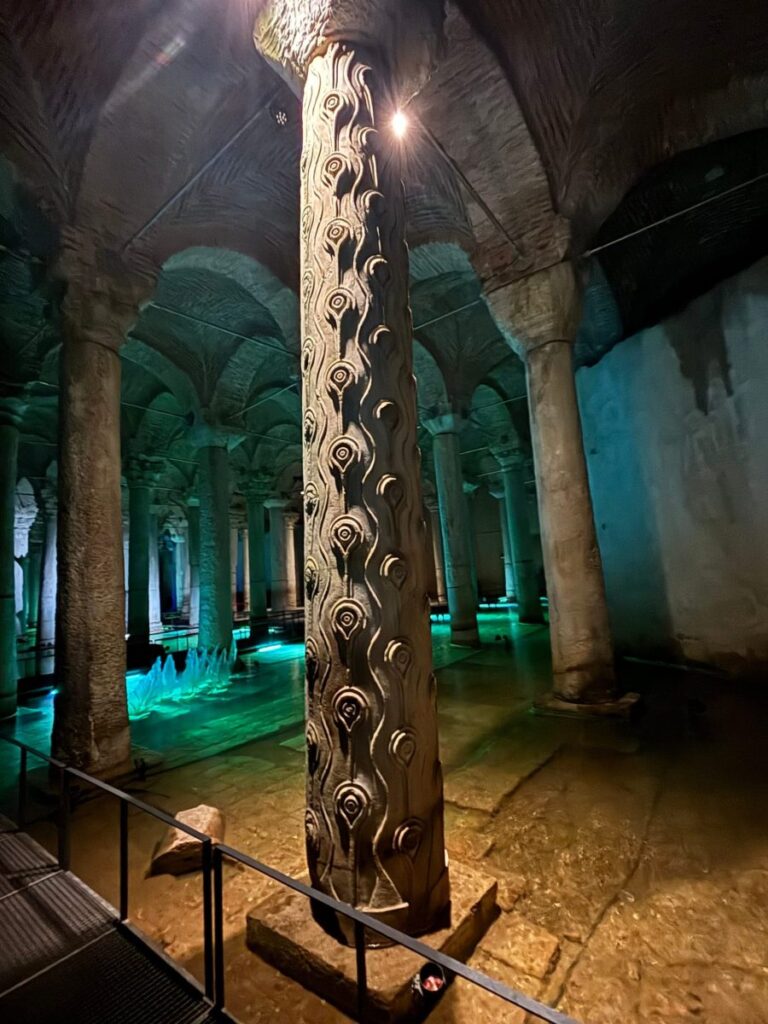
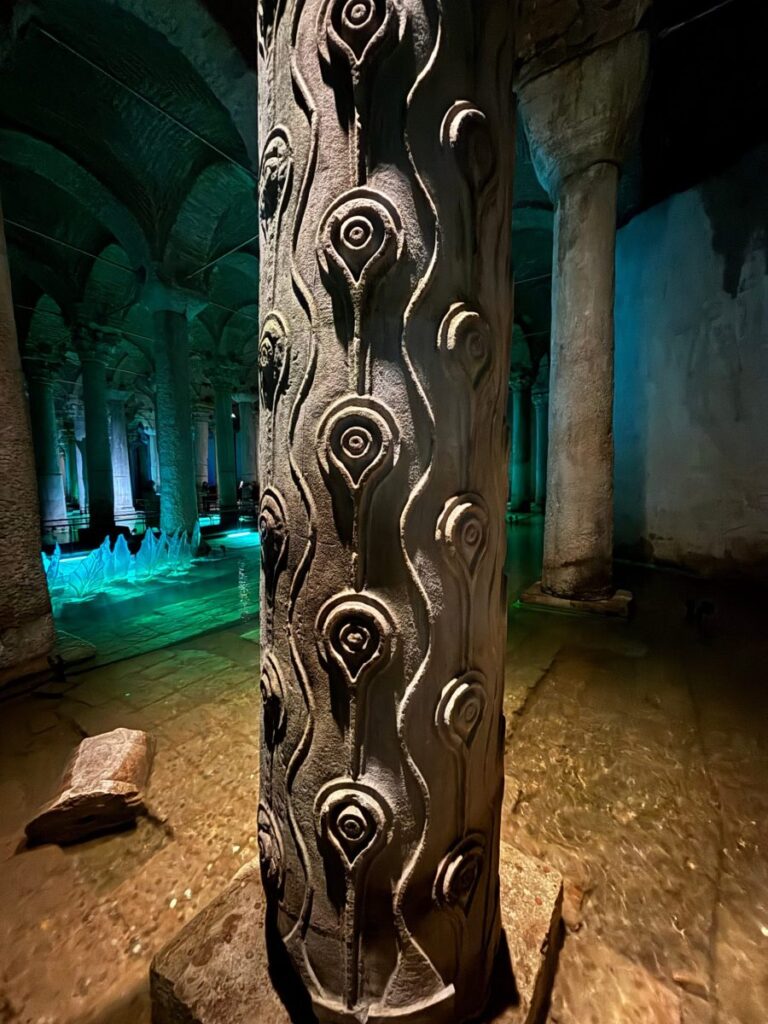
The Crying Column, also known as the Weeping Column, is another intriguing feature of the Basilica Cistern in Istanbul. It is one of the 336 columns in the cistern, but it stands out due to its distinctive design and mysterious symbolism.
-
The column is covered with teardrop-shaped carvings that appear to “weep.”
-
These carvings are thought to represent either water droplets as a representation of the flowing water into the cistern or a tribute to the slaves who toiled to construct the cistern.
-
The “tears” are widely believed to be a homage to the many laborers, including slaves, who suffered and possibly died during the construction of the cistern in the 6th century.
They have built nice and sturdy walking paths throughout the complex so it is easily accessible.
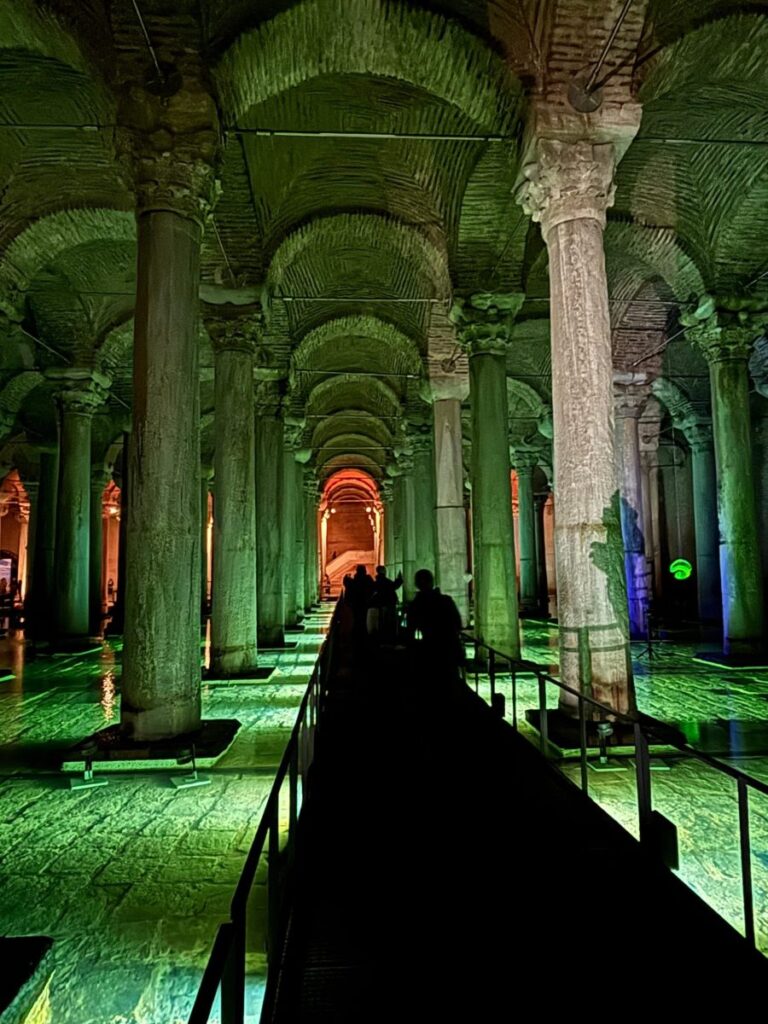
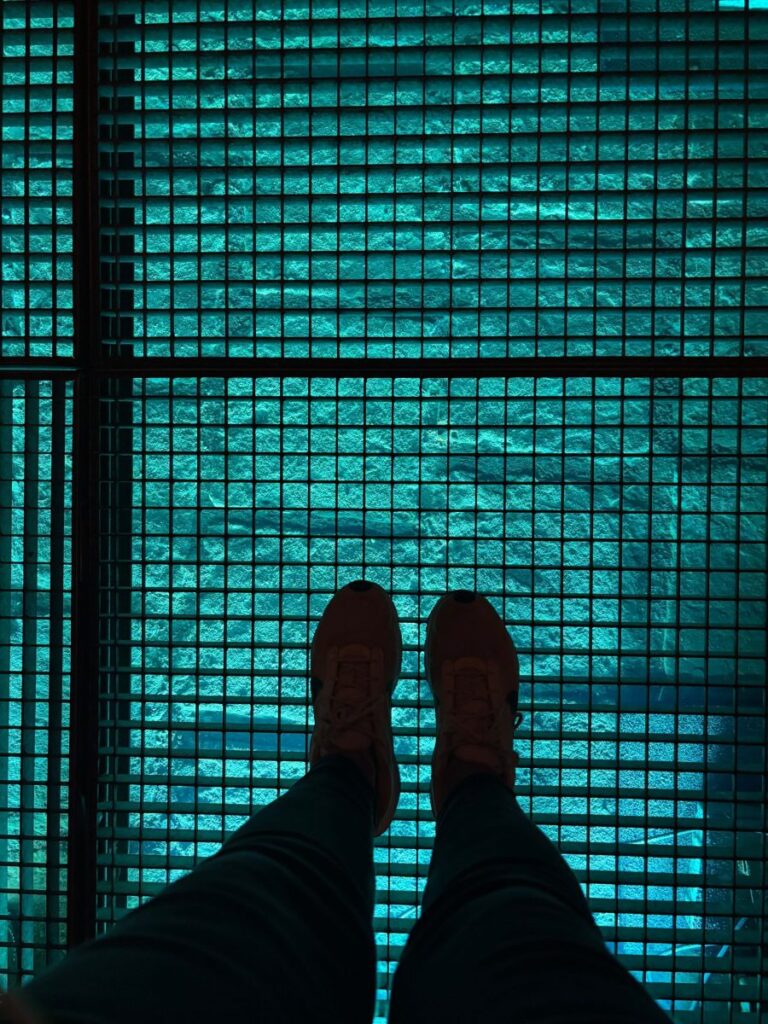
The entire place is absolutely stunning and I highly recommend visiting it if you are in Istanbul.
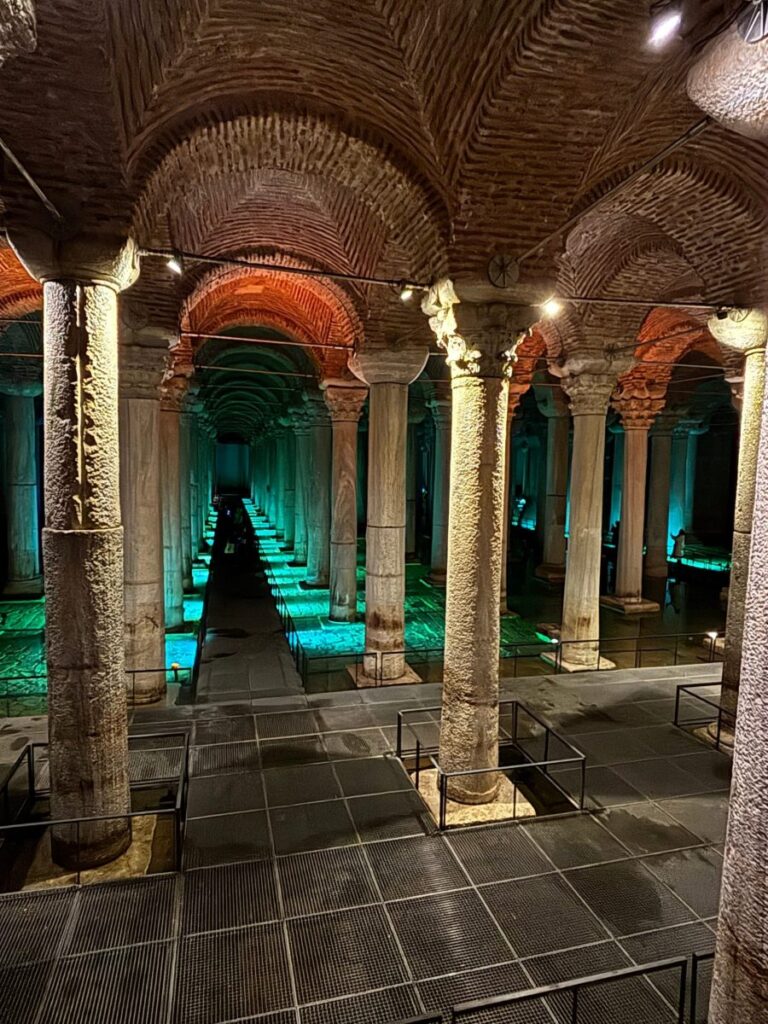
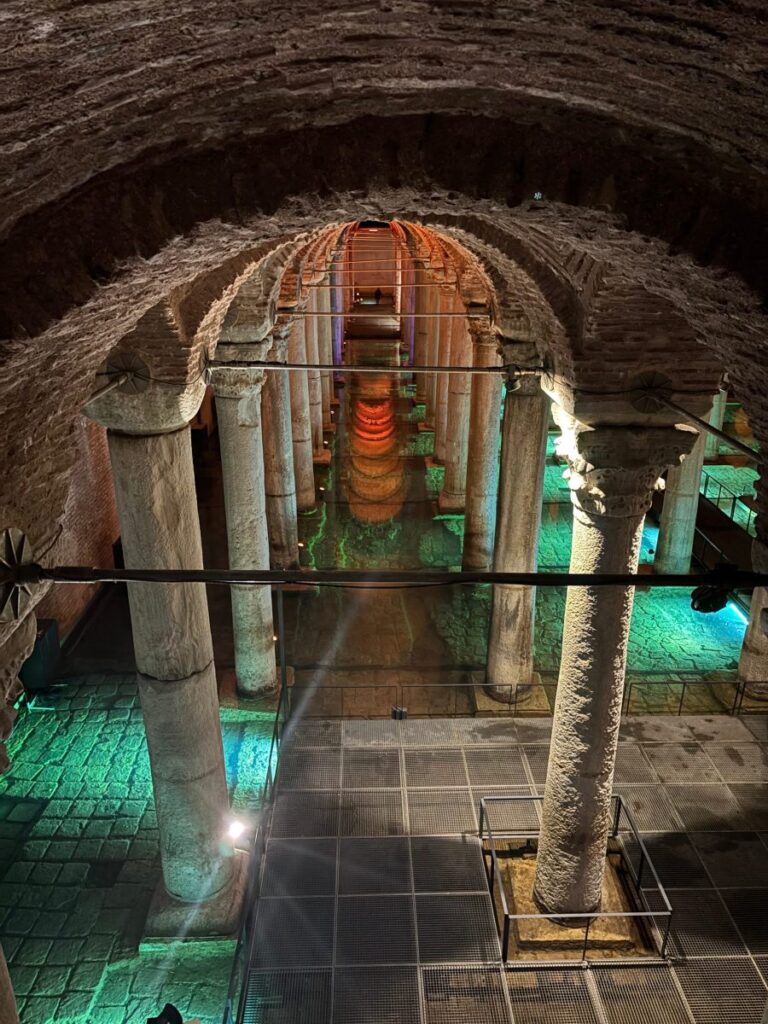
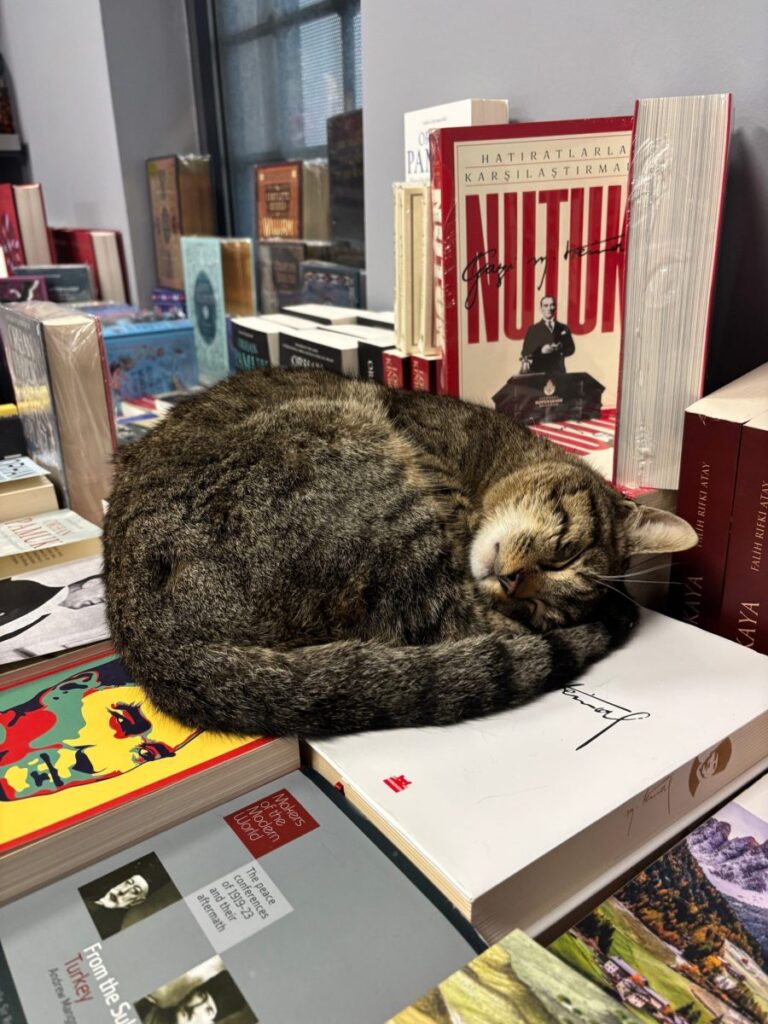
On my way out as I passed through the gift shop, this street cat was taking a nap on a pile of books. It’s true, cats rule the city of Istanbul.
Good Things List
-
Beautiful architecture
-
Sleepy cats
Much love & gratitude. Namaste 🙏
Don’t forget to like and share this post, please. Thank you.
To see more photos and videos from my adventures, follow me on social media. Facebook, Instagram, YouTube, TikTok, Threads, and Pinterest, or connect with me on LinkedIn.
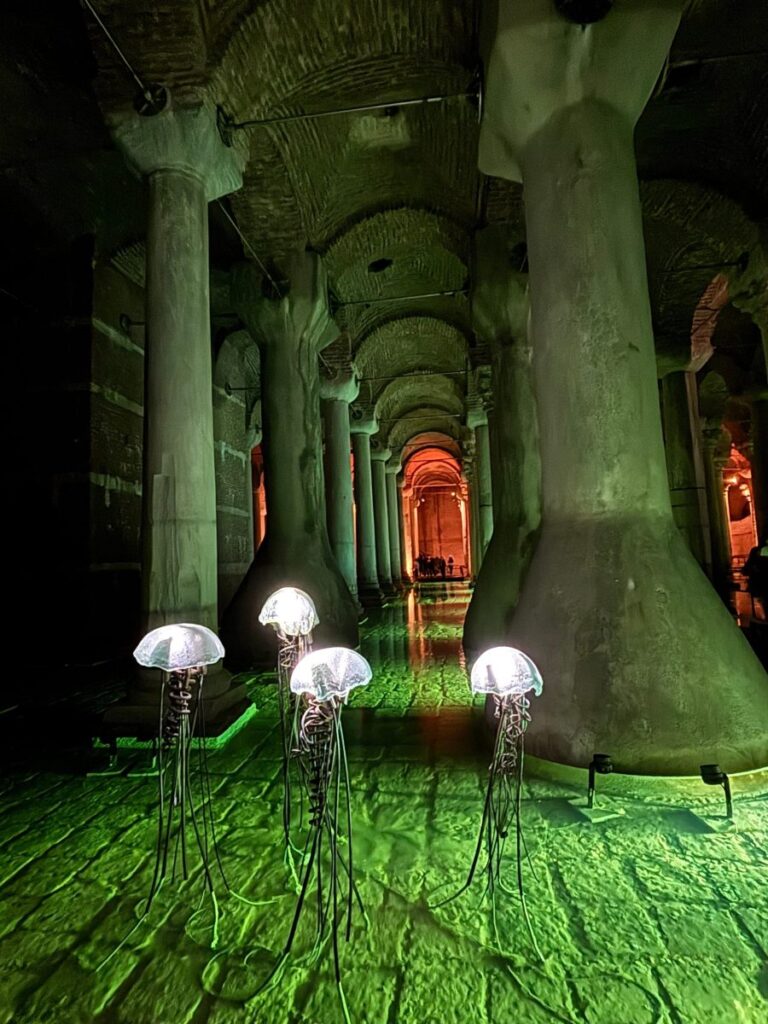
There are also a few interesting art displays around the complex.