You know I love a good Guru Walk in every city I visit. Well this one didn’t disappoint. It was full of Greek history, mythology, and a lot of sightseeing. As a group we decided to take a different route than what was listed in the itinerary so I hit those highlights on my own.
I’m giving fair warning right now that I will most likely botch some of these facts and information. I will be the first to tell you that Greek history/mythology is not something I know anything about…and I’m still a little confused even after the tour. I’m blonde, give me a break.
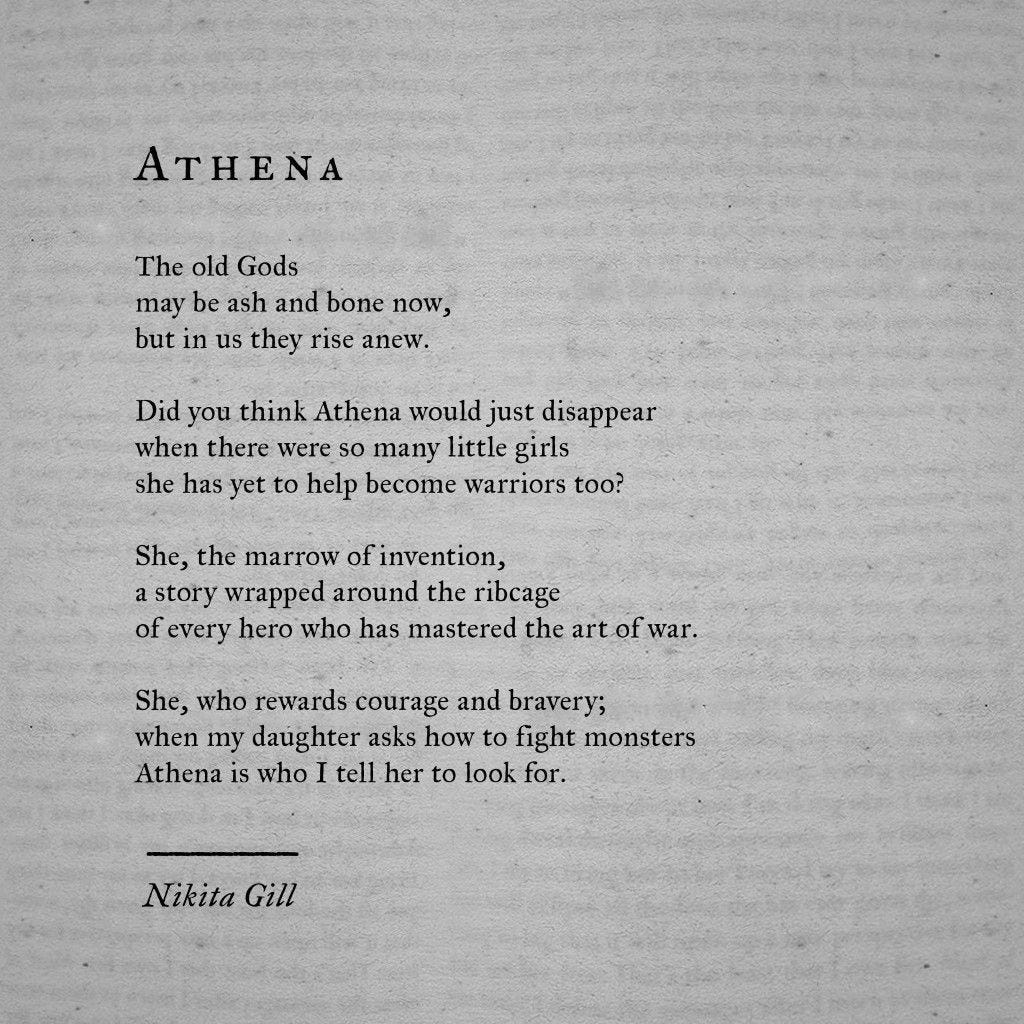
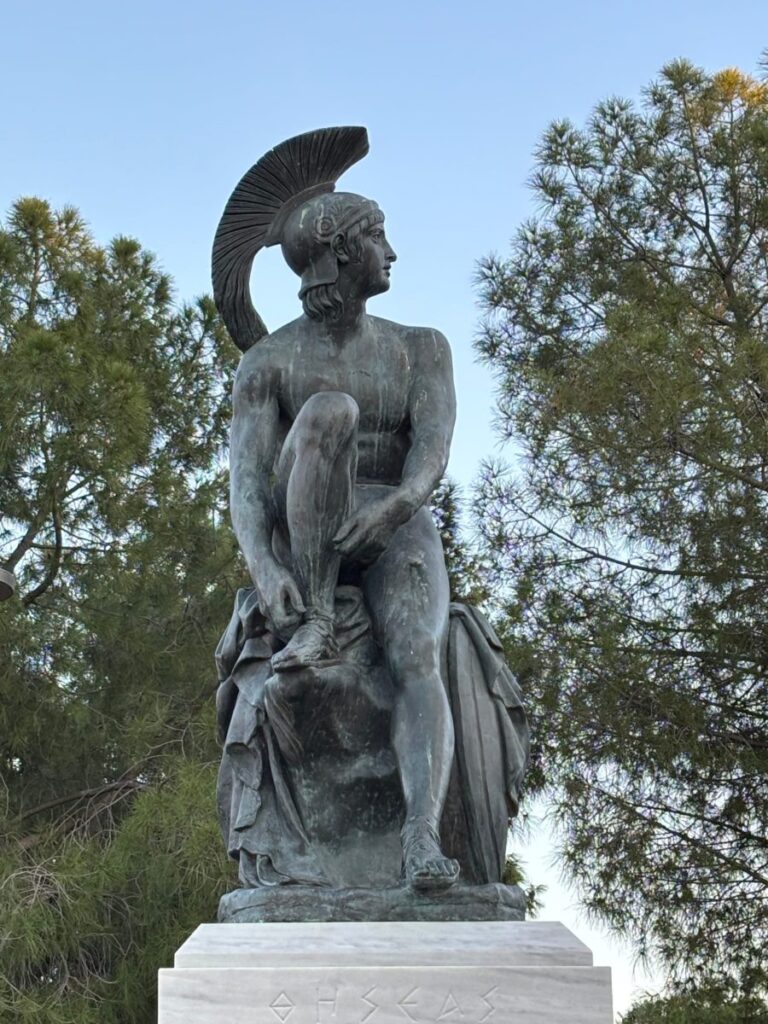
Our group met in Thisseos Square which features the statue of Theseus, the mythical founder of democracy according to our tour guide, Stavros. He shared a brief historical overview, such as Athens is named for the goddess Athena and is the birthplace of democracy, to get us started.
Fun fact about Stavros, he was born in Athens to a Greek father and an American mother. He went to University in NY and was a teacher in the US for many years before moving back to Athens to become a tour guide…because he could make more money as a tour guide than a teacher. Either way he is still doing what he loves – educating people. He is very knowledgeable and quite funny with his sarcastic wit.
I should also add that we had several Italians on the tour which provided additional entertainment as they “playfully” argued with Stavros about the timeline and history and which nation of people was truly the powerhouse. It kind of made me glad to be an American mutt made up of many nationalities. I have no stake in this dog fight. Just an audience member.
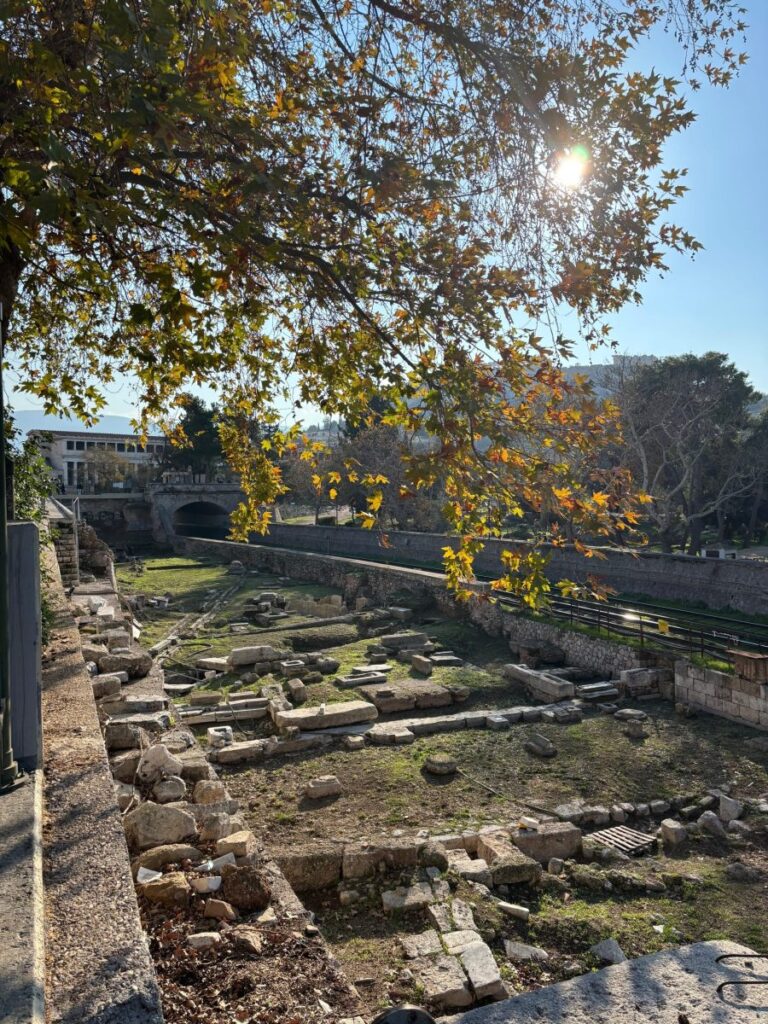
As we walked and Stavros talked, we passed by the ruins of the Stoa Basileios or Royal Stoa (6 BC), where official state business, specifically related to religious laws and rituals was conducted. Important legal documents were signed into law here. Of course only white men between certain ages could work and vote here. That’s democracy for ya.
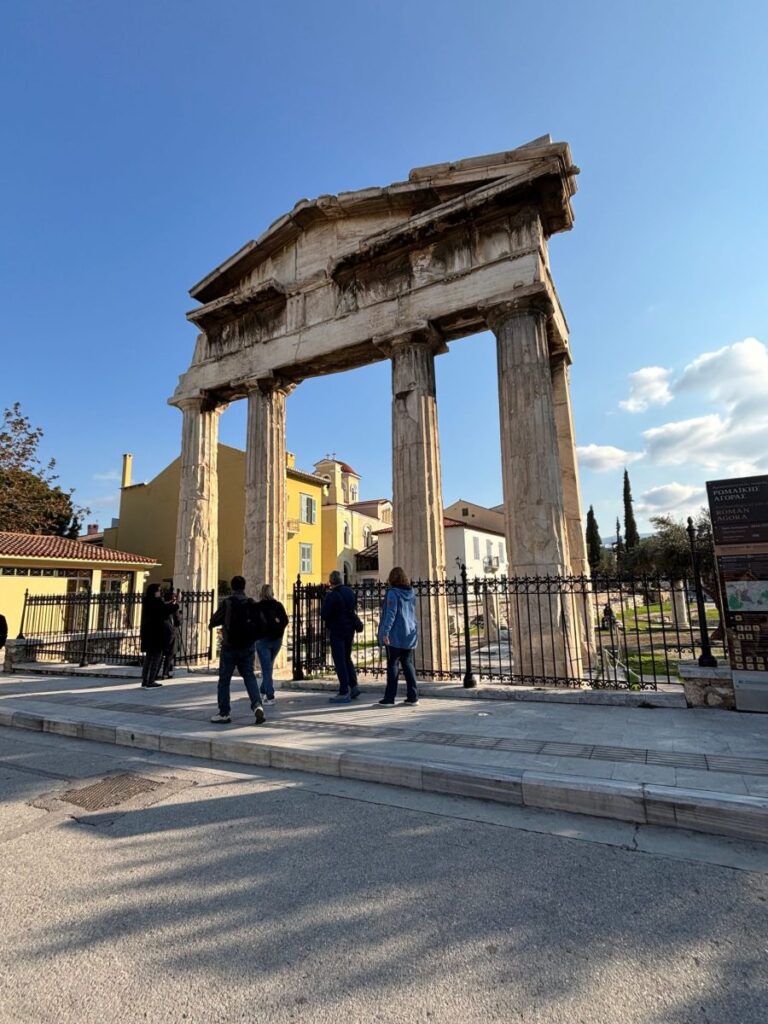
Just a short walk to the end of the street and we were at the Gate of Athena (constructed 11 BC by Caesar & Augustus). This is the main entrance to the Roman Agora (marketplace for social gatherings, religious activities, and political center). Not much is left of the Roman Agora but the footprint so use your imagination.
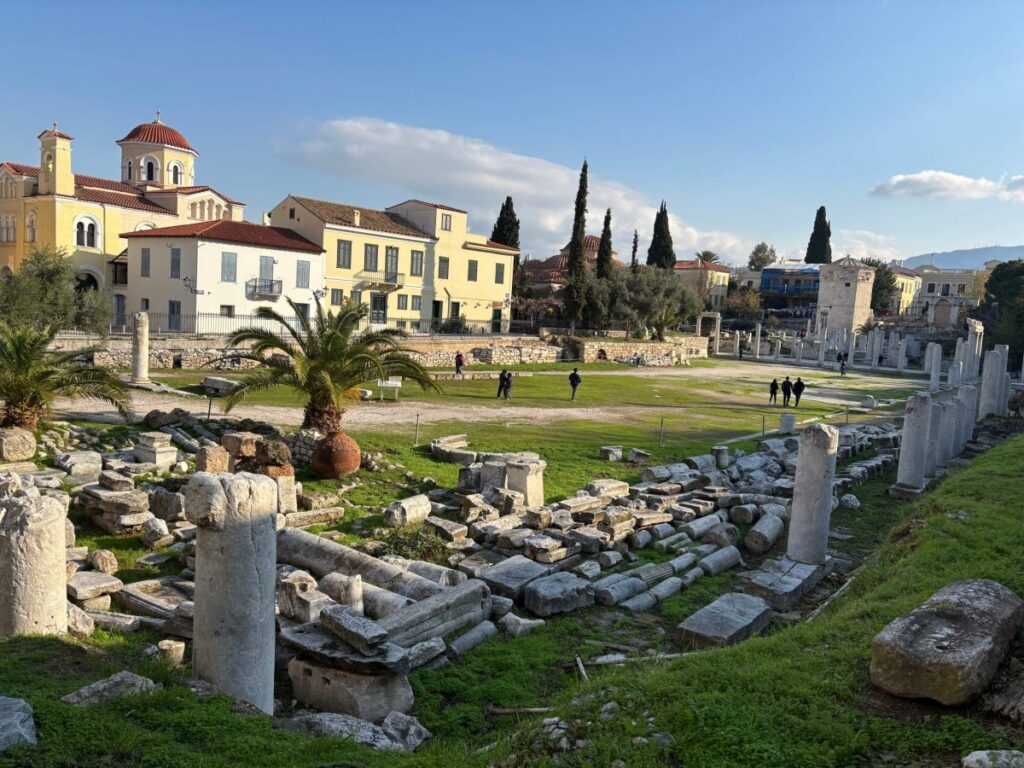
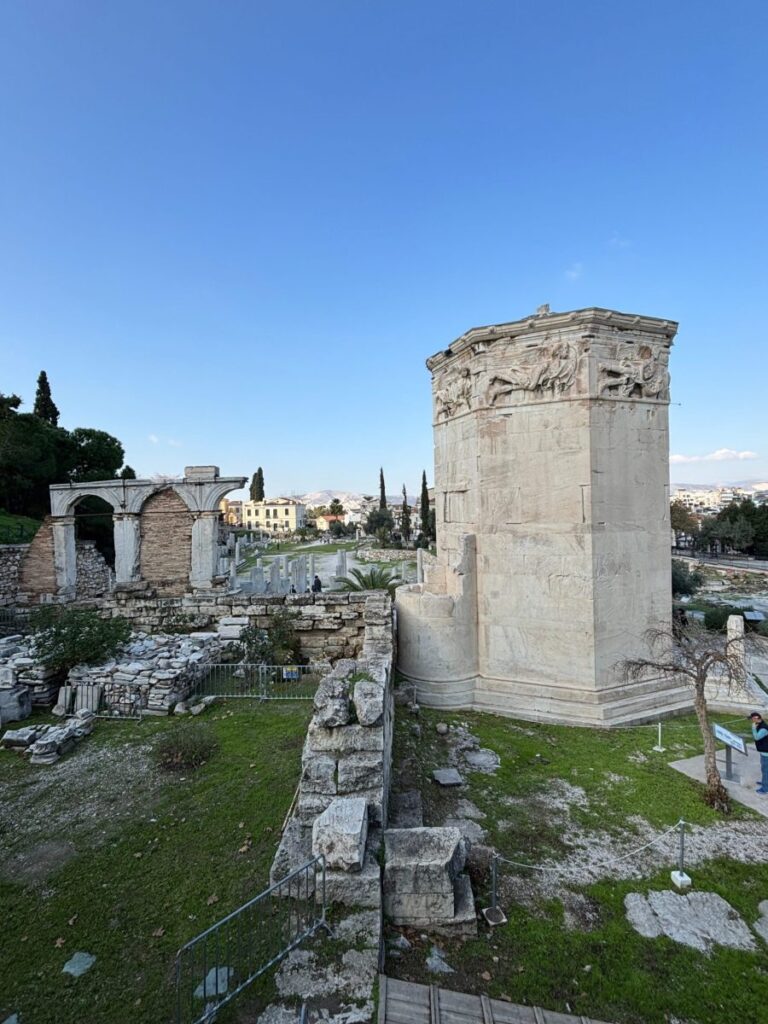
Inside the Roman Agora is the Horologion of Andronikos Cyrrhestes (Tower of the Winds). An ancient octagonal tower used as a weather station with sundials & a weather vane, plus what is believed to be one of the first water clocks in the world. It is one of the earliest examples of a scientific instrument used for timekeeping and meteorological purposes. Cool.
If you look closely at the photo you will see an aqueduct on the left. When it was built it would have been connected to the tower. The water would have flowed down from the mountain and into the tower.
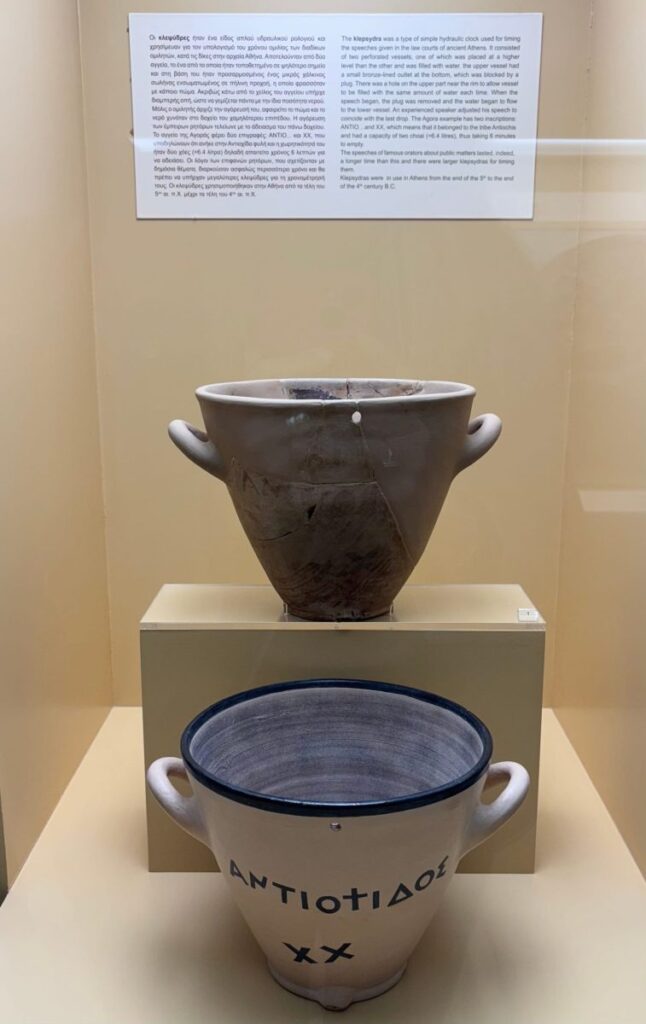
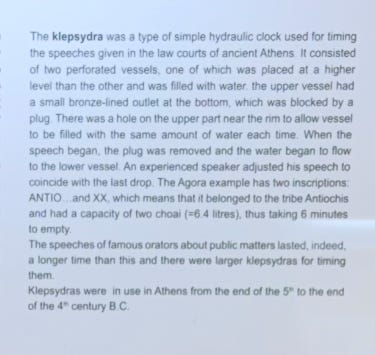
Later when I was in the Ancient Agora of Athens museum, I saw a similar water clock used to time speeches.
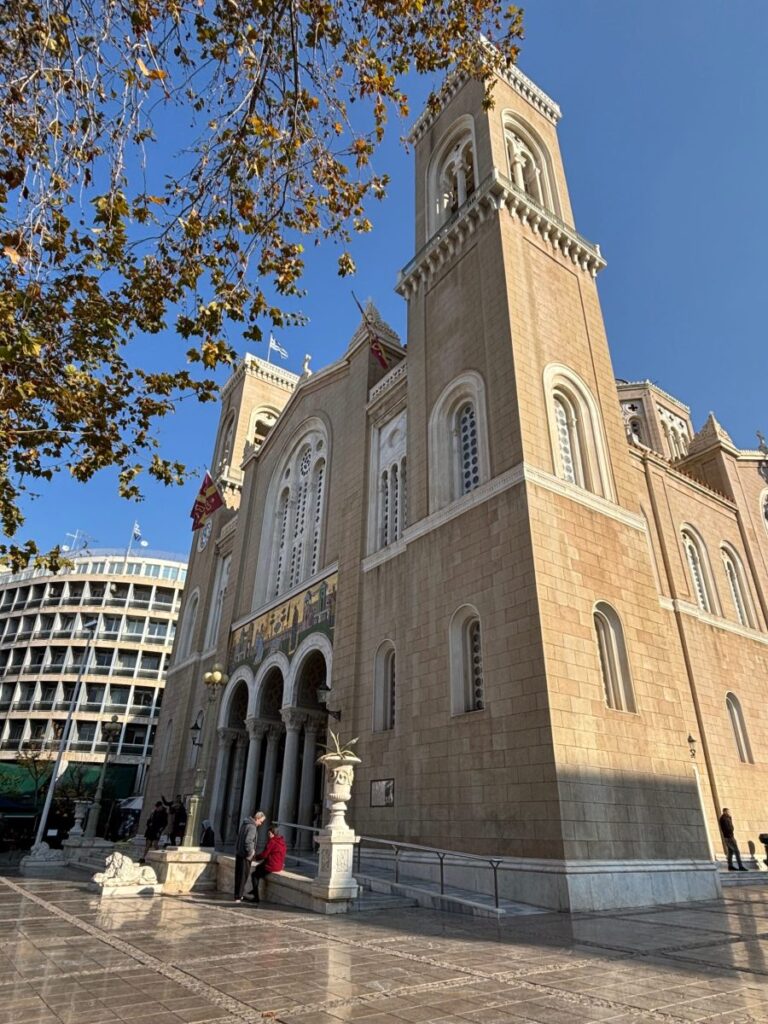
After a quick coffee break we walked over to the Greek Orthodox Church from the 1800’s, Holy Metropolitan Church of the Annunciation to the Virgin Mary
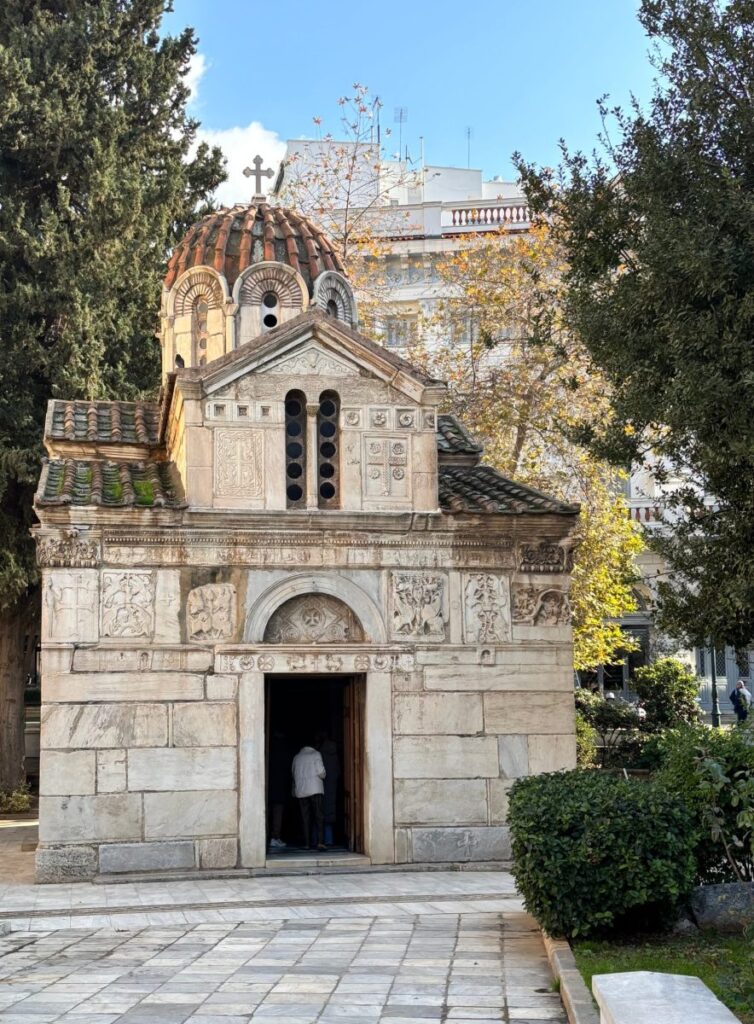
Stavros gave us a quick overview outside of the neighboring church Holy Church of the Virgin Mary Gorgoepikoos and Saint Eleutherius. It is a 12th-century Byzantine-era church known as the Little Metropolis. Both of these are named after Mary showing her importance in the city of Athens.
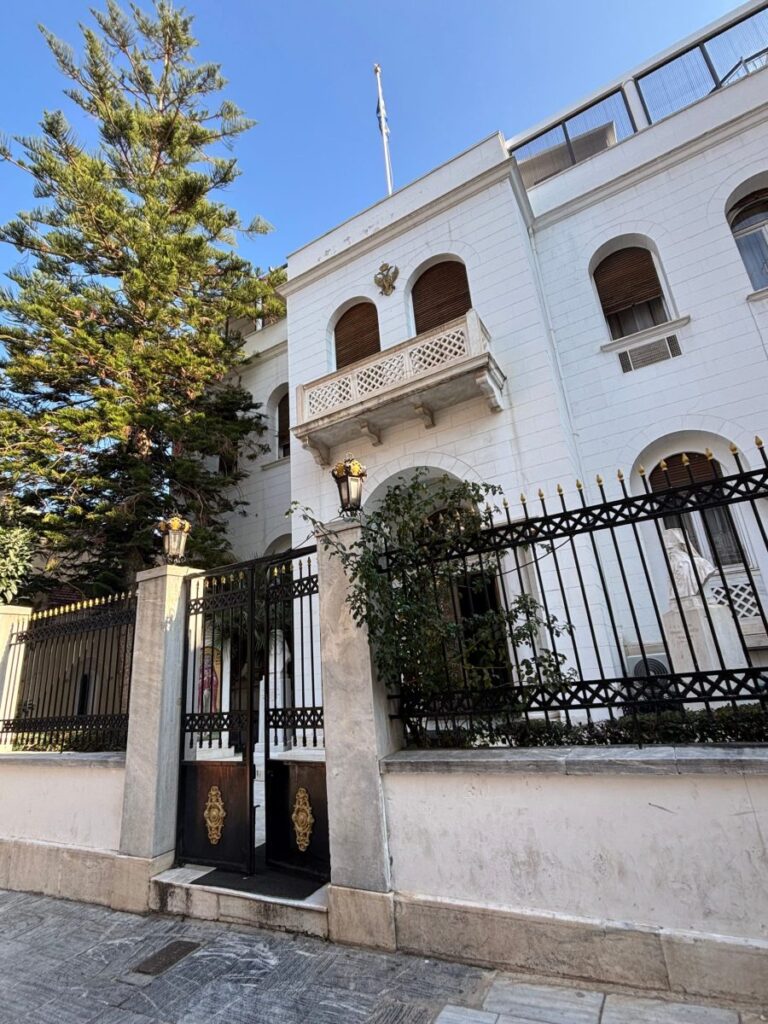
Just around the corner (everything is fairly close together) is the Holy Archdiocese of Athens – headquarters of the Orthodox Church and the Archbishop’s office. It’s a beautiful building on the outside and of course we didn’t go inside since it’s a working office but apparently it has some beautiful murals.
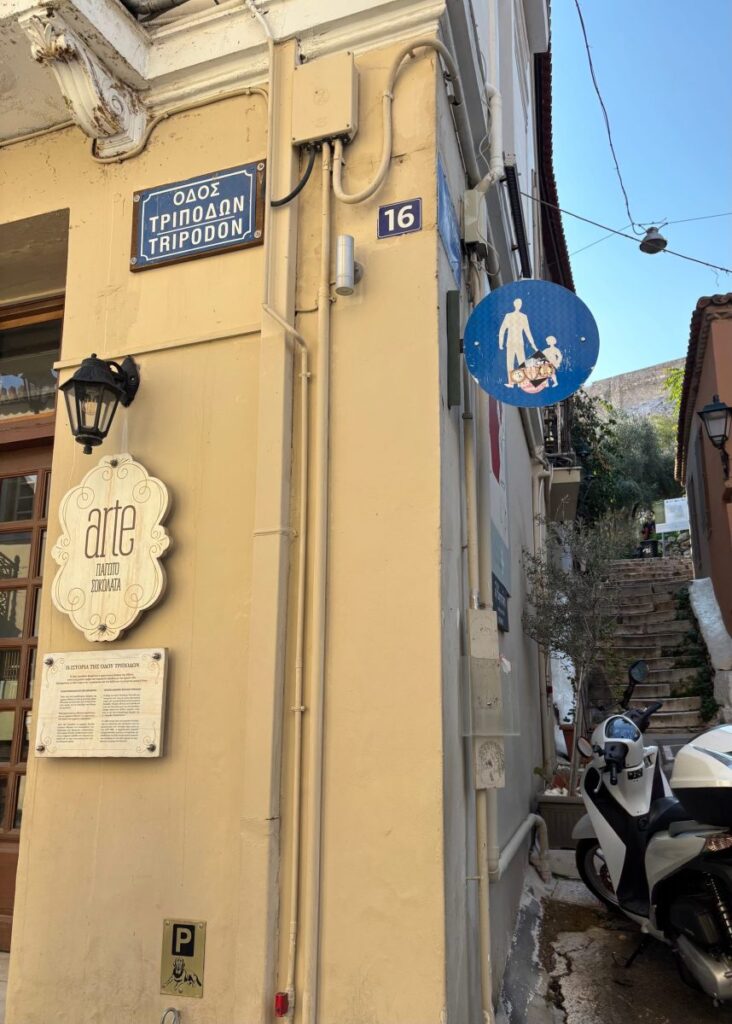
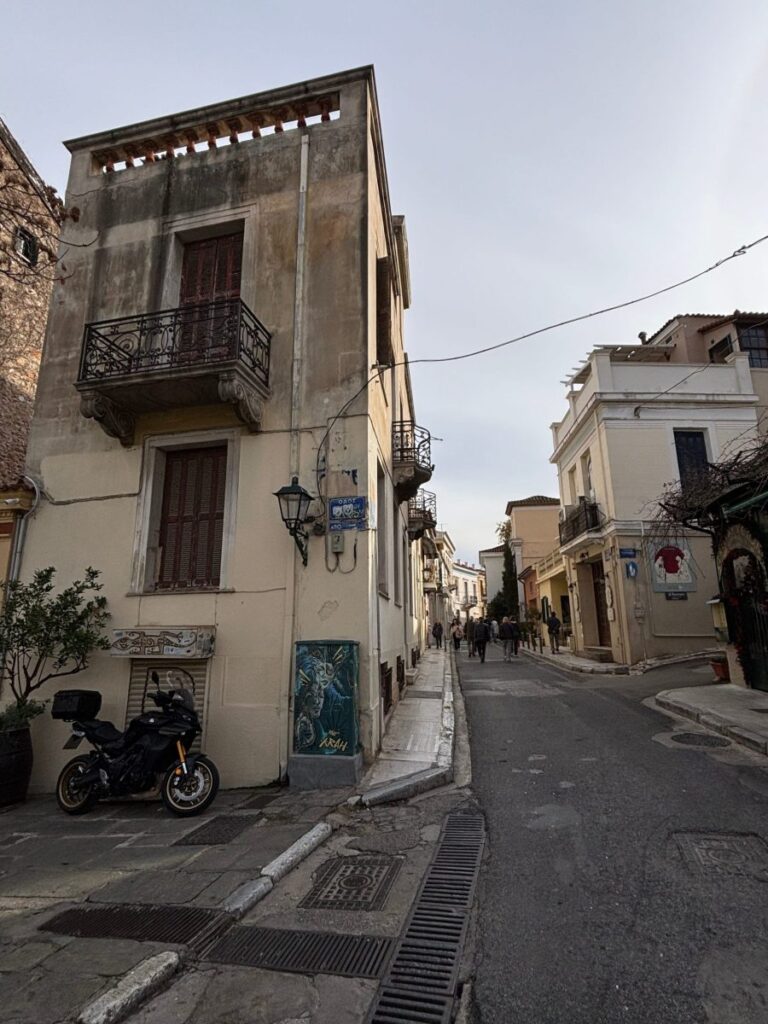
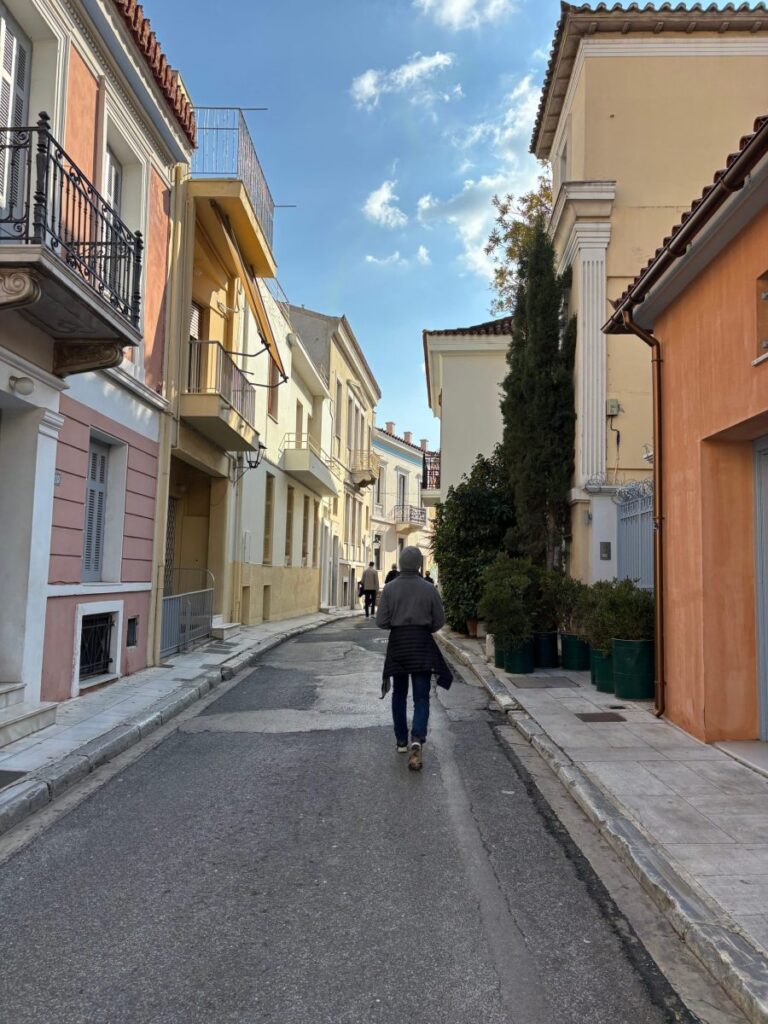
We walked down Tripodon Street (Tripod Street). The oldest street in the WORLD (I’m sure this is debated by other countries who claim the same thing – which seems to be a trend with claims such as this – biggest, baddest, oldest – but here we are so let’s roll with it). This is something that the locals are very proud of. While Stavros was giving the explanation, an elderly gentleman interrupted him to tell a story about the street and reinforced the “oldest street in the world” sentiment.
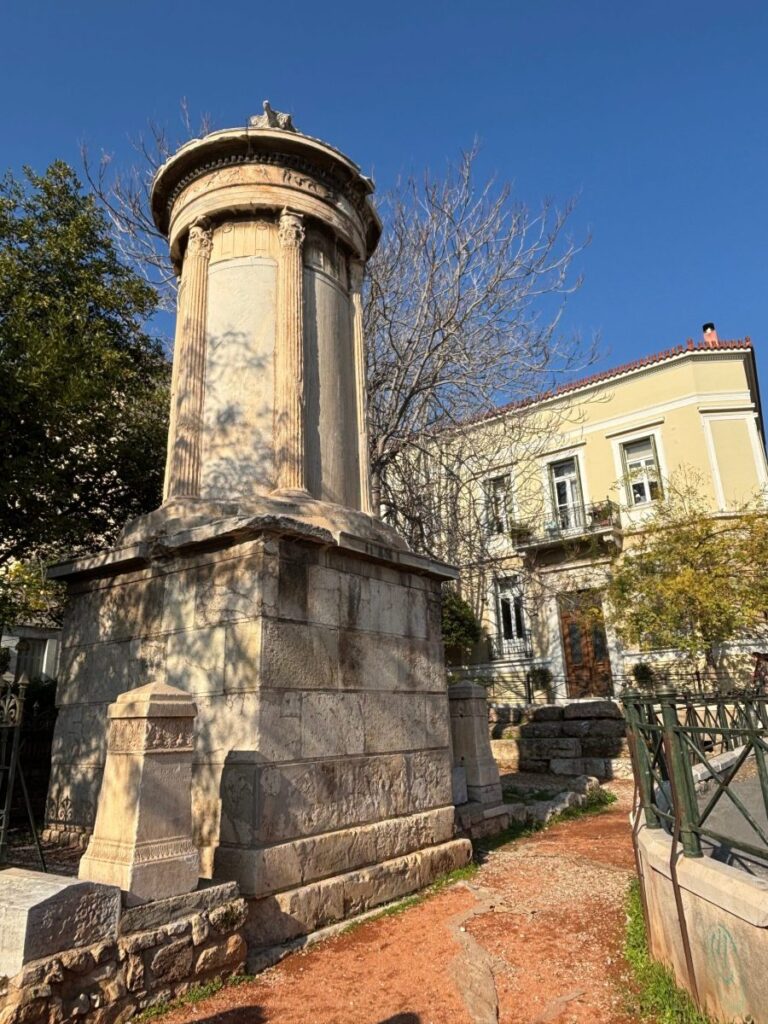
Our last stop was to the Choragic Monument of Lysicrates. It was built in 334 BC by Lysicrates, a wealthy patron of the arts, to commemorate a victory in a dramatic competition held during the Dionysia festival at the Theater of Dionysus. The monument served as a base for a bronze tripod, the prize awarded to the sponsor of the winning theatrical performance. Guess what the prize was? A goat. I love that now we call anyone who is the best at something The GOAT (Greatest Of All Time). I highly doubt the two are connected but still.
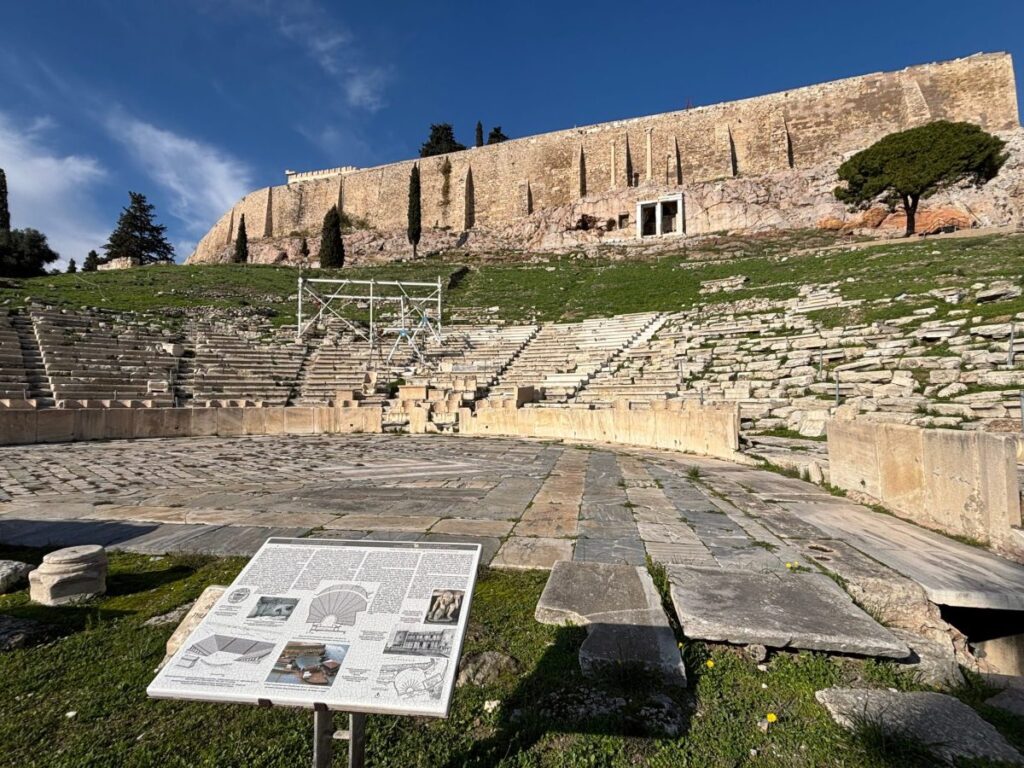
We didn’t see the Theater of Dionysus on the tour because it is located inside the gates of the Acropolis (which requires a ticket) but I went and saw it later so here ya go. The ancient Street of the Tripodon connected the Ancient Agora with the Sanctuary and the Theatre of Dionysus.
The tour provided a good lay of the land so I could decide what I wanted to see on my own. More to come…
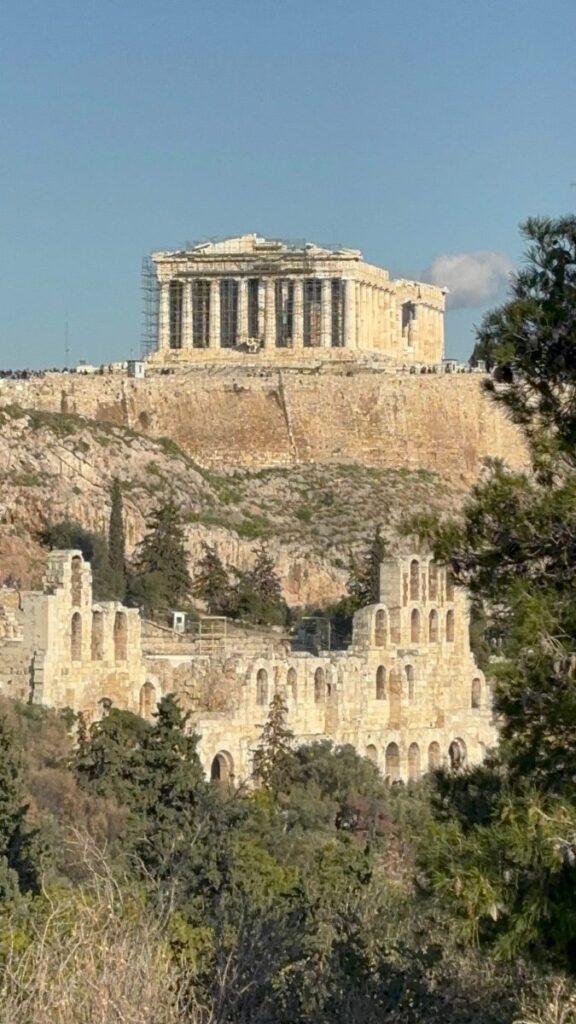
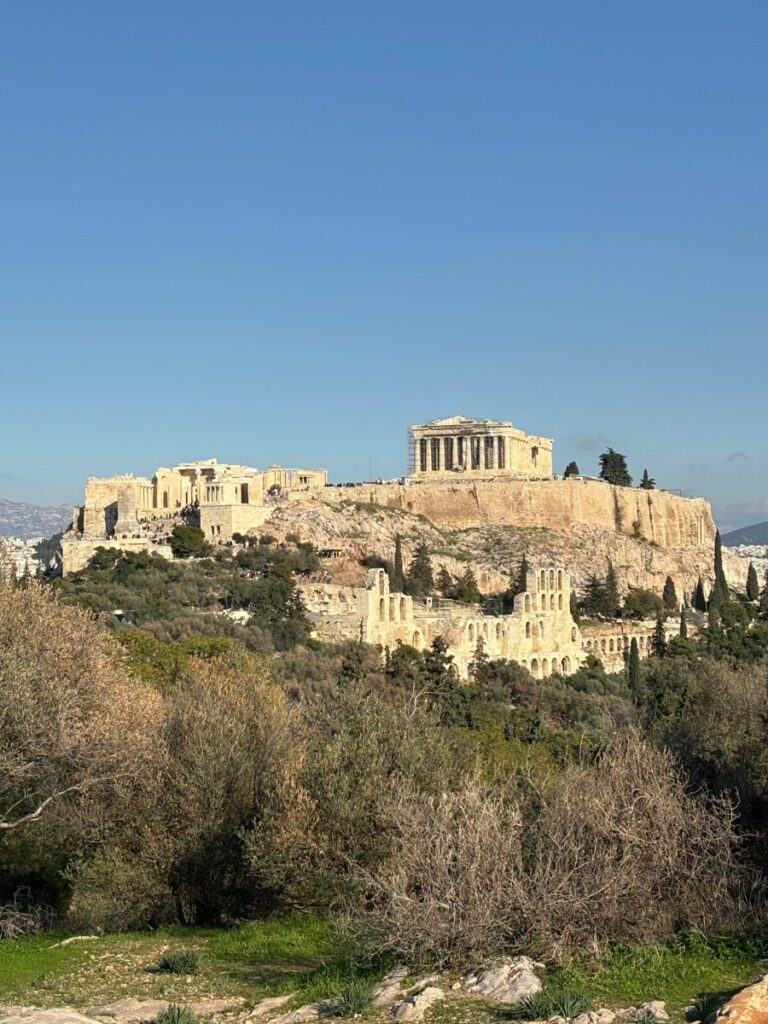
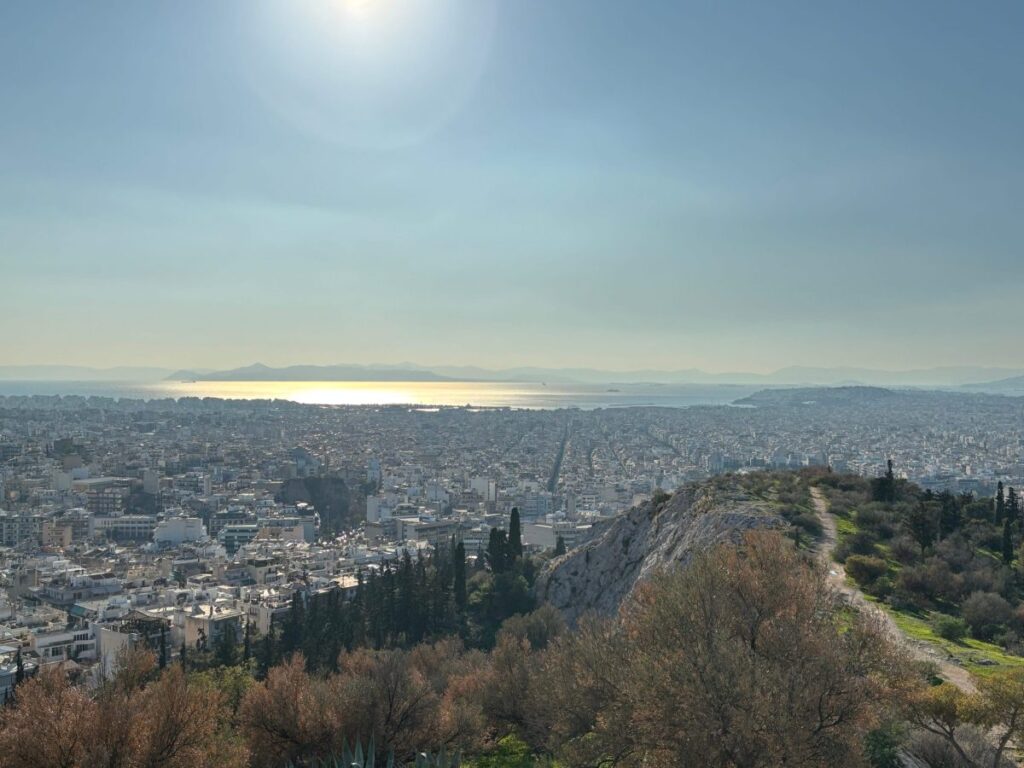
Later that day at the recommendation of Stavros, I hiked up to Pnyx to get a good view of the city and Saronic Gulf and the Parthenon and Acropolis.
I also stopped by to watch the soldiers guarding the Tomb of the Unknown Soldier.
It was a full day of walking and learning about the beautiful city of Athens.
Good Things List
-
The opportunity to explore such a historic city.
-
Greek food.
Much love & gratitude. Namaste 🙏
Don’t forget to like and share this post, please. Thank you.
To see more photos and videos from my adventures, follow me on social media. Facebook, Instagram, YouTube, TikTok, Threads, and Pinterest, or connect with me on LinkedIn.
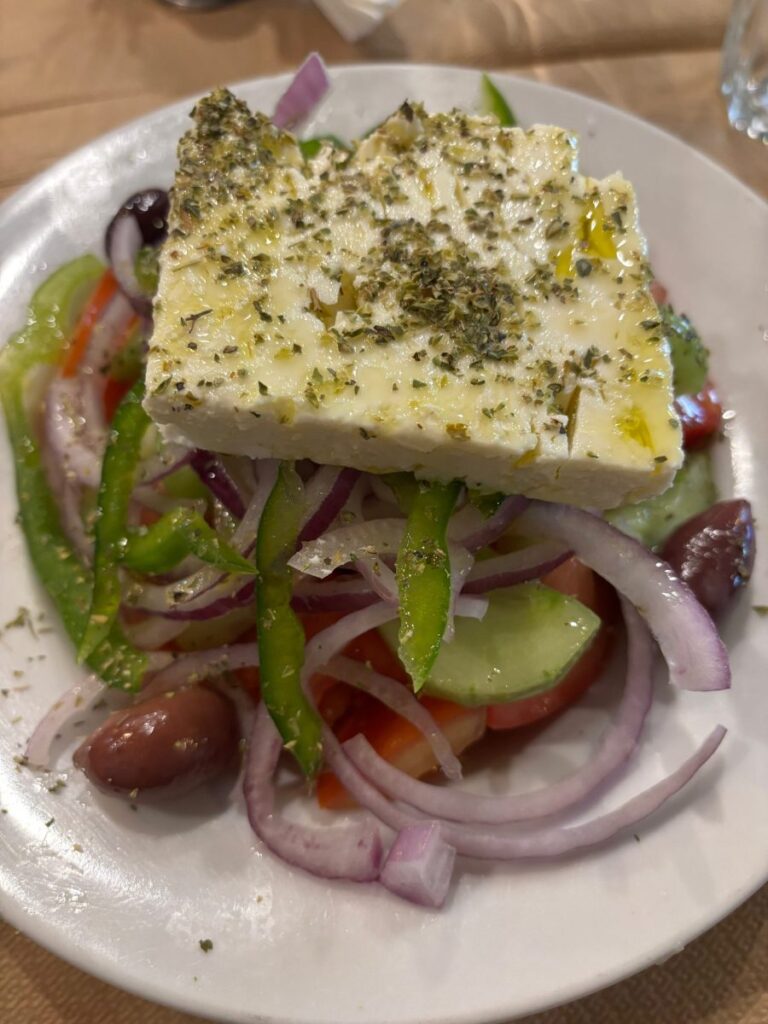
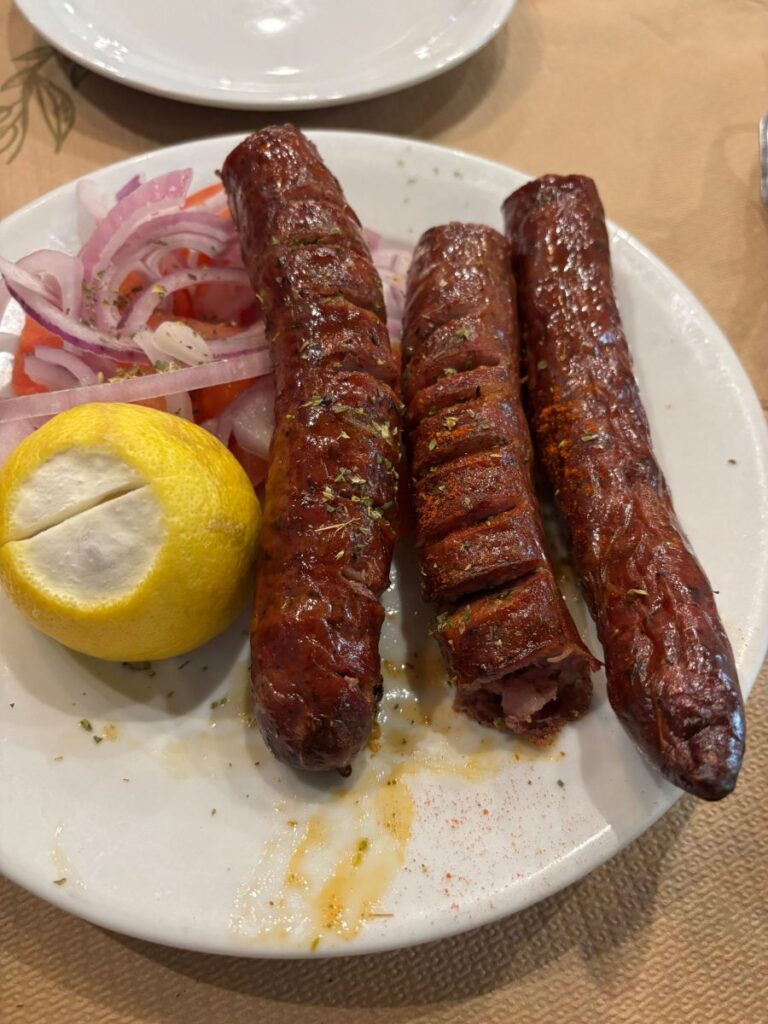
Traditional Greek food (sausages with onions and salad with Feta) from Opos Palia. A restaurant recommended separately by both the hotel and the tour guide.
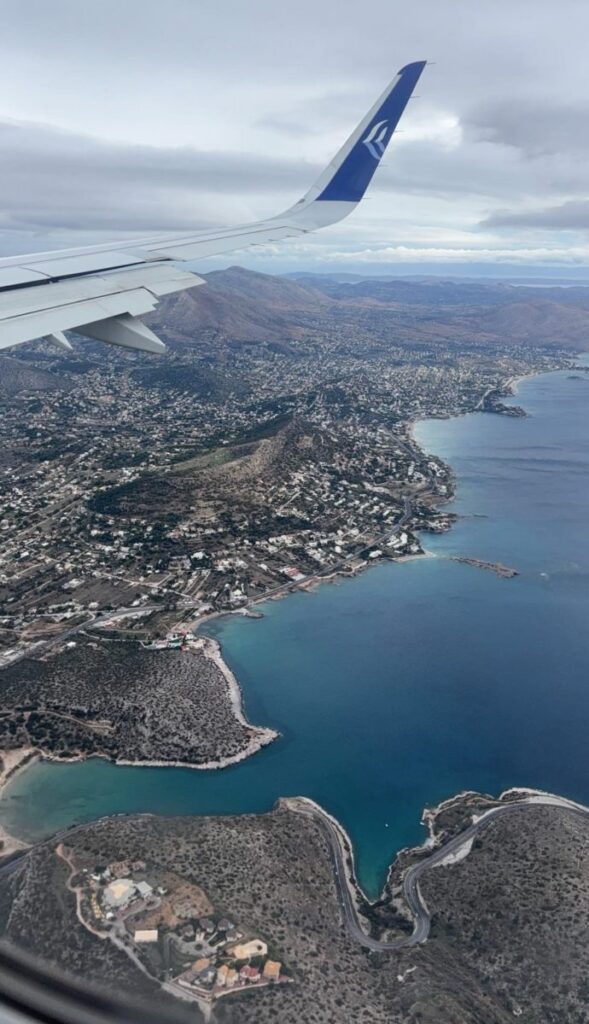
View when I flew into Athens. 💙
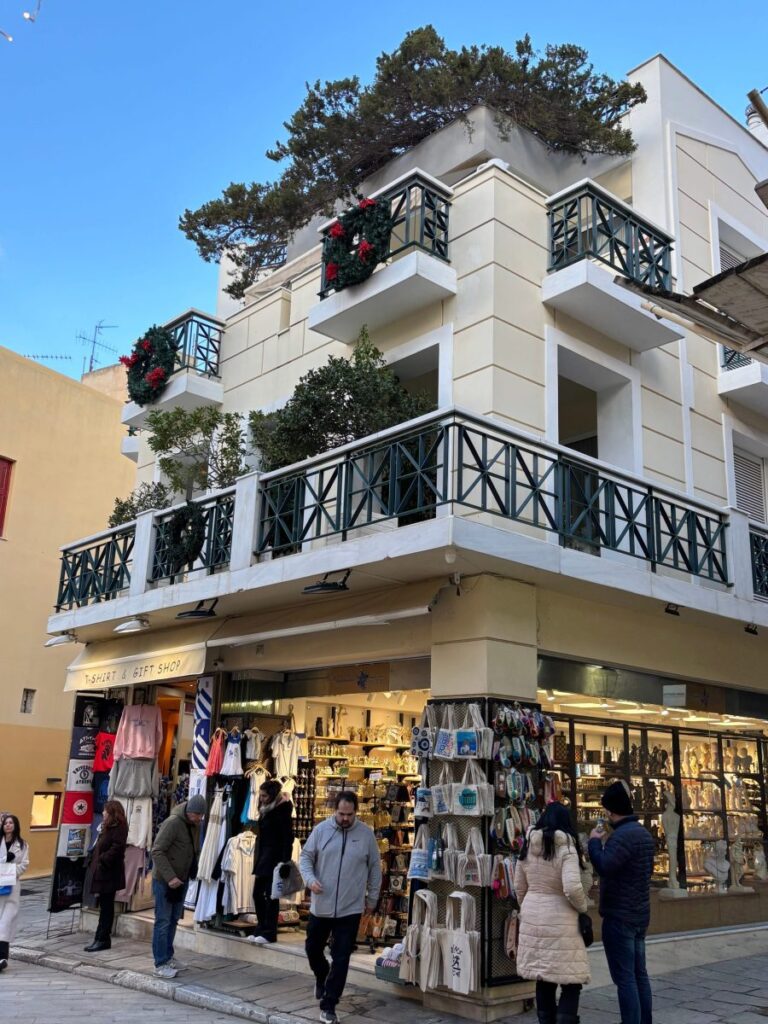
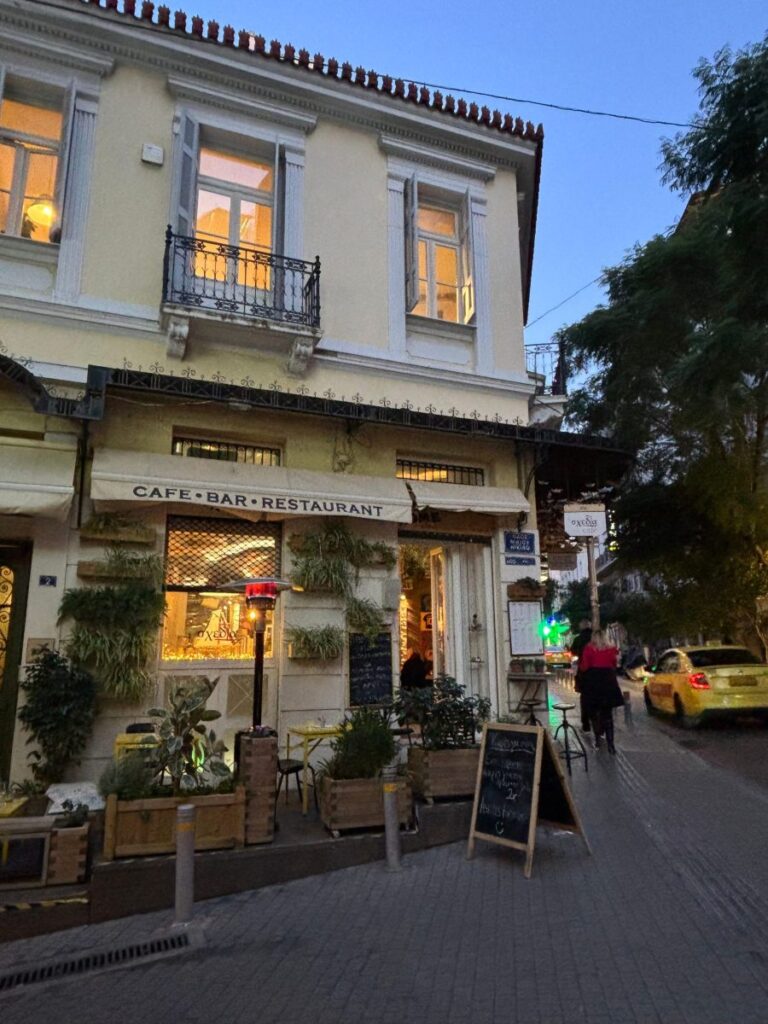
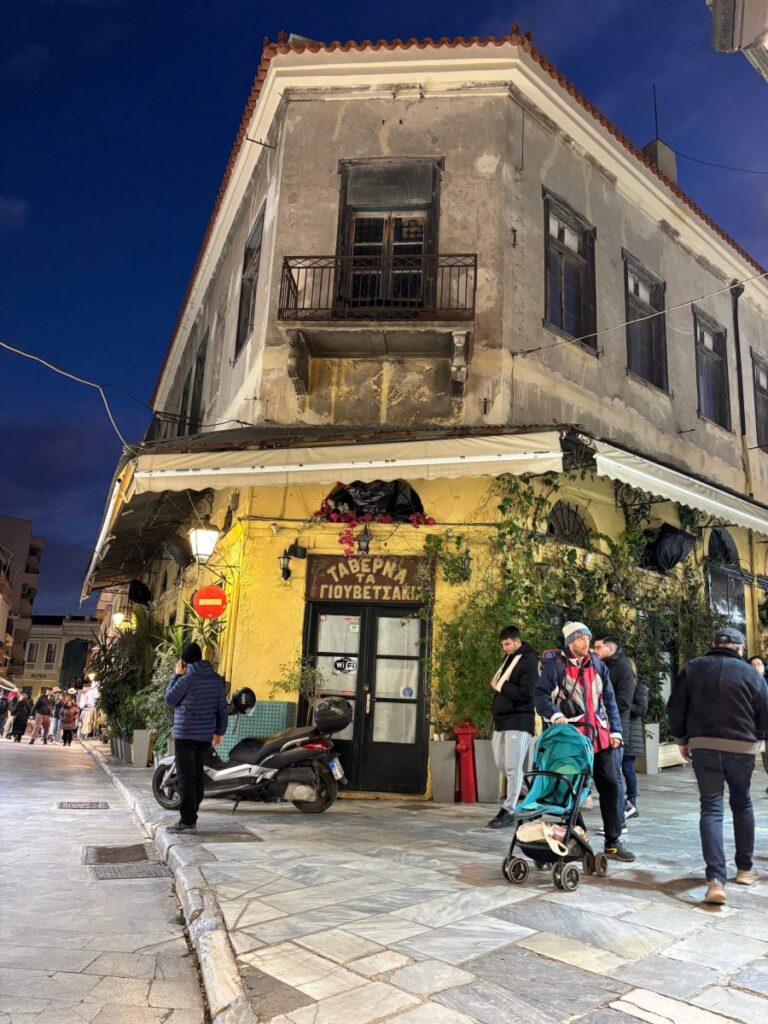
There are a ton of souvenir shops and beautiful buildings in Athens.